 English
 Türkçe
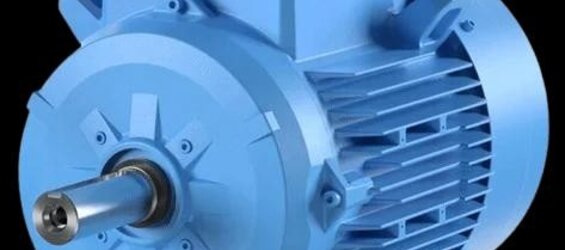
Sıcaklık Elektrik Motorunun Verimini Nasıl Etkiler?
Bir elektrik motorunun verimi sabit bir değer değildir; çalışma sıcaklığıyla birlikte değişir. Sıcaklık arttıkça sargı bakırının elektriksel direnci yükselir, bu da bakır kayıpları... More Details

Bir elektrik motorunun verimi sabit bir değer değildir; çalışma sıcaklığıyla birlikte değişir. Sıcaklık arttıkça sargı bakırının elektriksel direnci yükselir, bu da bakır kayıpları... More Details
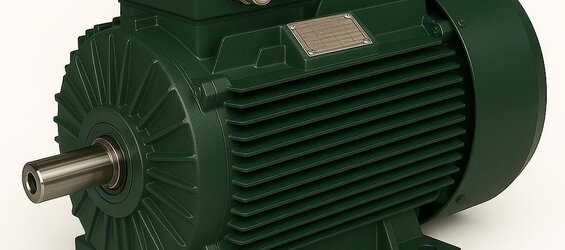
Belt-and-pulley drive is one of the most common ways to transfer a motor's power to a load. From a ventilator to a stone-crushing line, from a machining tool to a conveyor, many sy... More Details
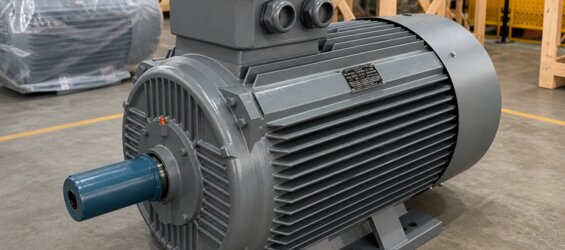
One of the most visible yet most often overlooked parts of an electric motor is the terminal box. This box, where the motor's electrical connection is made, is the critical point w... More Details
A frequency inverter can change the speed of an induction motor, but how it does so depends on the control method you choose. There are two fundamental approaches: scalar V/f contr... More Details
One of the most critical components determining the life and reliability of an electric motor is the bearing system. This element carries the shaft, makes rotation possible and tra... More Details
A soft starter limits the inrush current and mechanical shock of an induction motor by gradually raising the starting voltage instead of connecting the machine directly to the line... More Details
The rotational speed of an electric motor is determined not only by the supply frequency but also by how many magnetic poles are created in the stator. As the pole count increases,... More Details
A frequency inverter provides large energy savings by flexibly adjusting the motor's speed; but this benefit comes with an invisible side effect: electrical noise. The inverter dri... More Details
Choosing the right electric motor is not enough on its own; the cable that feeds that motor must also be chosen correctly. A wrongly chosen supply cable becomes the weak link of th... More Details
There is only one sound way to understand whether switching to an efficient motor makes sense: do the math. The sentence "a high-efficiency motor saves energy" is true but abstract... More Details
One of the most vulnerable points of an electric motor is where the shaft leaves the frame. At this point a small gap must remain between the rotating shaft and the stationary fram... More Details
Before an electric motor fails, it almost always gives a warning: vibration. Bearing wear, imbalance, misalignment, looseness or electrical problems all leave a trace in the motor'... More Details
Some loads are simply too large to fit within the power of a single motor. A belt conveyor hundreds of metres long, the lifting system of a heavy bridge crane, or the drive of a la... More Details
Whenever an electric motor burns out in an industrial setting, the same question arises: should we rewind this motor or buy a new one? Rewinding is the process of stripping out the... More Details
When an electric motor runs, the job of the winding insulation is not only to carry energy; it is also to separate the live conductors from the frame, and the frame from the people... More Details
On a cold winter morning, an electric motor waiting outdoors or in a chilled warehouse meets conditions at its first start that are very different from those in a warm environment.... More Details
How quickly a motor can bring a load to the desired speed depends on a critical quantity that is often overlooked yet determines both the starting behavior and the life of the moto... More Details
The insulation of large-power electric motors ages silently and over the years. This aging is usually invisible from the outside, until one day the winding insulation collapses and... More Details
The path to selecting the right motor often does not run, as is commonly assumed, through looking only at the power value. What really matters is the character of the load the moto... More Details
An electric motor cannot convert all the energy it draws into mechanical work; part of that energy inevitably turns into heat. In most facilities, this heat is seen as a loss that ... More Details