 English
 Türkçe

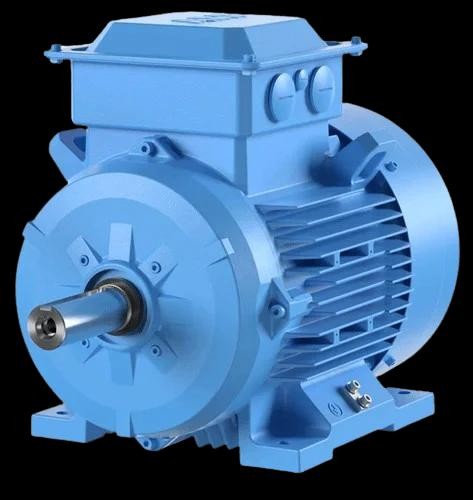

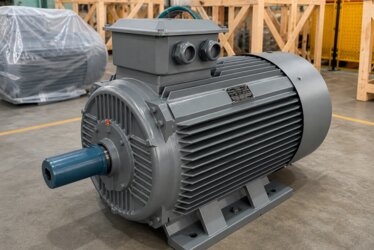
The rotational speed of an electric motor is determined not only by the supply frequency but also by how many magnetic poles are created in the stator. As the pole count increases, the synchronous speed of the motor drops, opening the door to drive solutions that produce high torque at low speed, run quietly and last longer. Multi-pole induction motors simplify systems by reducing mechanical intermediaries in applications such as cranes, mills, mixers and conveyors. In this article we examine the working principle, advantages, limits and correct selection criteria of 6, 8, 10 and 12-pole AC induction motors through DRG's manufacturing experience. For the fundamental relationship between pole count and speed, our article on pole count and speed is the starting point of this subject.
What Is Pole Count and Why Does It Matter?
When the windings in an induction motor's stator are supplied with three-phase voltage, they produce a rotating magnetic field. How many pole pairs this field contains depends on how the windings are arranged. Two poles create the fastest rotating field, while as the pole count increases the field rotates more slowly at the same frequency. Pole count is therefore one of the most fundamental design parameters that defines a motor's mechanical character. The speed-torque balance an application needs is established by choosing the correct pole count.
The Relationship Between Synchronous Speed and Pole Count
Synchronous speed is found by multiplying the supply frequency by 120 and dividing by the pole count. On a 50 Hz grid, a 2-pole motor runs at 3000 rpm, a 4-pole at 1500, a 6-pole at 1000, an 8-pole at 750, a 10-pole at 600 and a 12-pole at 500 rpm of synchronous speed. In an induction motor the actual speed is slightly below this value due to slip. The table below clearly shows the gradual drop in speed as the pole count rises. What matters is that these speeds are discrete; for intermediate speeds either a change in pole count or frequency control is required. During design, the target speed of the application is matched with the nearest pole class and fine-tuned with a drive if necessary.
| Pole Count | Synchronous Speed (50 Hz) | Typical Load Speed | Character |
|---|---|---|---|
| 2 poles | 3000 rpm | ~2900 rpm | High speed, low torque |
| 4 poles | 1500 rpm | ~1450 rpm | Balanced, most common |
| 6 poles | 1000 rpm | ~960 rpm | Medium speed, high torque |
| 8 poles | 750 rpm | ~720 rpm | Low speed, high torque |
| 10 poles | 600 rpm | ~575 rpm | Very low speed |
| 12 poles | 500 rpm | ~480 rpm | Heavy drive, slow |
Why Does Low Speed Mean High Torque?
A motor's shaft power depends on the product of torque and angular speed. At the same power level, as speed decreases torque increases to maintain the mechanical balance. For this reason multi-pole motors can produce high breakaway and starting torque even at relatively low power. Our article on the power, torque and speed relationship explains the basis of this calculation. Obtaining high torque at low speed makes it possible to drive heavy loads directly.
Applications of 6-Pole Motors
With a synchronous speed of 1000 rpm, 6-pole motors offer a smoother drive character than standard 4-pole motors. They are preferred in pumps, fans, conveyors and medium-speed drives. The lower speed reduces mechanical wear and noise while lightening the gearbox stage in the system. This class forms a practical bridge between 4-pole and 8-pole; running in balance without being too slow yet without the stresses of high speed. In medium-sized industrial plants, the 6-pole motor is a frequently chosen option for both efficiency and durability.
Advantages of 8-Pole Motors
At 750 rpm, 8-pole motors are common in cranes and lifting systems. Slow and controlled motion allows precise load positioning. In crane and lifting motor applications, this pole class shows stable behaviour against sudden load changes.
Heavy Drive with 10 and 12-Pole Motors
Operating at very low speeds such as 600 and 500 rpm, 10 and 12-pole motors come into play under heavy industrial loads like mills, crushers and large mixers. These motors have the torque character to drive loads with high inertia directly. In this class, the frame and winding design prioritise heat management under continuous heavy load. Because fan cooling weakens at very low speed, thermal design and bearing selection are carried out meticulously. DRG offers application-specific engineering solutions in this heavy drive class.
Reducing the Need for a Gearbox
In many applications a gearbox is placed between the motor and load to obtain low output speed. However, by selecting the correct pole count this stage can be reduced or, in some cases, eliminated entirely. Lightening the gearbox reduces mechanical losses, lowers the maintenance burden and increases the total efficiency of the system.
The Direct Drive Approach
Multi-pole motors lay the groundwork for a direct drive architecture. Driving the load without an intermediate gearbox reduces both energy loss and points of failure. This approach provides significant operating savings over the long term, especially in continuously running heavy drives. Eliminating the gearbox also reduces periodic tasks such as oil changes, seal maintenance and alignment. Fewer moving parts increase system reliability and lower the risk of unplanned downtime.
Efficiency and Power Factor Balance
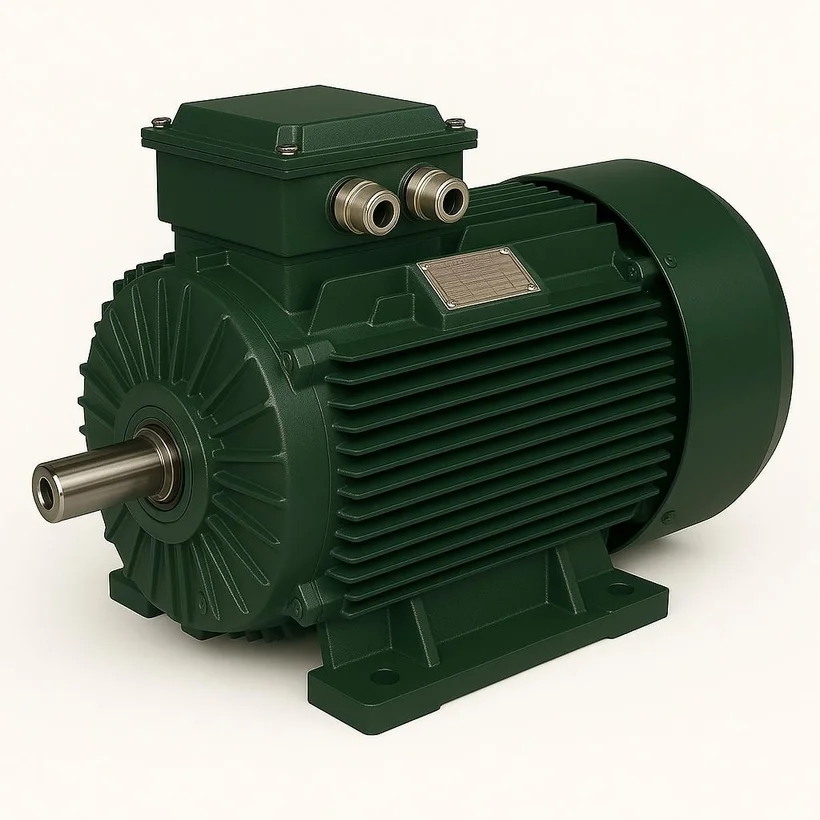
As the pole count increases the motor's magnetic circuit grows and a balance must be struck between power factor and efficiency. In multi-pole motors the magnetising current is relatively high, which can affect the power factor. With modern high-efficiency motor design this balance is optimised and IE3/IE4 class efficiency targets are maintained.
The Structure of Losses
In low-speed motors, mechanical friction and ventilation losses decrease, while copper and iron losses are controlled through design. Our article on motor efficiency losses examines these items in detail. Selecting the correct pole count is part of keeping total losses to a minimum.
Multi-Pole Motors in Crane Applications
In lifting systems the safe, vibration-free movement of the load is critical. Low-speed motors provide smooth acceleration during lifting and lowering. In crane lifting motor applications, the 8 and 10-pole classes work in harmony with brake and control systems.
Mill and Grinding Applications
In grinding processes the load moment of inertia is high and starting is demanding. Mill and grinding motors, thanks to their multi-pole structures, bring these loads online with high starting torque. Low speed positively affects grinding efficiency and machine life.
Low Speed in Mixers and Agitators
Mixing viscous fluids calls for high torque and low speed. A multi-pole motor turns the mixer blade directly at the desired speed, increasing the homogeneity of the process. This reduces the need for intermediate transmission elements.
Conveyor and Belt Systems
Belt conveyors carrying heavy material require a smooth and controlled speed profile. Low-speed motors offer stable drive against sudden load fluctuations and ensure a gentle belt start.
Starting Torque and Soft Starting
The high starting torque of multi-pole motors allows heavy loads to be brought online smoothly. Selecting the starting method according to the load limits the current surge and mechanical shock. The right combination of pole count and starting method extends the system's life.
Speed Control with a Frequency Inverter
When the supply frequency is changed using a drive, the speed of a multi-pole motor can be adjusted over a wide range. This offers flexible speed control while preserving the constant high-torque character. The inverter further increases the potential of low-speed motors.
Cooling and Thermal Behaviour
Because fan cooling may weaken at low speed, thermal design is important. With motor temperature control the winding temperature is monitored. When needed, auxiliary cooling is applied so the motor stays at a safe temperature even at low speed.
Insulation Class Selection
In heavy drives the thermal endurance of the windings is critical. Insulation class selection ensures the motor runs safely under sustained high load. DRG uses high thermal class insulation in multi-pole motors.
Bearing and Mounting Selection
In high-torque low-speed motors the bearing loads increase. Bearing types and selection is decisive at this point. The correct bearing type carries radial and axial loads, securing motor life.
Lubrication Interval and Maintenance
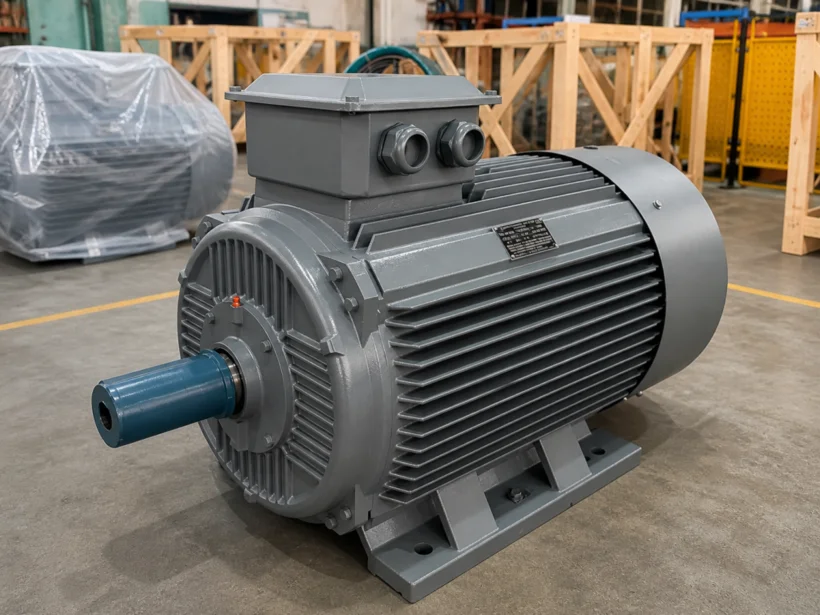
In low-speed motors grease distribution may require a different interval. Our article on bearing greasing and lubrication intervals helps determine the correct maintenance interval. Regular lubrication significantly extends bearing life.
The Noise and Vibration Advantage
Low speed naturally means less aerodynamic and mechanical noise. This provides comfort in the working environment and reduces vibration-induced fatigue. Quiet operation also becomes an advantage in sensitive processes.
Mechanical Life and Durability
Fewer revolutions mean rotating parts complete fewer turns per unit time. This reduces total fatigue cycles in bearings and gear systems, extending equipment life. The recommendations in extending bearing life support this advantage.
Power Calculation and Sizing
When selecting a multi-pole motor, the load's torque-speed profile must be established. The high and low kW motors comparison helps determine the correct power class. Sizing must be based on the actual load demand.
Supply Cable and Electrical Infrastructure
During high-torque starts the instantaneous current can rise. Supply cable sizing is therefore important. The correct cross-section limits voltage drop and preserves the motor's rated performance.
IP Protection Class
Multi-pole motors usually operate in dusty and humid heavy industrial environments. IP protection class selection enables the motor to withstand these conditions. The correct protection class is a precondition for long life.
Breadth of Industrial Application
Many sectors such as cement, mining, food, water and metal processing require low-speed drives. Within the industrial electric motors family, multi-pole classes form the backbone of heavy processes.
Comparison with the 2-Pole Motor
High-speed 2-pole motors are ideal in applications like fans and pumps, but fall short in work requiring heavy torque. A multi-pole motor can do the same job without the burden of a gearbox. The choice should be made according to the speed-torque demand of the application.
Difference from the Standard 4-Pole
The most common class, the 4-pole motor, offers a general-purpose balance. However, when 750 rpm or lower speed is required, using a multi-pole motor directly can be more efficient than slowing a 4-pole motor with a gearbox.
Effect on Energy Efficiency
Reducing gearbox stages and lowering mechanical losses increases the total energy efficiency of the system. Choosing an efficient electric motor directly affects operating cost. Efficient low-speed motors pay back the investment over the long term.
Total Cost of Ownership
A multi-pole motor may appear larger in initial investment; however, when gearbox, maintenance and energy items are evaluated together, the total cost is often lower. Simplicity across the system increases both reliability and economy.
Common Mistakes in Selection
Selecting a motor by looking only at power leads to a speed-torque mismatch. When pole count is ignored, the motor is either overstressed or chosen unnecessarily large. Correct selection begins with analysing the true character of the load.
Pole Selection Recommendation by Application
2-4 poles for fans and pumps, 6 poles for conveyors and medium drives, 8 poles for cranes, and 10-12 poles for mills and heavy mixers are a general starting point. The final decision becomes clear with detailed load analysis and DRG engineering support.
Mounting and Alignment
In high-torque motors coupling alignment and foundation connection are critical. Misalignment shortens life by increasing bearing load. Correct mounting preserves the durability advantage the multi-pole motor provides.
Commissioning Checks
At first start, rotation direction, current balance, vibration and temperature should be checked. These checks confirm that the low-speed motor runs at the expected performance and reveal potential problems early.
Monitoring and Predictive Maintenance
Monitoring vibration and temperature data prevents unplanned stops in heavy drives. A predictive maintenance approach ensures maximum uptime from multi-pole motors.
Grid Compatibility and Harmonics
In inverter-fed use, harmonic effects must be considered. Suitable filtering protects the health of both the motor and the grid. The correct electrical infrastructure is part of efficient low-speed operation.
Adapting to Environmental Conditions
High altitude, extreme temperature or a corrosive environment affects motor selection. Multi-pole motors can be adapted to these demanding conditions with suitable protection and insulation options. DRG offers customisation according to field conditions.
Recovery and Sustainability
Long-lasting and efficient motors lower the carbon footprint by consuming less energy. Efficient low-speed drives are aligned with sustainable production goals and provide environmental benefit over the long term.
The Future Direction of Multi-Pole Motors
As the industry's trend toward direct drive and energy efficiency strengthens, the importance of multi-pole motors grows. With smarter monitoring and higher efficiency classes, these motors will continue to be an indispensable part of heavy industry.
DRG Motor for Low-Speed Power
DRG manufactures 6, 8, 10 and 12-pole AC induction motors in IE3 and IE4 efficiency classes with application-specific design. From cranes to mills, from mixers to conveyors, we stand beside you in every project demanding low speed and high torque in heavy drives. Let us determine the correct pole count, correct power and correct protection class together. For your multi-pole motor needs, explore our industrial motor solutions and get in touch with the DRG engineering team; together we will select the low-speed motor best suited to your project.