 English
 Türkçe
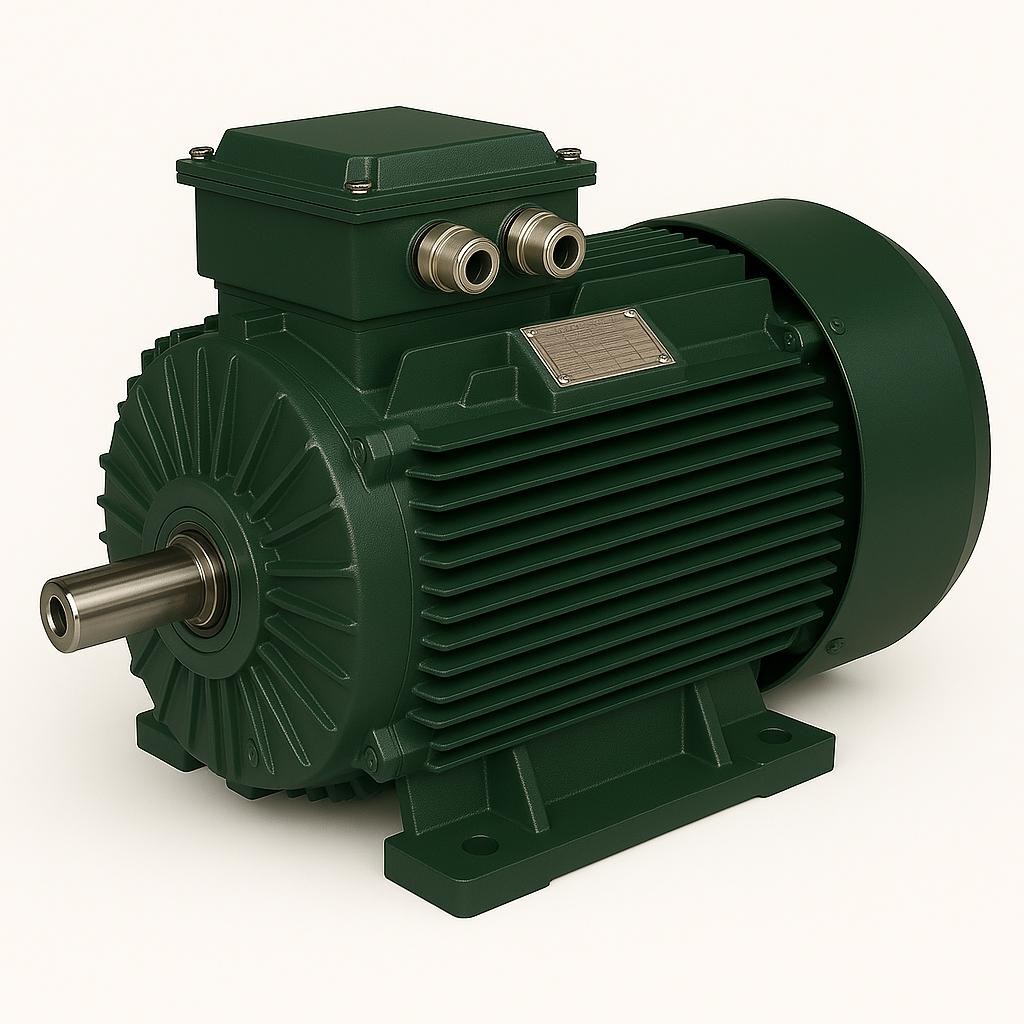

An electric motor can never convert all of the energy it draws from the grid into mechanical movement; a portion of that energy inevitably appears as loss. These losses define the efficiency of the motor and translate directly into your energy costs. Understanding where the losses originate is the key to choosing more efficient motors and achieving genuine energy savings. So where do efficiency losses in electric motors actually come from, and how can they be reduced?
At DRG Motor, this article examines the types of motor losses and how they affect efficiency. You can find an overview of the broader benefits of efficiency classes in our article on high-efficiency electric motors.
What Is an Efficiency Loss?
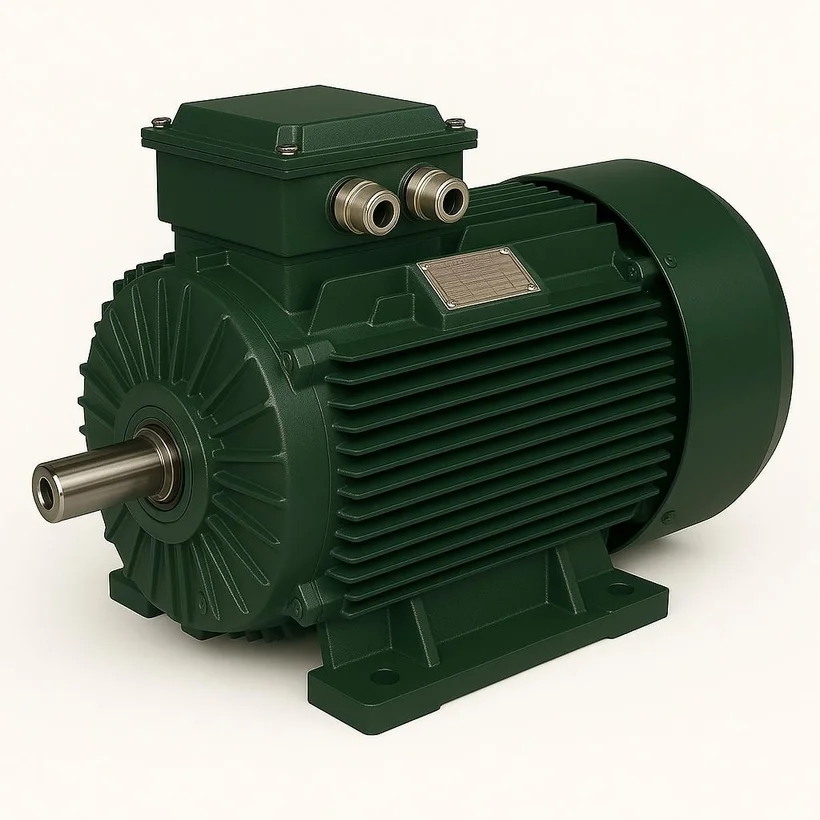
An efficiency loss is the portion of the energy a motor draws that cannot be converted into useful work and usually shows up as heat. A motor's efficiency tells you how much of the energy it consumes is turned into work; the remainder is loss. The lower the losses, the more efficient the motor. For this reason, understanding losses is the same as understanding efficiency.
No motor is one hundred percent efficient, but losses can be minimized. Reducing them as far as possible is precisely the goal of high-efficiency motors.
Copper Losses
Copper losses are the heat losses caused by winding resistance, and they increase with the square of the current. When a motor draws more current under load, these losses rise sharply. High-quality, generously dimensioned copper windings reduce winding resistance and therefore lower these losses. Copper losses make up a significant share of total motor losses.
We explain how winding quality affects losses in our article on rotor copper-wound electric motors. Quality copper keeps copper losses to a minimum.
Iron (Core) Losses
Iron losses are the hysteresis and eddy-current losses that occur in the magnetic core of the motor. These losses depend on the quality of the laminations that form the core. Thin, high-grade silicon-steel laminations reduce iron losses. Iron losses account for a substantial part of the total.
Quality core material minimizes magnetic losses, which in turn raises efficiency directly. The core is one of the quiet but decisive elements of efficiency.
Eddy-Current Losses
Eddy currents induced in the magnetic core lead to additional heat losses. To limit them, the core is built from thin, mutually insulated laminations. These thin sheets restrict the circulation of eddy currents, which in turn reduces overall iron losses. The thinner and cleaner the laminations, the smaller the eddy-current losses.
Lamination quality and thickness essentially determine the size of eddy-current losses. Precise manufacturing keeps these losses as low as possible.
Mechanical Losses
Mechanical losses arise from friction in the bearings and from the air resistance of the cooling fan. They are the natural consequence of the rotating parts of the motor. Quality bearings and a well-considered design reduce mechanical losses. They always form part of the total loss budget.
We explain the importance of bearing quality in our article on extending bearing life. Quality bearings lower mechanical losses.
Friction and Lubrication
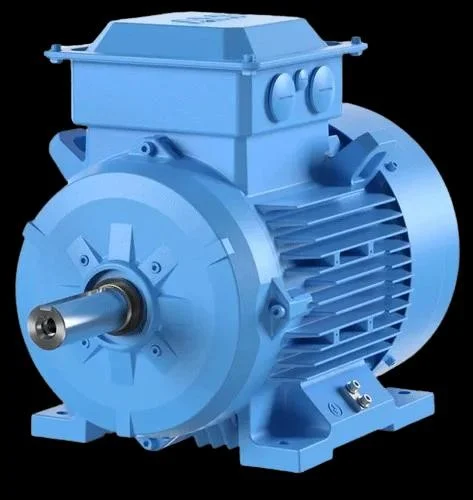
Friction in the bearings is a major source of mechanical loss. Correct lubrication reduces friction and therefore this loss. Insufficient or excessive lubrication, on the other hand, increases friction. For this reason, proper lubrication matters as much for efficiency as it does for service life.
Well-lubricated bearings both reduce friction loss and last longer. This delivers a combined benefit of efficiency and durability.
Stray Load Losses
When a motor operates under load, additional losses appear alongside the basic ones. These stray losses arise from the interaction between the load and the magnetic field. A quality design minimizes these extra losses. Load-dependent losses influence overall efficiency.
A well-designed motor runs with low losses even under load. That is exactly what high efficiency means in practice.
How Losses Turn into Heat
The greater part of efficiency losses appears as heat. This heat raises the motor's temperature and increases its cooling needs. A low-loss motor heats up less and runs cooler. Losses are therefore directly linked to how warm a motor becomes.
We cover temperature management in our article on electric motor temperature control. Fewer losses mean less heat.
The Role of Material Quality
The quality of the copper, laminations and other materials used in a motor directly determines its losses. Quality material means low losses and high efficiency. Cheap, low-grade materials, by contrast, increase both losses and heating. Material quality is the foundation of efficiency.
High-efficiency motors are built with quality materials, which is exactly what makes them low-loss machines.
Electromagnetic Design
The electromagnetic design of a motor is a major factor in determining the magnitude of its losses. A good design uses the magnetic field efficiently and reduces losses as a result. Next-generation motors achieve lower losses through optimized designs. Design is the invisible arbiter of efficiency.
Advanced design underpins the high efficiency of modern motors, and you can read more in our article on next-generation electric motors. Better design means lower energy bills.
The Effect of the Air Gap
The air gap between the stator and the rotor influences magnetic losses. A narrow, uniform air gap allows the magnetic field to cross efficiently and reduces the magnetizing current. A wide or irregular gap, on the other hand, increases losses. The air gap is a critical detail for efficiency.
Precise manufacturing ensures the correct air gap, which contributes directly to lower losses.
Load Factor and Losses
The load level at which a motor operates affects both its losses and its efficiency. Peak efficiency is reached when the motor runs close to its rated load. Operating at very low or very high load reduces efficiency. Running the motor at the right load therefore keeps losses down.
You can find the right power rating in our power (kW) and speed table. The right load means low losses.
Efficiency Classes and Losses
High-efficiency classes such as IE3 and IE4 describe low-loss motors. As the class rises, losses fall and efficiency increases. Selecting a higher efficiency class is the most direct way to minimize losses. The efficiency class is, in effect, a summary of a motor's losses.
A higher efficiency class delivers both energy savings and reduced heating. That translates into a long-term gain.
Ways to Reduce Losses
To reduce losses you should choose a quality, high-efficiency motor, size the motor correctly for the load, carry out regular maintenance and keep the supply voltage stable. Together, these measures bring losses to a minimum. Low losses mean both savings and longer service life. This is why loss management is so important.
Reducing losses directly lowers energy costs, which delivers a tangible benefit to the business.
Losses and Energy Cost
Efficiency losses are nothing other than wasted energy and, therefore, wasted money. In a continuously running motor, those losses accumulate into a significant sum over the course of a year. Choosing a low-loss motor noticeably reduces your energy costs. Losses are the hidden burden on the bill.
We examine the payback of switching to a low-loss motor in our article on the payback period of an efficient motor. Fewer losses mean faster savings.
The Effect of Maintenance on Losses
A well-maintained motor runs with lower losses. In a clean, correctly lubricated and properly aligned motor, friction and stray losses are reduced. Neglected maintenance, by contrast, increases both losses and heating. Maintenance therefore matters for efficiency too.
We describe the fundamentals in our article on electric motor maintenance steps. Regular maintenance keeps losses low.
The Advantage of a Low-Loss Motor
A low-loss motor consumes less energy, heats up less, lasts longer and runs more quietly. These advantages explain why high-efficiency motors are so widely preferred. Fewer losses translate into a many-sided gain. Low loss is, in short, an indicator of motor quality.
Low loss delivers both an economic and a technical advantage. Choosing it is the mark of an informed motor decision.
Stator Losses
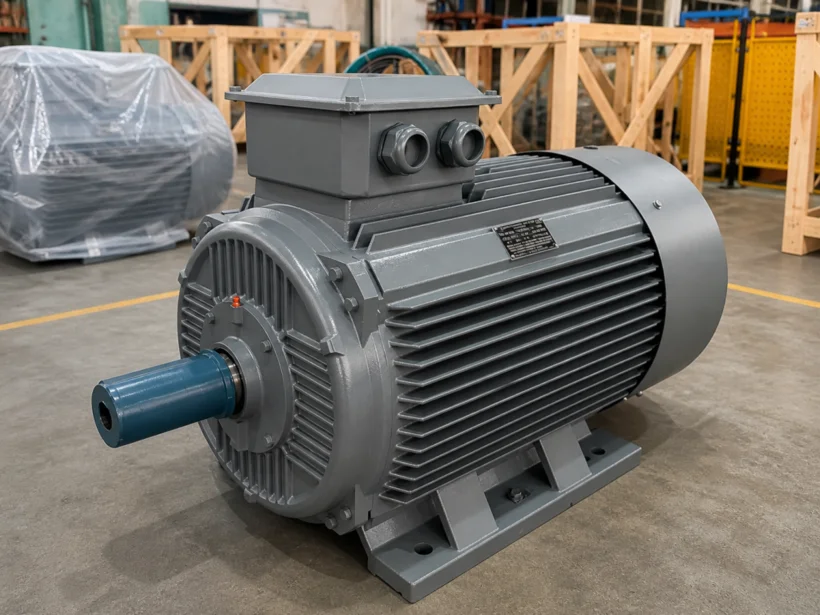
The copper and iron losses that occur in the stator make up a large share of total motor losses. The resistance of the stator windings and the magnetic properties of the core determine these losses. A quality stator design keeps them to a minimum. The stator is the component at the heart of efficiency.
A well-designed stator lowers both copper and iron losses, which raises efficiency directly.
Rotor Losses
Losses also occur in the rotor due to its design and resistance. Copper-bar rotors offer lower losses than aluminium rotors. For this reason, high-efficiency motors use quality rotors. Rotor losses affect overall efficiency.
A quality rotor delivers both low losses and high torque, which improves the motor's performance.
Cooling Fan Loss
The cooling fan consumes a certain amount of power to overcome air resistance, and this counts as a mechanical loss. An efficient fan design provides the necessary cooling while keeping this loss to a minimum. Good cooling is both effective and low-loss. Fan design is part of the efficiency picture.
An optimized fan delivers the required cooling with the least possible power, contributing to overall efficiency.
Voltage Quality and Losses
Low or unbalanced voltage causes the motor to draw more current and increases losses. Stable, balanced voltage keeps losses low. Voltage quality therefore matters for efficiency. Voltage problems raise losses quietly and unnoticed.
Clean, steady voltage allows the motor to run efficiently, keeping losses under control.
The Effect of Harmonics
Harmonic distortion on the grid leads to additional losses and heating in the motor. This problem is especially common in facilities with many electronic devices. Clean power and appropriate filtering reduce harmonic-related losses. Harmonics are a hidden source of loss.
Grid quality indirectly affects motor efficiency. Clean power means low losses.
The Effect of Overload on Losses
A motor operating under overload draws much more current, and copper losses rise rapidly. This both reduces efficiency and heats the motor. Running at the correct load keeps losses low. Overload is a factor that multiplies losses.
We explain overload protection in our article on overload protection. The right load reduces losses.
No-Load Running Losses
Even when a motor runs unloaded, iron and mechanical losses continue, and this energy is wasted. Motors left running idly for no reason keep generating losses. Stopping unused motors prevents this waste. Idle running is a hidden form of waste.
Avoiding idle running is a simple savings measure that eliminates unnecessary losses.
Reducing Losses with a Frequency Inverter
A frequency inverter reduces unnecessary losses by running the motor only as hard as the load requires. In variable-load applications in particular, the inverter delivers significant savings. When the motor draws exactly the energy needed, losses are minimized. The inverter is an effective tool for loss management.
We explain the logic of inverter savings in our article on frequency inverters and energy saving. The inverter reduces losses.
Measuring Losses
A motor's losses and efficiency can be measured with standard test methods. These measurements reveal the motor's true efficiency and its potential for improvement. The efficiency class is based on exactly these measurements. Measurement-based assessment supports correct motor selection.
The efficiency figure on the nameplate is the result of these measurements. We cover reading the nameplate in our article on nameplate details.
Losses in Next-Generation Motors
Next-generation motors achieve far lower losses than older machines thanks to advanced design and quality materials. Replacing an old motor with a modern efficient one noticeably reduces losses. That translates into energy savings. New-generation means low loss.
We describe the benefits of modern motors in our article on next-generation electric motors. Modern design reduces losses.
Losses and Environmental Impact
Efficiency losses mean wasted energy and therefore unnecessary greenhouse-gas emissions. Reducing losses delivers both cost savings and environmental benefit. A low-loss motor supports sustainability. That is part of environmental responsibility.
Fewer losses mean a smaller carbon footprint. For this reason, loss reduction is valuable for the environment too.
Losses and Cooling Demand
Because losses turn into heat, a high-loss motor requires more cooling. A low-loss motor heats up less and reduces the cooling burden. This allows the motor to be cooled more simply and reliably. Fewer losses make cooling easier.
Less heating is advantageous for both service life and safety. This is one of the benefits of a low-loss motor.
Losses and Motor Size
High-efficiency, low-loss motors usually contain more and better material, which can affect their size and cost. The savings they deliver, however, soon close that gap. Low loss is always advantageous in the long run. Size is therefore secondary to efficiency.
The value of a low-loss motor is measured by the savings it delivers over its lifetime, which makes it a profitable choice.
Why Keeping Losses Low Matters
Keeping losses low delivers energy savings, reduced heating, longer service life and environmental benefit. For this reason, losses should be taken into account both when selecting a motor and during operation. Low loss is the most important feature of an efficient motor. Choosing it is an informed decision.
Understanding and managing losses yields both cost and efficiency gains. That is part of modern energy management.
A Total-Efficiency Approach
Reducing losses delivers the best result through an approach that covers not just the motor but the whole system. The right motor, the right control, regular maintenance and clean power together minimize losses. A holistic approach raises total efficiency. That is what delivers the greatest savings.
System-wide loss management delivers the highest return. That means a comprehensive energy strategy.
Efficiency Optimization with Expert Support
Reducing losses and maximizing efficiency call for correct motor selection and a careful system assessment. Consulting an expert allows you to identify the lowest-loss solution for your application. The right support is the key to efficiency optimization. That delivers the best result.
At DRG Motor, we provide technical support in choosing low-loss, efficient motors. The right choice keeps losses to a minimum.
DRG Motor for Low-Loss Drive Solutions
At DRG Motor, we offer low-loss motors built with quality materials, optimized design and high efficiency classes. Our aim is to ensure that the greatest possible share of your energy is converted into useful work while losses are minimized. By focusing on the correct power and efficiency class, we recommend the solution that best fits your needs.
To choose a low-loss, efficient motor and receive technical support, you can contact DRG Motor and review our range on our products page. You can also explore our other guides from our homepage. A low-loss motor is the way to use your energy in the most efficient manner possible.