 English
 Türkçe

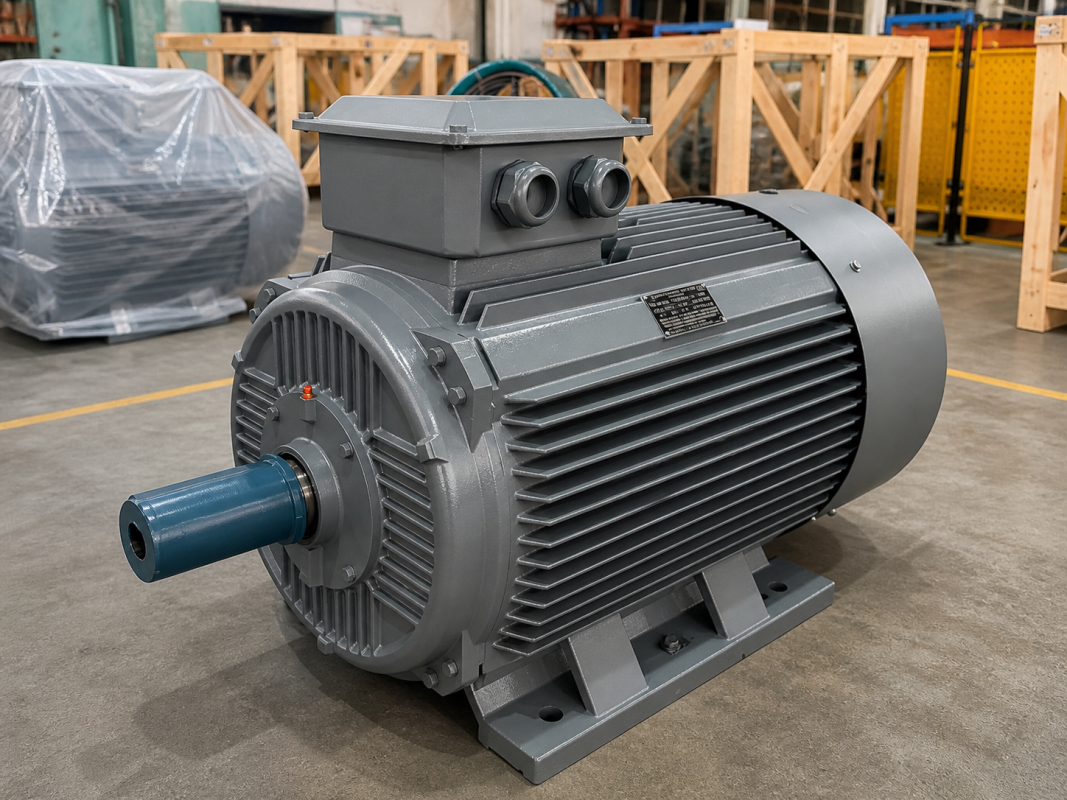

A soft starter limits the inrush current and mechanical shock of an induction motor by gradually raising the starting voltage instead of connecting the machine directly to the line. Yet mounting the device in the panel is not enough on its own; the real benefit only appears with correct parameter settings. When values such as ramp time, initial voltage, current limit and stop profile are not matched to the nature of the load, the motor either fails to start or loses every advantage that soft starting was meant to provide. In this article we cover, one by one, the soft starter parameters we encounter most often in the field at DRG Motor, how to set them for each load type, and the problems caused by incorrect settings.
What Does a Soft Starter Do?
A soft starter adjusts the voltage applied to the stator winding by phase-angle control through thyristors. It begins with a low voltage, so the inrush current and therefore the starting torque are limited. As time progresses the voltage is raised to its full value and the motor settles at its rated speed. To understand the basis of this behavior it helps to look at the topic of motor starting and inrush current, because every parameter actually exists to manage that current.
Why Initial Voltage Matters
The initial voltage is the percentage of voltage the motor sees at the very first instant. It is typically set between 30% and 50% of rated voltage. If chosen too low, the motor cannot produce enough torque at the start and the load will not move. If chosen too high, soft starting becomes meaningless and the current surge happens anyway.
Its Relationship with Starting Torque
In an induction motor, torque is proportional to the square of the voltage. So when you set the initial voltage to 50%, the motor produces roughly 25% of its full-voltage torque. This simple relationship explains why some loads cannot start at all with a low initial voltage. If the load's starting torque requirement is high, the initial voltage must be raised as well. This is the essence of parameter setting in practice: give the motor enough voltage to produce sufficient torque, but keep the voltage low enough to limit current. This balance varies from load to load, and the correct setting is only possible when the load's breakaway torque is known.
The Voltage, Current and Torque Triangle
In soft starter setup, three quantities are linked: applied voltage, drawn current and produced torque. When you lower the voltage, the current drops too, but the torque falls much faster, in a squared relationship. That is why reducing the current by half cannot be done by trimming the voltage a little; as you cut the voltage, the torque erodes rapidly. Understanding this triangle lets you know which parameter you are changing and why. Picturing the motor's torque-speed curve and the load curve on the same graph shows whether enough accelerating torque remains at every speed throughout the start.
Ramp Time (Start Ramp)
The ramp time is the time it takes for the voltage to rise from its initial value to full value. A short ramp means a fast but harsh start; a long ramp is softer but holds the motor at low voltage for a long time. In the field at DRG, ranges of 10-20 seconds are common in pump and fan applications, and 5-15 seconds in conveyors. The article on motor selection by load type guides the choice based on load type.
If the Ramp Time Is Too Short
When the ramp is set too short, the soft starter behaves almost like direct-on-line starting. The inrush current stays high, the mechanical shock is not reduced, and the device is assumed to provide protection when in reality it does not. This is especially common with high-inertia loads.
If the Ramp Time Is Too Long
An excessively long ramp keeps the motor for a long time in the low-voltage, high-slip region. This causes the windings to heat up. Since the motor keeps drawing current continuously before reaching full speed, the thermal protection may trip. The correct time is the shortest reasonable value at which the motor can complete its start.
Current Limit
The current limit is the parameter that prevents the current drawn during start from exceeding a defined ceiling. It is generally set between 3 and 4 times the rated current. This setting is critical for protecting the grid and transformer and for limiting voltage drop.
If the Current Limit Is Too Low
If the current limit is pulled below the starting torque the motor needs, the motor cannot reach the desired speed and gets stuck in a stall condition. In this case the current stays fixed at the limit, the motor does not accelerate, and protection eventually trips. This is a frequent mistake with high-inertia loads.
How Current Limit and Ramp Work Together
In modern soft starters the voltage ramp and the current limit are active at the same time. As the motor accelerates the voltage rises; if the current hits the limit, the device temporarily brakes the voltage increase. Choosing these two parameters in harmony is the key to a smooth start.
The Kick-Start (Torque Pulse) Function
Some loads demand very high breakaway torque at the first instant due to sticking (friction). Kick-start (or pulse start) gives the motor a brief high-voltage pulse during the first few hundred milliseconds of the start to break the load loose, then switches to the normal ramp. It is useful with loads such as conveyors and mixers.
When Kick-Start Should Not Be Used
For loads with low breakaway torque such as pumps and fans, kick-start is unnecessary; in fact, in water pumps it can cause a pressure surge (water hammer). This function should be enabled only when it is truly needed.
Stop Ramp (Soft Stop)
A soft starter can soften not only the start but also the stop. In the stop ramp the voltage is gradually reduced. This is especially important in pump systems; a sudden stop causes water hammer and pipe damage, while a soft stop prevents this.
Parameter Setting for Pump Loads
Centrifugal pumps require low starting torque. The initial voltage should be moderate, the ramp of medium length, and soft stop must be active. To prevent water hammer, the stop ramp can be kept longer than the start ramp.
Setting for Fan and Blower Loads
Fans are high-inertia loads; their initial torque is low but acceleration takes a long time. For this reason the ramp time should be long and the current limit reasonable. Because the blade inertia is large, the start cannot be completed if the ramp is too short.
Setting for Conveyor Loads
In conveyors the load is treated as constant torque and reducing mechanical shock is the priority. Here kick-start is useful to overcome sticking, and soft stop to prevent belt jerking. For conveyor applications, the motor selection by load type approach also determines the parameter choice.
Compressors and Loads Demanding High Torque
Reciprocating compressors may require starting under load and have high breakaway torque. For these loads the initial voltage is kept high, kick-start may be needed, and the current limit should not be reduced too much. Otherwise the motor remains in a stall condition.
Typical Starting Values by Load Type
| Load Type | Initial Voltage | Ramp Time | Current Limit | Soft Stop |
|---|---|---|---|---|
| Centrifugal pump | 30-40% | 10-20 s | 3-3.5x | Recommended |
| Fan / blower | 40-50% | 15-30 s | 3.5-4x | Not needed |
| Conveyor | 40-50% | 5-15 s | 3.5-4x | Recommended |
| Compressor (under load) | 50-60% | 5-10 s | 4x | Not needed |
These values are a starting point; fine tuning should be done by monitoring current and time in the field. The ranges in the table are kept wide because, even within the same load type, inertia, pulley ratio and friction conditions change the result significantly. Placing your application in the table and starting from the middle, then moving up or down according to the current measurement, is the safest method. Never rely on default values alone; every plant is unique.
Bypass Contactor and Continuous Operation
After the motor reaches full speed, keeping the thyristors continuously conducting produces heat and losses. The bypass contactor disconnects the thyristors when the start is complete and connects the motor directly to the line. Most soft starters operate with an internal or external bypass; this matters for device life and efficiency.
Thermal Protection and Parameters
Because soft starters measure the motor current, they offer built-in overload protection. Entering the motor's rated current correctly is essential. To go deeper into this topic, the article on electric motor overload protection is complementary.
The Advantages Soft Starting Provides
A correctly set soft starter reduces mechanical wear, limits the grid shock and lowers maintenance cost. For the details of these advantages, you can look at the article on soft starting advantages for electric motors.
Difference Between Soft Starter and Frequency Inverter
A soft starter controls only the start and stop; it cannot change the speed during operation. If continuous speed adjustment is needed, a frequency inverter is required. For the energy-saving dimension, the article on energy saving with a frequency inverter offers a comparison.
Symptoms of Incorrect Settings
If the motor cannot start, the protection keeps tripping, or the start is too harsh or too slow, the parameters are wrong. A stall symptom usually indicates a low current limit or low initial voltage. Overheating, on the other hand, is mostly caused by an excessively long ramp.
What to Watch During Commissioning
During the first commissioning, measure the current and the start time. If the inrush current is constantly held at the limit, review the ramp or the limit. If the motor picks up speed quickly but there is a current surge, the initial voltage is too high.
Phase Sequence and Connection Check
Before commissioning the soft starter, make sure the phase sequence and terminal connection are correct. A wrong connection causes the motor to run in reverse or the device to fault. Just as important as the inrush behavior covered in inrush current, mechanical connection discipline matters. Balanced loading of all three phases is necessary so the thyristors heat evenly.
Data Logging and Monitoring
Advanced soft starters keep the current profile and duration of the last start in memory. Recording this data regularly lets you see how the site changes over time. A gradually lengthening start time can indicate bearing wear, and rising current can point to load imbalance. The habit of monitoring is the most practical way to catch a fault before it forms, and it also shows when the parameters need updating.
Compatibility with Mechanical Transmission
Soft starter parameters protect not only the motor but also the transmission components. A soft start is critical for reducing shock in gearboxes and couplings. When motor-gearbox compatibility is set up correctly, the parameters also yield more stable results.
The Standard Approach in Industrial Plants
A consistent parameter policy across the plant makes spare-part and maintenance management easier. Using similar setting templates for similar loads reduces the margin of error. In the selection of industrial electric motors, the starting strategy should be planned from the outset.
Common Mistakes in Parameter Setting
The most common mistake is continuing to run with the factory default values. The second is putting the motor into a stall by cutting the current limit too far. The third is causing water hammer by neglecting soft stop on a pump. The fourth is using a short ramp on fans and failing to complete the start.
Maintenance and Periodic Inspection
Soft starter settings should be reviewed over time because of load changes or mechanical wear. The inrush current should be measured at least once a year, and the start time should be recorded. An increase in these values can be an early warning of a mechanical problem. Dust buildup on the thyristor heatsinks, the contact condition of the bypass contactor and fan operation should also be checked regularly; because when these components degrade, the device can behave unexpectedly even if the parameters are correct.
The Effect of Ambient Conditions on Parameters
Soft starters are rated for a certain ambient temperature. In hot panels or at high altitude the current-carrying capacity drops; this strains the device in applications that start frequently with long ramps. If the number of starts per hour is high, the ramp time may need to be kept short and the device selected one size larger. The starting frequency of the application must always be considered before commissioning.
Number of Starts and Thermal Budget
Each start produces heat in both the motor and the soft starter. During the time spent at low voltage, the motor draws a high slip current and the winding heats. In applications that need many starts per hour, the ramp time should be shortened and a cooling margin left between starts. When the thermal budget is exceeded, neither the motor nor the device lasts long; therefore, when setting parameters, not only a single start but the entire duty cycle should be considered.
Fine Tuning of Soft Stop Parameters
In a soft stop you must set not only the stop time but also the stopping voltage level. In a pump application, if the voltage is lowered too quickly the water column reverses and the check valve slams shut. The stop ramp should be chosen long enough to let the flow taper off slowly. In a conveyor, soft stop prevents the carried material from being thrown forward due to inertia. In every application, the stop profile must be handled with as much care as the start profile.
Grid Quality and Voltage Drop
In plants fed by weak or long lines, the voltage drop at the moment of start affects other equipment. The soft starter's current limit exists precisely to keep this drop under control. Choosing the current limit correctly ensures that sensitive devices fed from the same busbar are not affected at the moment of start. In this respect, parameter setting concerns not just the motor but the electrical stability of the entire plant.
Correct Motor Selection Makes Setting Easier
When a motor that properly meets the load is selected, parameter setting becomes much easier. A drive that correctly establishes the relationship between power, torque and speed places less burden on the soft starter. On this matter, inrush current and load analysis must be evaluated together.
DRG Motor for Soft Starting Solutions
DRG Motor designs its AC induction motors to work in harmony with soft starters and determines the right starting strategy for your application together with you. Whether pump, fan, conveyor or compressor; for every load we extend your motor's life and reduce grid shock with the correct initial voltage, ramp and current limit. To plan your project's starting parameters together and select the right motor, get in touch with the DRG Motor team; with our field-proven setting templates, let us get your system running correctly the first time.