 English
 Türkçe

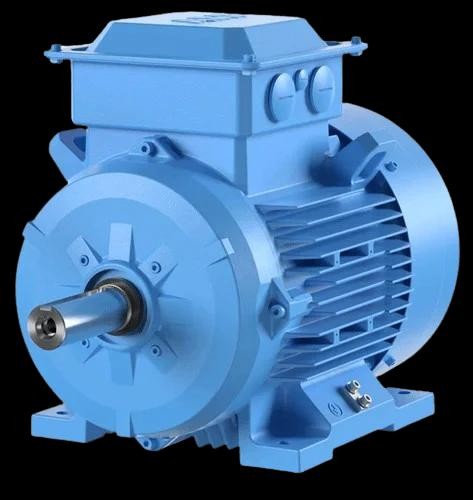

If the heart of an electric motor is the rotating rotor, then the hero that allows that rotor to turn quietly and trouble-free is the bearing. This small part, often overlooked, directly determines the motor's service life, quietness, and reliability. A wrongly selected or poorly maintained bearing can drag even the highest-quality motor into failure in a short time. In this article we cover the bearing's role in electric motors, the main bearing types, their relationship with load direction, lubrication and speed limits, and the criteria for the right bearing selection. For a broad look at the basics, our what is an electric motor article is a good starting point.
The Bearing's Role in the Motor
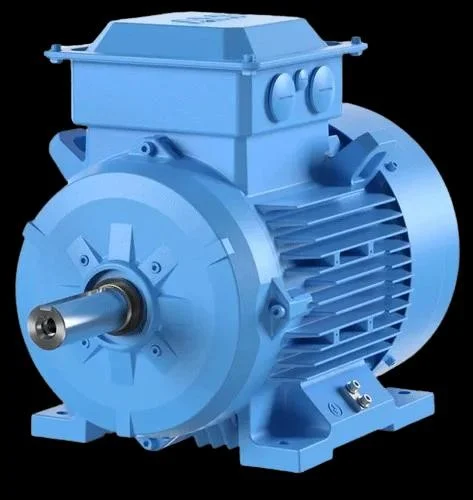
The bearing's basic role is to support the rotating shaft relative to the fixed housing with low friction and to transfer the loads on the shaft to the housing. In induction motors, the shaft is carried by two bearings: one on the drive (coupling) side and one at the rear. Without a bearing, the friction between the shaft and the housing would lead to both great energy loss and rapid wear. The bearing turns this friction into rolling contact, thereby increasing efficiency and allowing the motor to run for decades. For this reason, the bearing is, in a sense, the motor's silent backbone.
The Basic Operating Logic of Bearings
A bearing consists of an inner ring, an outer ring, rolling elements (balls or rollers), and a cage that keeps them in order. As the shaft turns the inner ring, the rolling elements roll between the two rings, so sliding friction gives way to the much lower rolling friction. This simple but ingenious principle lies at the foundation of modern motors. Whether the rolling element is a ball or a roller determines the load the bearing can carry and the application it is suitable for.
Load Direction: Radial and Axial
One of the most critical topics in bearing selection is load direction. The load acting perpendicular to the shaft is called radial load, while the load acting along the shaft axis is called axial load. A belt-pulley system puts a large radial load on the shaft, while a vertically mounted pump can create an axial load. Each bearing type carries these two load types to different degrees. The right bearing selection comes from correctly understanding which direction and magnitude of load the application produces.
Ball Bearings
The most commonly used type in electric motors is the deep-groove ball bearing. These can carry both radial and moderate axial loads, are suitable for high speeds, have low friction, and are economical. The vast majority of standard induction motors operate with deep-groove ball bearings on both sides. Quiet operation, long service life, and a wide application range make these bearings the default choice. They are an ideal solution for most medium-load pump, fan, and general drive applications.
Roller Bearings
In applications involving high radial loads, cylindrical roller bearings come into play. Since rollers offer a much larger contact area than balls, they carry heavy radial loads much better. In motors where large belt tensions are applied or heavy loads are driven, roller bearings are preferred on the drive side. However, roller bearings are not as suitable as ball bearings for carrying axial loads; for this reason, a roller bearing on one side and a ball bearing on the other are usually used together.
Angular Contact Bearings
In applications where both radial and strong unidirectional axial loads are present together, angular contact bearings are used. In these bearings, the rolling elements contact the rings at a certain angle, allowing them to carry axial load effectively. They are usually used in pairs. Vertically mounted motors and special applications that create high axial thrust benefit from this bearing type. When operated with the right preload, they offer a precise and durable solution.
Self-Aligning Bearings
In cases where small angular misalignments between the shaft and the housing are inevitable, self-aligning bearings provide an advantage. These bearings are tolerant of slight shaft bending or imperfect alignment of the housings. In applications where long shafts or alignment errors may be present, self-aligning bearings compensate for misalignment and preserve bearing and shaft life. However, instead of fully compensating for misalignment, it is always better to base things on proper alignment; on this subject our shaft-coupling alignment article is a useful guide.
Bearing Type Selection Table
The table below summarizes the main bearing types in terms of the load they carry, speed suitability, and typical use. This table is a starting guide; the final selection should always be made according to the specific conditions of the application.
| Bearing Type | Load Characteristic | Speed Suitability | Typical Use |
|---|---|---|---|
| Deep-groove ball | Radial + moderate axial | High | General-purpose motors |
| Cylindrical roller | High radial | Medium-high | Heavy belt load, large motors |
| Angular contact | Radial + unidirectional axial | Medium-high | Vertical mounting, axial thrust |
| Self-aligning | Radial, misalignment-tolerant | Medium | Long shaft, alignment risk |
| Paired ball | Balanced radial-axial | High | Special drive arrangements |
Speed Limit and Speed Relationship
Every bearing type has a speed limit at which it can safely operate. Ball bearings are generally suitable for higher speeds; roller bearings carry high loads but have a relatively low speed limit. The motor's pole count, and therefore its speed, directly affects bearing selection. Bearing selection in a high-speed two-pole motor can differ from that in a low-speed multi-pole motor. We covered the relationship between pole count and speed in our pole count and speed article.
The Importance of Lubrication
One of the most critical factors determining a bearing's life is lubrication. Lubrication forms a thin film between the rolling elements and the rings, preventing metal-to-metal contact. Insufficient lubrication leads to rapid wear, while excessive lubrication leads to heating. The wrong grease type or mixing different greases also disrupts lubrication performance. The right grease, the right amount, and the right interval are the three fundamental pillars of bearing life. We covered the details of lubrication and the ways to extend bearing life in depth in our extending bearing life article.
Sealing and Protection
One of a bearing's greatest enemies is contamination. When dust, moisture, and foreign particles get inside the bearing, they scratch the rolling surfaces and accelerate wear. For this reason, bearings are usually protected with sealed or shielded types. In motors operating in dusty or humid environments, sealing is even more important. The right protection class and a suitable sealing solution keep the bearing clean and long-lived.
Factors Affecting Bearing Life
A bearing's life does not depend on a single factor. Load magnitude, speed, lubrication quality, operating temperature, alignment, and environmental cleanliness together determine its life. When any of these factors is neglected, the bearing fails far earlier than expected. For example, even a correctly selected bearing can be used for only a small portion of its life due to poor alignment or insufficient lubrication. For this reason, bearing selection must be addressed as part of a whole.
The Effect of Vibration on Bearings
Vibration is an insidious threat to bearings. An unbalanced rotor, a misaligned coupling, or a loose mounting puts continuously changing loads on the bearing and fatigues it. Moreover, vibration also leads to the breakdown of the lubrication film, accelerating wear. For this reason, keeping vibration under control directly extends bearing life. We covered practical ways to reduce vibration in our reducing noise and vibration article.
Symptoms of Bearing Faults
A bearing usually gives signs before it fails: a high-pitched or irregular noise, increased vibration, and local heating in the bearing region. When these symptoms are caught early, the bearing can be replaced with a planned maintenance and a major failure is prevented. If left too late, the bearing can seize completely and the shaft and its housing can also be damaged. Monitoring these symptoms systematically is an important part of predictive maintenance; we detailed the topic in our predictive maintenance article.
Electrical Effects and the Bearing
Especially in motors driven by a frequency inverter, electrical voltages that can form on the shaft may lead to currents flowing through the bearing. These currents cause microscopic damage to the bearing surfaces and wear over time. To reduce this effect, insulated bearings or suitable grounding solutions can be used. This topic shows why, in modern variable-speed drive systems, bearing selection is not only a mechanical but also an electrical matter.
Mounting and Correct Placement
Even the highest-quality bearing fails quickly when mounted incorrectly. Seating the bearing on the shaft and in the housing with the correct fit tolerance, not subjecting it to impact during mounting, and installing it with the right tools are of great importance. A bearing forced with a hammer can be damaged before it is even installed. Correct mounting is an invisible but decisive part of bearing life. Checking sound and temperature during the first start after mounting reveals a possible mounting error early.
The Effect of Rotor Type on the Bearing
The motor's rotor type also affects bearing load. The mass distribution and balance characteristics of squirrel-cage and wound rotors can differ, which changes the load on the bearing. We examined the differences between rotor types in our squirrel cage vs wound rotor motor article. Also, to understand slip, the fundamental operating phenomenon of the induction motor, our induction motor slip article is useful.
Bearing Selection According to Application
Choosing the right bearing begins with answering a few questions: In which direction and at what magnitude does the application produce load? How high is the motor's speed? Is the operating environment dusty or humid? Is the mounting horizontal or vertical? The answers to these questions largely determine the right bearing type. You can find the common application areas of three-phase motors in industry in our three-phase motor in industry article, and general maintenance steps in our electric motor maintenance steps article.
Operating Temperature and the Bearing
The bearing's operating temperature is a critical factor that directly affects its life. High temperature changes the fluidity of the grease and leads to thinning of the lubrication film, which increases the risk of metal-to-metal contact. In an overheating bearing, the grease degrades over time and becomes unable to perform its protective duty. The cause of rising temperature is sometimes not the bearing itself but the general heating of the motor; overload, insufficient cooling, or ambient temperature can indirectly strain the bearing. For this reason, monitoring bearing temperature gives valuable information about both bearing and motor health. Exceeding temperature limits means shortened grease replacement intervals, and this should be reflected in the maintenance plan.
Grease or Oil?
There are two basic options in bearing lubrication: grease and oil. Grease is preferred in the vast majority of electric motors, because it stays in place, helps with sealing, and is simple to maintain. In special applications running at very high speed or very high temperature, oil lubrication may come into play. Oil distributes heat better and provides lower friction at high speeds; however, it is more complex because it requires a sealing and supply system. For most standard industrial motors, a correctly chosen grease is the most practical and reliable solution. In grease selection, the temperature range, speed, and load conditions should be evaluated together.
Clearance and Preload
A topic often overlooked in bearing selection but decisive for performance is bearing clearance. Every bearing has a certain radial and axial clearance between its inner ring, outer ring, and rolling elements. If this clearance is too large, the motor runs noisily and with vibration; if it is too small, the bearing heats up and its life shortens. The thermal expansion of the shaft as it heats during operation also changes the clearance; for this reason, the mounting clearance is selected with operating conditions in mind. In some applications, a deliberate preload is applied to the bearing; this reduces vibration and increases rigidity, especially in arrangements requiring precise positioning and high axial load. The right balance of clearance and preload is the hidden key to quiet and long-lived operation.
Spare Bearings and Stock Management
Keeping the right spare bearing in stock for critical motors shortens unexpected downtime. When a bearing fails, having the right type on hand can reduce maintenance time from hours to minutes. For this reason, recording the bearing information of motors and keeping spares for critical applications is part of a smart maintenance strategy. A temporary replacement made with the wrong bearing, on the other hand, brings the problem back in a short time.
Points to Watch in Bearing Replacement
Replacing a bearing is not merely removing the old one and installing the new one. Before the new bearing is installed, the housing surface, shaft, and seal areas must be carefully cleaned and checked for wear. The failure mode of the old bearing is also a valuable clue; even wear indicates normal life, while local damage indicates a misalignment or lubrication problem. The new bearing must be installed with the right tools, by heating or a suitable press method, and without impact. After replacement, the correct amount of grease should be applied and the motor observed for sound, temperature, and vibration during the first start. This care ensures the new bearing delivers its full life and prevents faults that recur in a short time.
A Practical Summary of the Right Choice
Bearing selection is a silent decision that determines the motor's life. Analyzing the load direction correctly, selecting the type suitable for the speed, planning the right lubrication, and performing the correct mounting; when these four steps are applied together, the bearing becomes one of the motor's most reliable parts. When neglected, it turns into the most frequent source of failure. The right choice both preserves energy efficiency and lowers maintenance cost.
The Right Bearing Solution with DRG Motor
At DRG Motor, in the AC induction motors we produce in IE3, IE4, and IE5 efficiency classes, we carefully select the bearing type suitable for the load and speed conditions of each application. The right bearing, the right lubrication, and the right mounting are the foundation of the long and quiet operation of the motors we produce. If you want to plan the most suitable motor and bearing solution for your application together, extend the bearing life of your existing motor, or make the right choice for a demanding application, you can get in touch with the DRG Motor team. Explore more on our homepage.