 English
 Türkçe

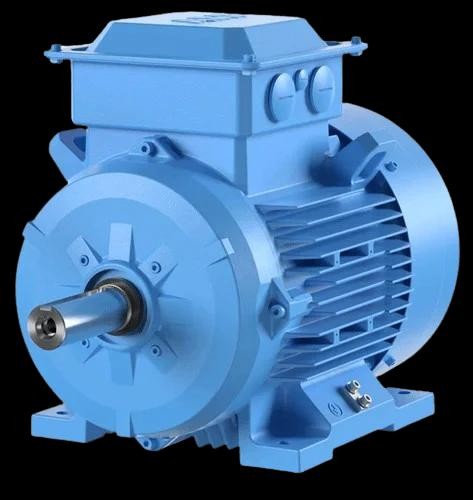

Induction motors are the most widely used sources of motion in industry, and at the heart of how these motors work lies the concept of slip. An induction motor can only produce torque because its rotor turns at a slightly different speed than the rotating magnetic field; that very speed difference is slip. Without slip, an induction motor produces no torque and therefore cannot drive a load. In this article we examine step by step what slip is, how it is calculated, which factors change it, and why it matters so much in practical engineering decisions. To build a stronger foundation, we also recommend reading our article on what is an electric motor.
What Is Slip?
Slip is the ratio between, on one hand, the difference of the rotating magnetic field speed in the stator (synchronous speed, Ns) and the actual rotor speed (Nr), and on the other hand the synchronous speed itself. In an induction motor the rotor can never quite catch the rotating field, because if the rotor turned at exactly field speed, the change in magnetic flux cutting the rotor conductors would be zero, the induced current would vanish, and torque would drop to zero. This is precisely why induction motors are also called induction machines: the rotor current is induced as a function of relative motion, that is, of slip.
Slip is usually expressed as a percentage. In a motor running unloaded the slip is very small (typically around 0.1-0.5%), while under full load the slip rises (typically between 2% and 6%). This seemingly tiny value directly governs the motor's behaviour, its efficiency and its heating.
How to Find Synchronous Speed (Ns)
To understand slip we first need to know the synchronous speed. Synchronous speed is the rotational speed of the magnetic field the stator produces, and it depends only on the supply frequency (f) and the number of motor poles (p). The formula is: Ns = 120 × f / p, where f is the frequency in hertz and p is the total pole count. In countries with a 50 Hz supply, the pole count becomes the single variable that fixes synchronous speed. Our article on electric motor pole count and speed explores this relationship in greater depth.
Synchronous Speed by Pole Count (50 Hz)
The table below shows synchronous speeds for various pole counts on a 50 Hz supply. These figures are your reference point when interpreting the speed printed on the motor nameplate; the actual nameplate speed is always slightly below this synchronous speed, and the difference is the slip.
| Pole Count | Synchronous Speed (rpm) @ 50 Hz | Typical Full-Load Speed (rpm) | Approx. Slip |
|---|---|---|---|
| 2 poles | 3000 | 2850-2950 | 1.7-5% |
| 4 poles | 1500 | 1420-1470 | 2-5.3% |
| 6 poles | 1000 | 940-980 | 2-6% |
| 8 poles | 750 | 700-735 | 2-6.7% |
| 10 poles | 600 | 560-585 | 2.5-6.7% |
| 12 poles | 500 | 465-485 | 3-7% |
The Slip Formula: s = (Ns − Nr) / Ns
The basic slip formula is quite simple. Slip (s) is found by dividing the difference between synchronous speed and rotor speed by the synchronous speed: s = (Ns − Nr) / Ns. To convert the result to a percentage we multiply by 100. Some references express slip in per-unit form between 0 and 1; at synchronous speed s = 0, and when the rotor is stationary (at the moment of starting) s = 1.
Step-by-Step Slip Calculation (Example)
Suppose a 4-pole, 50 Hz induction motor lists a full-load speed of 1450 rpm on its nameplate. The synchronous speed is Ns = 120 × 50 / 4 = 1500 rpm. The slip is s = (1500 − 1450) / 1500 = 50 / 1500 = 0.0333, that is 3.33%. This means that at full load the motor runs about 3.3% below synchronous speed. If the same motor runs at half load, the speed may rise to 1475 rpm and slip falls to 1.67%, because slip is a dynamic quantity that changes with load.
Slip Speed and Rotor Frequency
Slip is not merely a ratio; the slip speed (Ns − Nr) directly determines the frequency of the current induced in the rotor. Rotor frequency is calculated as fr = s × f. At the moment of starting s = 1, so the rotor frequency equals the supply frequency (50 Hz). As the motor accelerates, slip shrinks and rotor frequency drops to just a few hertz. This explains why rotor losses and heating are especially high during starting.
The Relationship Between Slip and Torque
The torque produced by an induction motor is directly related to slip. In the low-slip region (the normal operating range), torque increases roughly linearly with slip. In other words, as load increases the motor slows a little, slip grows, the induced rotor current rises, and the motor produces more torque. This self-balancing mechanism is what makes the induction motor so robust and useful. Torque keeps rising up to a certain slip value (the breakdown slip), at which point the motor produces its maximum torque.
Breakdown Torque and Critical Slip
Once slip exceeds a certain critical value (usually 15-20%), the torque the motor produces begins to fall. This maximum-torque point is called the breakdown torque. If the load exceeds this torque, the motor stalls. In well-designed industrial motors the breakdown torque is 2-3 times the rated torque; this safety margin prevents the motor from stalling during sudden load surges.
How Slip Varies With Load
Slip is not a fixed motor characteristic; it changes with load. In an unloaded motor slip is nearly zero. As load increases the motor slows and slip grows. This is why the speed printed on a motor's nameplate is the "full-load speed"; the real speed swings between that value and the synchronous speed according to the instantaneous load. In applications requiring precise speed control, this natural variation is managed by achieving energy savings with a frequency inverter.
What Does Full-Load Slip Percentage Mean?
A motor's "full-load slip" is the slip it has when running at rated load, and it usually lies between 1% and 6%. In small motors (for example 0.75 kW) slip is higher (5-7%), while in large motors (for example 200 kW) it is far lower (it can fall below 1%). Motors with low full-load slip are generally more efficient, because low slip means fewer rotor losses. That is why keeping slip low is one of the core goals in the design of high-efficiency electric motors.
Why Is Slip Necessary?
Intuitively one might think "slip looks like a loss, why not eliminate it?" Yet slip is essential for an induction motor to operate. If the rotor turned in perfect synchronism with the rotating field, the flux cutting the rotor conductors would not change, there would be no induction, no current would flow, and torque would be zero. Slip is therefore the physical prerequisite for an induction motor to produce torque. This is exactly what distinguishes it from a synchronous motor: a synchronous motor turns at synchronous speed thanks to external excitation, whereas an induction motor depends on slip.
What Does High Slip Lead To?
Excessively high slip is usually a sign of a problem. As slip rises, rotor losses (rotor copper losses) increase, and these losses are directly proportional to slip. High slip means more heating, lower efficiency and a shorter motor life. Overload, low supply voltage, phase imbalance or broken rotor bars can all increase slip. The quality of the rotor construction also has a direct effect; our article on copper-wound rotor electric motors offers detailed information on this.
Is Low Slip Always Good?
Low slip generally means high efficiency, yet in some applications high slip is deliberately desired. For example, in crane and lifting motors, a high-slip characteristic softens shock loads and provides a gentle start. High-slip motors are also preferred in shock-load applications such as presses, crushers and mills, because during sudden load surges the motor slows slightly and balances the energy through a flywheel effect.
Slip and Motor Efficiency
There is a close relationship between motor efficiency and slip. Rotor copper losses are approximately equal to the air-gap power multiplied by slip. So in a motor with 3% slip, rotor losses are about 3% of the transmitted power. As manufacturers move up to high-efficiency classes such as IE3 and IE4, they reduce full-load slip through higher-quality rotor material and optimised design. To read a motor's efficiency class from the nameplate, our article on electric motor nameplate information is a helpful guide.
How Is Slip Measured in Practice?
In the field, slip is found simply by measuring rotor speed with a tachometer or stroboscope and comparing it with the synchronous speed. For more precise measurement, the rotor frequency can be measured. Higher slip than expected can indicate that the motor is overloaded, that there is a supply problem, or that a mechanical or electrical fault is developing in the rotor. Regular slip measurement is a valuable part of predictive maintenance.
The Importance of Slip Frequency
The frequency of the current induced in the rotor, the slip frequency (fr = s × f), directly governs the motor's magnetic behaviour. At low slip frequency the rotor reactance is small, so rotor current consists largely of the active (torque-producing) component and the motor runs at high efficiency. At starting, slip frequency is high, so rotor reactance dominates, most of the current is reactive, and the torque produced per unit of current falls. This physical reality explains why, despite high current, starting torque remains limited with direct-on-line starting. This is exactly where the frequency inverter helps: by starting the supply frequency low, it keeps the slip frequency under control and allows high starting torque at low current.
Slip, Power Factor and Drawn Current
Slip affects not only speed and torque but also the current the motor draws from the supply and its power factor (cosφ). When unloaded, that is at very low slip, the motor draws mostly magnetising current, so the no-load power factor is quite low. As load and therefore slip increase, the active current component grows and the power factor improves. Near full load a well-designed induction motor reaches a power factor in the range of 0.80-0.88. This relationship explains why oversizing a motor reduces energy efficiency: a large motor runs at low slip under light load, and both power factor and efficiency suffer. Correct sizing, matching the motor to its load, keeps slip in the right range and limits reactive power consumption.
Slip and Soft Starting
At the moment of starting, slip is s = 1, and therefore the inrush current is very high (5-7 times the rated current). To reduce this high starting current and the mechanical shock, a soft starter or star-delta arrangement is used. We detailed the advantages of these methods in our article on electric motor soft-starting advantages. A frequency inverter, meanwhile, raises both frequency and voltage gradually at start-up, keeping slip under control.
The Balance of Slip and Power Transfer
In an induction motor, the power transferred from stator to rotor across the air gap splits into three parts: mechanical output power, rotor copper losses, and friction and windage losses. The product of the air-gap power and slip gives the rotor losses directly; the rest converts to mechanical power. This simple relationship clearly shows why slip is inversely related to efficiency. For example, in a motor transferring 10 kW across the air gap and running at 4% slip, about 0.4 kW turns to heat in the rotor while the remaining 9.6 kW is delivered to the shaft. Lowering slip reduces this loss, raising efficiency and letting the motor run cooler.
The Feedback Between Temperature and Slip
There is a two-way interaction between slip and temperature. As the motor heats up, the resistance of the rotor bars and windings increases; the higher resistance in turn raises slip for a given load. For this reason, the hot slip of a motor running at full load for a long time can be slightly higher than its cold slip. Designers account for this effect and size the motor so that it delivers the desired speed and efficiency at the expected operating temperature. The insulation class and cooling method are critical to maintaining this thermal balance.
Design Classes and Slip
In international standards, induction motors are divided into design classes according to their starting torque and slip characteristics. Low-slip designs offer constant speed and high efficiency, while high-slip designs provide high starting torque and resilience to shock loads. When selecting a motor for an application, not only power (kW) and speed but also this design characteristic must be considered. Low-slip efficient motors are the sensible choice for steady loads such as pumps and fans; high-slip motors are right for variable, shock-prone loads such as conveyors, crushers and cranes.
Managing Slip in Industry
When selecting a motor in an industrial plant, the application's slip requirement is taken into account. If constant speed and high efficiency are wanted, a low-slip standard motor is chosen; if shock loads and a gentle start are needed, a high-slip motor is selected. In three-phase motor in industry applications, choosing the right slip characteristic directly affects both energy cost and equipment life. For solutions across a wide kW and speed range, see our article on high and low kW motors.
Common Mistakes
The most common mistake regarding slip is to assume the speed on the nameplate is the synchronous speed. The 1450 rpm on the nameplate is the full-load speed of a 4-pole motor; the synchronous speed is 1500 rpm. The second common mistake is to think of slip as a fixed number; in fact slip changes continuously with load. The third is to consider high slip always bad; in some applications high slip is a desired feature.
Choosing the Right Slip Characteristic With DRG Motor
Slip in an induction motor is not just a theoretical concept but a practical design parameter that determines the motor's efficiency, heating, torque behaviour and lifespan. Selecting a motor with a slip characteristic suited to your application lowers both your energy bill and your maintenance costs. At DRG Motor we offer induction motor solutions for every need, from high-efficiency applications requiring constant speed to crane and crusher systems carrying shock loads. For the right kW, the right pole count and the right slip characteristic, you can review the DRG Motor products and get technical support from our expert team. For more technical content, visit our industrial electric motors resource or our homepage.