 English
 Türkçe

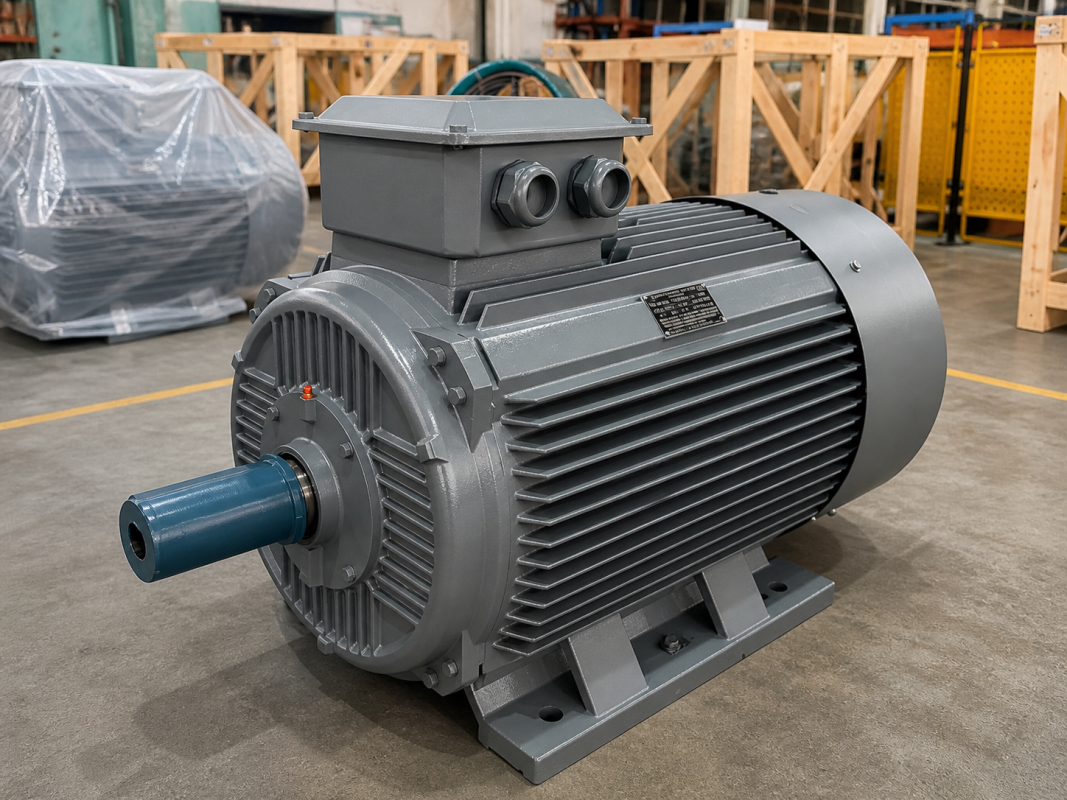

An electric motor is designed to run at the single voltage and frequency value written on its nameplate; however, in the real world the supply conditions never stay exactly fixed at these values. The voltage may drop a little, the frequency may shift slightly, an imbalance may arise between phases, or the motor may operate in a hot, high-altitude environment. Understanding the effect of these deviations on the motor and reducing its power when necessary (derating) is the foundation of a long-lived and efficient operation. At DRG Motor, our IE3, IE4, and IE5 efficiency-class asynchronous motors are designed to operate smoothly within certain tolerances; but knowing the limits of these tolerances and the logic of derating is the key to the right motor selection. In this article we examine in detail the voltage and frequency tolerances, the effect of imbalance, and the conditions that require derating.
Why Do We Need the Concept of Tolerance?
The supply is a living system in which countless consumers draw energy at the same time. As load increases the voltage falls, as load decreases it rises; the balance between generation and consumption also shifts the frequency by small amounts. For this reason no motor runs in a world where the value on its nameplate stays perfectly fixed. The concept of tolerance defines exactly a safety window for the motor against these real-world fluctuations.
What Are Rated Values?
The voltage, frequency, power, and current values written on the motor nameplate are called the rated values. These values define the design point at which the motor operates most efficiently and safely. For example, a motor labeled 400V, 50Hz, 7.5 kW is designed to produce its rated power with the expected efficiency under these conditions. As the supply deviates from these values, the motor's behavior also changes.
What Is Voltage Tolerance?
No supply voltage stays perfectly fixed; it fluctuates throughout the day depending on load. For this reason motors are designed to operate within a certain voltage tolerance. Standard asynchronous motors can usually run while maintaining their rated values within a range of ±10% of the rated voltage. Outside this range, efficiency, torque, and temperature are adversely affected.
The Logic of Voltage Tolerance
Voltage tolerance is not an arbitrary number; it is set so as to keep the motor's winding temperature within the limit permitted by the insulation class. The designer leaves a thermal safety margin for the motor by anticipating the expected voltage fluctuations. Thanks to this margin, the motor continues to operate safely even when the voltage drops or rises a little.
±10% Voltage Tolerance
A ±10% tolerance means that a motor labeled 400V can operate between roughly 360V and 440V. Within this range the motor performs its task; however, as it approaches the extremes, performance trade-offs begin. At low voltage the current and heat rise; at high voltage magnetic saturation and additional losses appear.
The Effects of Low Voltage
When the voltage drops, the motor must draw more current to produce the same power. Because power depends on the product of voltage and current, when voltage decreases the current increases. The increased current produces more heat in the windings. In addition, low voltage reduces the motor's starting and breakdown torque, because torque is proportional to the square of the voltage.
Torque Loss at Low Voltage
Because torque is proportional to the square of the voltage, a 10% voltage drop leads to roughly a 19% torque loss. This is a critical problem, especially for loads that require a difficult start. The motor may be unable to handle the load or may remain stuck at start, continuing to draw high current. We covered the topic of starting current in our article on starting current.
The Effects of High Voltage
When the voltage rises above the rated value, the motor's magnetic core begins to saturate. Saturation causes the magnetizing current to rise disproportionately and the core losses to increase. As a result the motor heats up again; this time the source is not copper loss but iron loss. Excessively high voltage also creates additional stress on the insulation.
Voltage and Frequency Deviation Table
We have gathered the basic effects of voltage and frequency deviations on the motor in the table below. This table lets you quickly see which deviation leads to what.
| Deviation | Current | Torque | Temperature | Efficiency |
|---|---|---|---|---|
| Low voltage | Rises | Falls | Rises | Falls |
| High voltage | Magnetizing current rises | Rises slightly | Rises | Falls |
| Low frequency | Rises | Rises | Rises | Varies |
| High frequency | Falls | Falls | Falls | Varies |
| Unbalanced voltage | Rises sharply | Fluctuates | Rises sharply | Falls |
What Is Frequency Tolerance?
The supply frequency can also show small fluctuations. Motors are usually designed to operate smoothly within a range of ±2% of the rated frequency. Because frequency directly determines the motor's synchronous speed, a change in frequency also changes the motor's speed. We covered the relationship between pole count and speed in our article on pole count and speed.
The Difference Between 50 Hz and 60 Hz
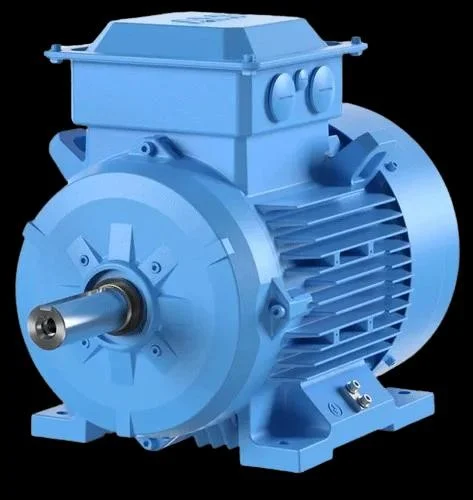
In different regions of the world the supply frequency can be 50 Hz or 60 Hz. When the same motor is run at 60 Hz its speed rises by about 20%, which affects the power of the connected load and the motor's behavior. A motor designed for 50 Hz turns faster at 60 Hz, but its torque characteristic changes. For this reason frequency is as important as voltage in motor selection.
The Effect of Frequency on the Magnetic Field
When frequency decreases, at the same voltage the magnetic flux density rises and the core approaches saturation. For this reason, if a motor is run at low frequency with high voltage, it draws an excessive magnetizing current and heats up. Inverters solve this problem by changing voltage and frequency proportionally (constant V/Hz ratio), so the magnetic flux stays balanced at every speed.
The Importance of the Volt/Hertz Ratio
The key to the healthy operation of an asynchronous motor is the ratio between voltage and frequency. As long as this ratio stays constant, the motor's magnetic balance is preserved and its torque stays stable. In supply-related deviations this ratio is disturbed; in inverter-driven operation it is deliberately kept constant. Understanding the Volt/Hertz logic is the key to grasping both supply deviations and inverter behavior.
Voltage and Frequency Deviating Together
In some cases voltage and frequency deviate together. Standards define a limit for this combined deviation as well. Usually the total deviation formed by voltage and frequency together must not exceed a certain value. The accumulation of both deviations in the same direction compounds the stress on the motor and severely reduces performance.
What Is Unbalanced Voltage?
In a three-phase supply the voltage of the three phases should ideally be equal. However, connecting unbalanced loads to the phases or line problems can create a voltage difference between phases. This situation is called voltage imbalance and is one of the most harmful supply problems for asynchronous motors.
The Harms of Unbalanced Voltage
Even a small voltage imbalance creates a disproportionately large current imbalance in the motor. As a general rule, a 1% voltage imbalance can lead to a 6-10% current imbalance. This causes the most heavily loaded phase to overheat. Unbalanced voltage also creates additional vibration and noise in the motor.
The Sources of Imbalance
Voltage imbalance most often arises from an unequal distribution of single-phase loads across the phases. Connecting many single-phase devices to one phase lowers that phase's voltage. In addition, loose connections, oxidized terminals, and line impedance differences also create imbalance. The first step in finding the source is to measure the voltage of the three phases one by one.
Derating in Imbalance
On a supply with voltage imbalance the motor's power must be reduced. For example, with an imbalance of around 3% the motor should be run at only a fraction of its rated power; otherwise the hottest phase burns the insulation. Until the source of the imbalance is found and removed, this derating is a temporary measure that protects the motor.
Measuring and Monitoring Imbalance
The most practical way to monitor voltage imbalance is to measure the voltages between the three phases regularly and track the difference between them. Modern protection relays can automatically stop the motor when the imbalance exceeds a certain threshold. This monitoring both protects the motor and reveals a hidden problem in the supply early.
Phase Loss: The Extreme Imbalance
The most extreme form of voltage imbalance is the complete loss of one phase. In this case the motor may continue running on two phases and burn out by heating up very quickly. Phase loss protection is therefore vital. We covered this topic in detail in our article on phase loss.
Temperature and Derating
Standard motors are usually designed for a 40 °C ambient temperature. In hotter environments cooling the motor becomes harder, so running it at rated power strains the insulation excessively. In this case the motor's power must be reduced or a motor suited to a higher temperature must be selected. We covered the monitoring of temperature in our article on temperature control.
Altitude and Derating
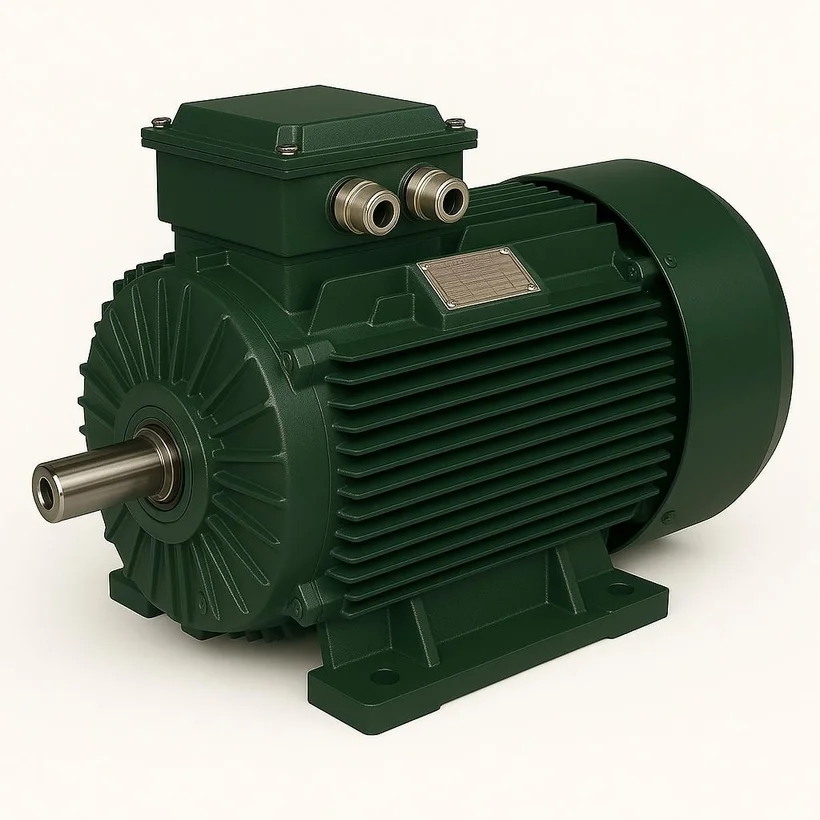
As altitude increases, air density decreases and cooling weakens. Standard motors are usually designed to run at full power up to 1000 meters. Above this altitude the motor's power must be reduced gradually. When high altitude and high temperature occur together, the derating effect compounds. We covered this topic in our article on ambient temperature and altitude.
Why Is Derating Necessary?
Derating is the way to protect the motor under harsh conditions. The aim is to keep the motor's winding temperature within the limit permitted by the insulation class. Reducing the power decreases the generated heat and thereby keeps the temperature in the safe zone. This is an engineering measure that extends the motor's life and prevents unexpected failures.
Calculating the Derating Factor
Derating is usually expressed as a reduction coefficient multiplied by the rated power. If both high temperature and high altitude are present, the coefficient of each is applied together and the total reduction is larger. For example, a coefficient of 0.9 for high temperature and 0.9 for high altitude together leave a usable power of about 0.81. This calculation shows how many kW of load the motor can carry under real conditions.
Preventing Derating with Correct Sizing
If the harsh conditions requiring derating are known from the outset, selecting a motor from one power class higher is usually the wiser solution. In this way the motor easily carries the rated load even under harsh conditions and preserves its thermal margin. Correct sizing prevents the overheating and power-shortage problems that would otherwise be experienced later.
Tolerance Under Continuous and Variable Load
A motor running continuously at constant load experiences the effect of tolerances constantly; a motor running at variable load is strained only at peak moments. For this reason the tolerance and derating assessment must be made according to the character of the load. Tolerances can be approached more strictly for motors running continuously at heavy load and somewhat more flexibly for those running at variable load.
The Relationship Between Insulation Class and Tolerance
A motor's capacity to withstand tolerances and temperature is closely related to its insulation class. A motor with a higher insulation class has a wider temperature margin and requires less derating under harsh conditions. We covered this relationship in detail in our article on insulation class.
Reading the Nameplate Information Correctly
The first step in understanding a motor's tolerances and which conditions it suits is reading the nameplate correctly. The nameplate states voltage, frequency, power, and sometimes the temperature class. This information tells whether the motor suits the supply and the environment. We covered this topic in our article on nameplate information.
Overload and Tolerance
Because a voltage or frequency deviation changes the current the motor draws, it also affects the overload protection setting. At low voltage the motor draws more current; in this case the thermal relay may trip unnecessarily, or if set incorrectly may fail to protect the motor. We covered this topic in our article on overload protection.
Voltage and Frequency Control with an Inverter
A frequency inverter ensures efficient operation over a wide speed range by controlling the voltage and frequency applied to the motor together. The inverter preserves torque by keeping the voltage-to-frequency ratio constant. In this way a stable operation independent of supply-related deviations is achieved. A frequency inverter also provides energy saving.
Soft Starting and Tolerance
When the supply voltage is low, starting becomes difficult, because low voltage reduces the starting torque. A soft starter eases starting by gradually increasing the voltage and brings the motor up to speed without strain. Soft starting thus protects motors operating at the limits of tolerance.
Protection Class and Environmental Conditions
The harsh environments requiring derating are often dusty or humid at the same time. For this reason, alongside the voltage and frequency tolerances, the right IP protection class must also be selected. The right protection class keeps the motor safe both physically and electrically in a harsh environment. We covered this topic in our article on IP protection class.
Tolerance and Derating in Industry
In industry motors often operate under non-ideal supply conditions. Long cables, many motors, and variable loads make voltage and frequency deviations inevitable. For this reason motor selection in industry must be made by accounting for tolerances and the necessary derating from the outset. In three-phase motor in industry applications, this foresight significantly reduces failures and downtime.
The Importance of Assessing Tolerances Correctly
If voltage and frequency tolerances are ignored, the motor ages silently and fails much earlier than expected even if it appears to run. A correct assessment means measuring the supply conditions, accounting for the ambient temperature and altitude, and reducing the power when necessary. This foresight ensures that the return on the motor investment is obtained over many years.
DRG Motor for the Right Tolerance and Derating
Voltage and frequency tolerances are critical parameters that determine how a motor will behave under real-world conditions. Motors designed within a ±10% voltage and ±2% frequency tolerance require derating outside these limits or in harsh environments. At DRG Motor, we evaluate our IE3, IE4, and IE5 efficiency-class asynchronous motors according to the supply and environmental conditions in which they will operate, offering a long-lived solution with the right power, the right insulation class, and the right derating. To determine the most suitable motor for your supply and environmental conditions together, you can review our industrial electric motors page. If you are curious about the working principle of electric motors, our what is an electric motor article is a good starting point.