 English
 Türkçe

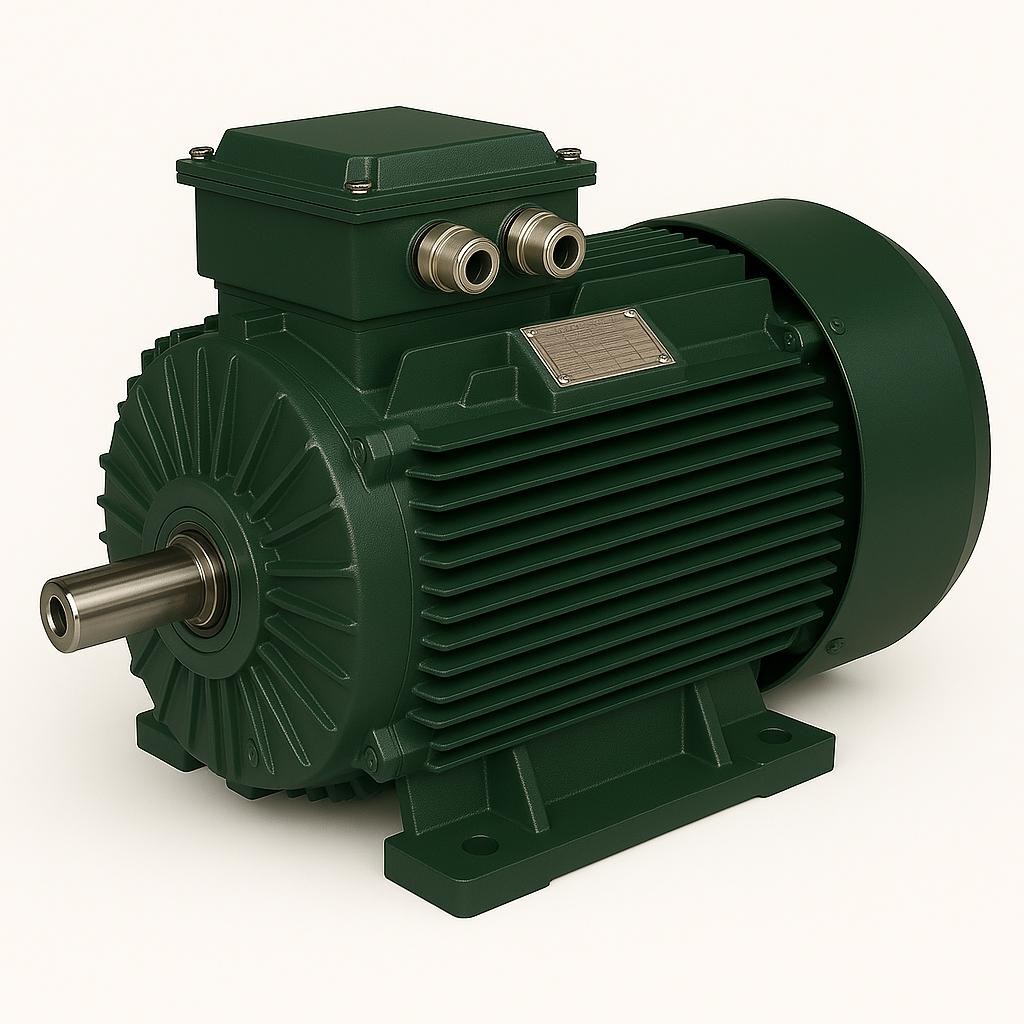

Induction motors are divided, by rotor construction, into two broad families: the squirrel cage (short-circuited bar) rotor and the wound rotor (slip-ring) motor. From the outside these two motor types look alike, but the internal structure of the rotor, and therefore their starting behaviour, controllability, cost and maintenance, are very different. To make the right motor choice, you need a clear understanding of how each rotor type works, its advantages and disadvantages, and which application suits which. In this article we compare the two rotor types side by side. For the basic concepts, our article on what is an electric motor is a good starting point.
The Role of the Rotor in an Induction Motor
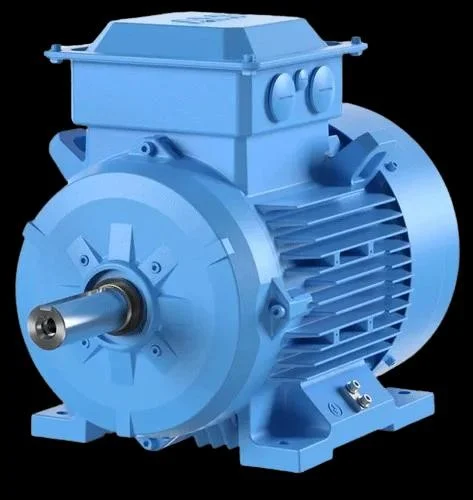
In an induction motor the stator produces the rotating magnetic field; the rotor produces torque from the current induced by that field. The structure of the stator is almost identical in both motor types. The real difference is in the rotor. How the rotor is built determines the motor's starting torque, starting current, speed-control capability and maintenance needs. So the question "squirrel cage or wound rotor?" is really an answer to an application's starting and control requirements.
What Is a Squirrel Cage Rotor?
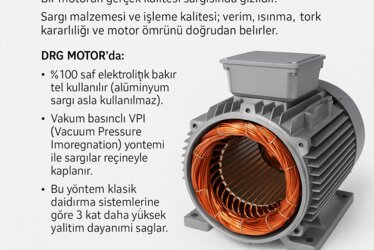
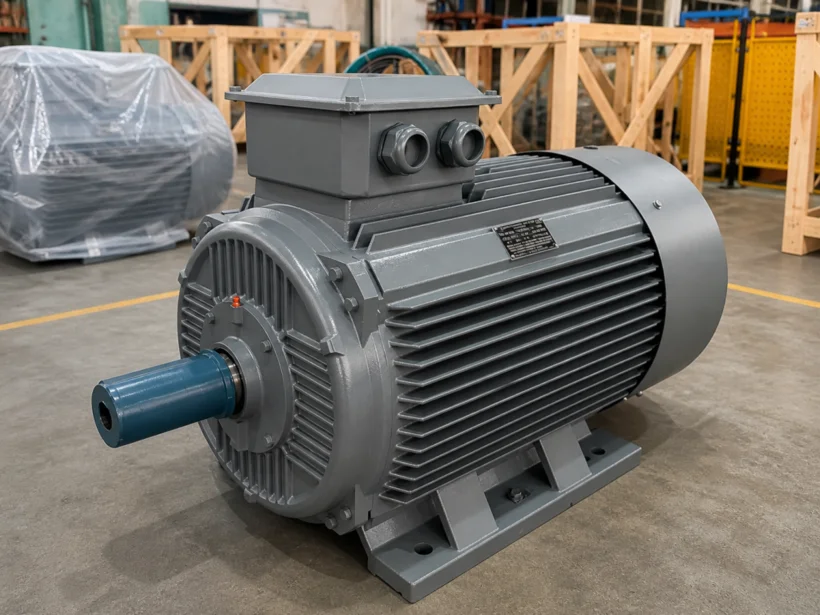
The squirrel cage rotor takes its name from its structure: aluminium or copper bars placed in the slots of the rotor core are joined at both ends by short-circuiting rings, forming a cage that resembles a squirrel's exercise wheel. These bars have no external connection; rotor current arises purely by induction. The structure is simple, robust and brushless. This simplicity makes the squirrel cage motor the most common, cheapest and lowest-maintenance type of electric motor. The vast majority of three-phase motor in industry applications use squirrel cage rotors.
What Is a Wound Rotor (Slip-Ring) Motor?
In a wound rotor motor the rotor has a three-phase winding, similar to the stator. The ends of this winding connect to slip rings mounted on the rotor shaft. Through brushes, these slip rings can be accessed externally and external resistors can be connected into the rotor circuit. This is the source of all the wound rotor motor's advantage: by adding resistance to the rotor circuit it is possible to increase starting torque, limit starting current and achieve a limited degree of speed control. This flexibility comes at the price of a more complex structure and more maintenance.
The Operating Principle of Both Rotor Types
In both motors the basic principle is the same: the stator produces a rotating field, current is induced in the rotor, and torque is created. The difference is whether the rotor circuit is accessible. In the squirrel cage rotor the circuit is permanently short-circuited and cannot be reached from outside. In the wound rotor the circuit is open to the outside; this allows high resistance to be connected during starting for high starting torque and low starting current, with the resistance gradually reduced as the motor accelerates. To better understand the slip-torque relationship, you can read our article on slip in an induction motor.
Squirrel Cage vs Wound Rotor Comparison Table
The table below compares the two rotor types across the most critical criteria. It can serve as a quick reference in your motor selection decision.
| Criterion | Squirrel Cage Motor | Wound Rotor Motor |
|---|---|---|
| Rotor structure | Short-circuited bars (cage) | Three-phase winding + slip rings + brushes |
| Starting torque | Medium (1.5-2.5x rated) | High, adjustable (2-3x rated) |
| Starting current | High (5-7x rated) | Low and controllable (2-3x) |
| Speed control | Limited (inverter needed) | Possible via rotor resistance |
| Maintenance | Very low (brushless) | Higher (slip ring + brush wear) |
| Cost | Low | High |
| Efficiency | High | Slightly lower (rotor loss) |
| Typical use | Pump, fan, conveyor, general industry | Crane, crusher, mill, high inertia |
The Difference in Starting Torque
When started direct-on-line, the squirrel cage motor produces a medium level of starting torque. In the wound rotor motor, the resistance added to the rotor circuit can substantially increase starting torque; the maximum torque can even be shifted to the very moment of starting. This makes the wound rotor motor advantageous in systems with high moment of inertia or that must start under load (for example loaded conveyors and mills). For lifting applications that demand high starting torque, our article on crane and lifting electric motors explores the subject further.
Starting Current and Grid Impact
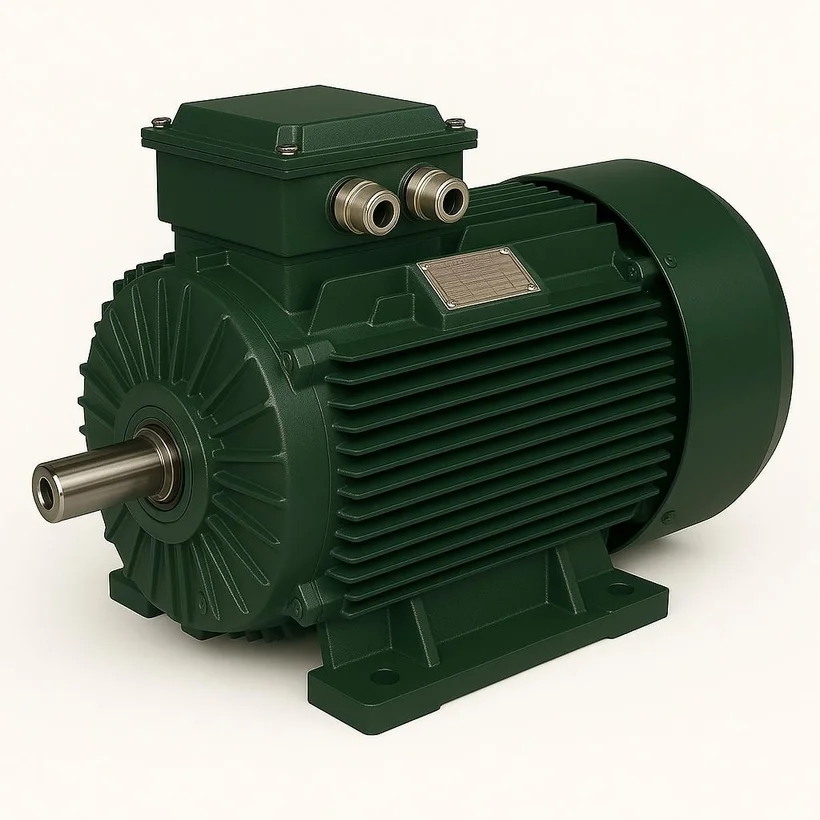
The biggest disadvantage of the squirrel cage motor is the very high starting current it draws direct-on-line; this current can reach 5-7 times the rated current and cause a voltage dip on the grid. For this reason, large squirrel cage motors use star-delta, a soft starter or a frequency inverter. The wound rotor motor, by contrast, naturally limits starting current thanks to rotor resistance; this is an important advantage on weak grids or at very high powers. For soft-starting methods, see our article on soft-starting advantages.
Speed Control Comparison
In the squirrel cage motor, speed is fixed by pole count and supply frequency; a frequency inverter is needed for variable speed. In modern applications, energy savings with a frequency inverter is the most common speed-control method. In the wound rotor motor, speed can be controlled within a certain range by varying the rotor resistance; however, since this method wastes energy in the resistors, it is not as efficient as an inverter. Today, with electronic drives becoming cheaper, the combination of squirrel cage motor plus inverter is now preferred in many applications requiring speed control.
Maintenance and Reliability
The squirrel cage motor's greatest advantage is that it has no brushes or slip rings. With no contact parts to wear, maintenance needs are minimal and reliability is very high. In the wound rotor motor, the brushes and slip rings must be checked regularly, worn brushes replaced and slip-ring surfaces kept clean. In dusty or humid environments the slip-ring/brush system adds a maintenance burden. So where long, low-maintenance operation is required, the squirrel cage motor stands out.
Cost Comparison
In terms of initial investment cost, the squirrel cage motor is clearly cheaper. Its simple structure, suitability for mass production and standard nature keep costs down. Because the wound rotor motor requires an additional winding, slip rings, a brush mechanism and an external resistor bank, both its purchase and operating costs are higher. When total cost of ownership is calculated, in most standard applications the squirrel cage motor plus inverter solution is more economical than a wound rotor motor.
The Difference in the Torque-Slip Curve
The most fundamental behavioural difference between the two rotor types appears in the torque-slip curve. In the squirrel cage motor, the maximum torque (breakdown torque) occurs at a low slip value, and the starting torque stays below this maximum. In the wound rotor motor, adding external resistance to the rotor shifts the torque-slip curve to the right; the maximum torque can thus be brought to the very moment of starting (s=1). This lets the motor start smoothly and powerfully even at full load and high inertia. After starting, the resistance is gradually reduced to draw the motor to its high-efficiency normal operating point. This curve flexibility is the wound rotor motor's core advantage in heavy starting applications. Our article on slip in an induction motor complements this topic.
Efficiency and Energy Consumption
Squirrel cage motors are generally more efficient; efficiency is especially high in copper-bar, optimised-design models. In the wound rotor motor, when run with rotor resistance, energy turns to heat in those resistors and efficiency falls. In continuously running applications where energy cost matters, a squirrel cage motor chosen from among high-efficiency electric motors delivers serious long-term savings.
Which Application Calls for a Squirrel Cage Motor?
The squirrel cage motor is the first choice in nearly all pump, fan, compressor, conveyor, machine-tool and general industrial drives. It is ideal wherever starting is done unloaded or under light load, constant speed is wanted and low maintenance matters. If variable speed is needed, adding an inverter meets that requirement too. Squirrel cage motors are the backbone of the world of industrial electric motors.
Which Application Calls for a Wound Rotor Motor?
The wound rotor motor is preferred in heavy-industry applications with high moment of inertia that must start under load and demand high starting torque. Cranes, large crushers, mills, compressors and long conveyor lines are typical examples. In these applications the need to limit starting current and control starting torque justifies the wound rotor motor's extra cost and maintenance. For the importance of rotor winding quality, see our article on copper-wound rotor electric motors.
Noise and Vibration Comparison
There are also differences between the two types in operating noise and vibration. In squirrel cage motors, when the cage geometry (bar count, slot skew) is well designed, magnetic noise can be kept low; slot skewing is a common method that reduces torque ripple and hum. In wound rotor motors, brush-slip ring contact can be an additional source of mechanical noise and sparking; noise and vibration rise especially when brushes wear or the slip-ring surface deteriorates. In environments where quiet operation matters, this difference puts the squirrel cage motor a step ahead. In both types, balance, bearing condition and mounting rigidity directly affect the vibration level.
Identifying the Type From Nameplate Information
Whether a motor is squirrel cage or wound rotor can usually be told from its nameplate and body structure. Wound rotor motors carry additional information such as rotor voltage and rotor current on the nameplate; the body also shows a slip-ring/brush compartment and external rotor terminals. To read nameplate information correctly, our article on electric motor nameplate information is a useful resource.
Choosing the Right Power and Speed
As much as the rotor type, the motor's power (kW) and speed must be selected according to the application's requirements. Incorrect sizing leads to both efficiency loss and early failure. To find the right motor across a wide kW and speed range, our article on high and low kW motors can guide you. The mounting type must also suit the application; for this, see our article on mounting type selection.
Historical Development and Areas of Use
In the early days of the induction motor, the wound rotor was almost mandatory for high-power, high-torque starting applications, because there was then no economical electronic method to limit the squirrel cage motor's high starting current. Steel plants, mining facilities, cement mills and harbour cranes were equipped with wound rotor motors for many years. The squirrel cage motor, thanks to its simple structure, was always dominant at small and medium powers. As power electronics advanced, this balance shifted increasingly in favour of the squirrel cage motor, yet the wound rotor still holds its place in very high-inertia starts and some older facilities.
Cooling and Thermal Behaviour
In both motor types, cooling is usually provided by fins on the frame and a fan at the shaft end. In the wound rotor motor, however, the energy turned to heat in the rotor resistance during starting creates an additional thermal load; so in heavy applications with frequent starts, the thermal capacity of the resistor banks and rotor circuit is calculated carefully. In the squirrel cage motor, rotor losses turn directly to heat in the cage; for frequent, under-load starts it is important to select the motor in the correct class so the cage bars and short-circuit rings are not overstressed. In both cases, the insulation class and protection degree must suit the motor's expected operating temperature.
Fault Types and Maintenance Differences
In squirrel cage motors the most common rotor fault is a broken rotor bar or a crack in the short-circuit ring; this fault shows itself as vibration and efficiency loss, and is usually detected by current signature analysis. In wound rotor motors there are additional fault types such as brush wear, blackening of the slip-ring surface, weakening of the brush spring pressure and deterioration of rotor winding insulation. So the maintenance plan for wound rotor motors is more frequent and more comprehensive than for squirrel cage motors. Regular inspection is the key to preventing unexpected stoppages in both types.
The Modern Trend: Squirrel Cage Plus Drive
In the past, the only option for speed control and soft starting was often the wound rotor motor. But with the spread and falling cost of frequency inverters, this equation has changed. Today even many heavy applications are solved by driving a robust, maintenance-free squirrel cage motor with a frequency inverter. This combination delivers high efficiency, full speed control, soft starting and low maintenance all at once. Even so, the wound rotor motor retains its place in some special applications with very high inertia and very high power.
Points to Consider When Deciding
When choosing between the two rotor types, answering these questions helps: Will the motor start under load? Can the grid handle the starting current? Is variable speed needed? Is the environment dusty or humid, is maintenance access limited? How important is total cost of ownership? The answers to these questions point to the squirrel cage motor in most standard applications and to the wound rotor motor in very special heavy applications.
Choosing the Right Rotor Type With DRG Motor
The difference between squirrel cage and wound rotor induction motors is not merely a structural one; it is the engineering answer to your application's starting, control, maintenance and cost requirements. For most industrial drives the robust, efficient and maintenance-free squirrel cage motor is the right choice; in very special heavy applications the wound rotor motor's advantages come to the fore. At DRG Motor we offer a wide product range and expert technical support to meet the needs of both worlds. To determine the motor best suited to your application together, you can review the DRG Motor products and contact our team, or visit our homepage.