 English
 Türkçe

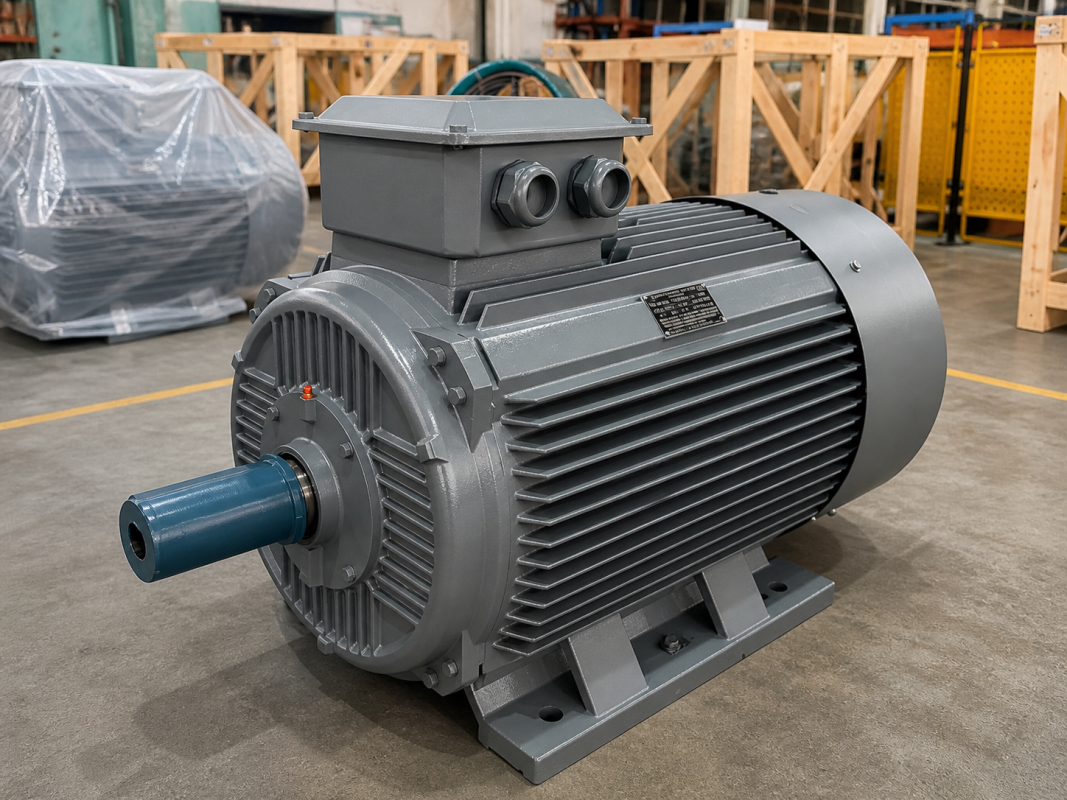

An electric motor cannot convert all the electricity it draws into mechanical power; some of it is inevitably turned into heat. For a single motor this heat may seem small, but in an enclosed motor room where dozens of motors and panels are gathered together, this heat builds up quickly. A poorly ventilated motor room soon turns into a hot prison that lowers the motors' efficiency, shortens their life, and increases the risk of failure. For this reason, motor room ventilation and heat management is a topic as critical as motor selection itself. At DRG Motor, this article addresses in detail how to manage the heat radiated by AC asynchronous motors, the effects of temperature rise in enclosed motor and panel rooms, ventilation design, and the impact of ambient temperature on motor life.
Why Do Motors Radiate Heat?
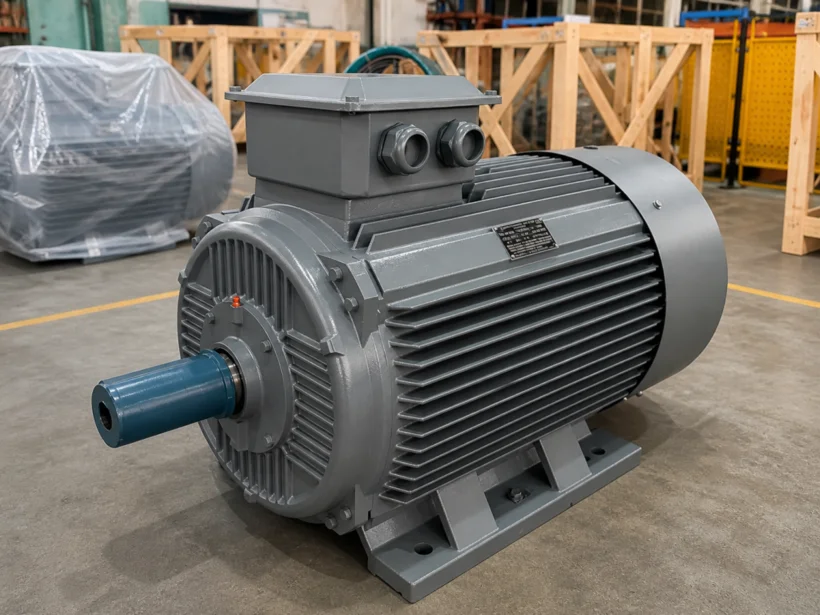
No motor is one hundred percent efficient. Losses in the winding resistances, iron losses, friction, and ventilation losses cause part of the electrical energy to be converted into heat. This heat is radiated from the motor's housing and, through the cooling air, directly into the environment in which it sits. The more heavily the motor runs, the more heat it releases into the surroundings.
The Relationship of Efficiency with Heat
A motor's efficiency is also an indication of how little heat it radiates. A high-efficiency motor does the same work with fewer losses and therefore releases less heat into the environment. For this reason, choosing a high-efficiency motor is a decision that reduces not only the energy bill but also the heat load of the motor room.
The Problem of the Enclosed Motor Room
When motors run in an open area, the heat they radiate is dispersed into a large volume and goes unnoticed. However, in an enclosed room this heat is trapped and continuously raises the room temperature. As long as the heat is not removed, the room heats the air around the motors; the heated air, in turn, loses its capacity to cool the motors. This vicious cycle can cause the temperature to reach dangerous levels.
The Additional Load of the Panel Room
Motor rooms often also contain drives, contactors, and other power electronics. This equipment also radiates its own heat. Gathering motors and panels in the same enclosed volume multiplies the heat load. For this reason, heat management of panel rooms requires as much care as the motor room.
The Effect of Ambient Temperature on the Motor
A motor's cooling depends on the temperature of the air around it. As the ambient temperature rises, the motor's ability to dissipate heat decreases and the winding temperature rises. High ambient temperature lowers the power limit at which the motor can operate. On this topic, our article on ambient temperature and altitude in motor selection provides detailed information.
What Is Derating Risk?
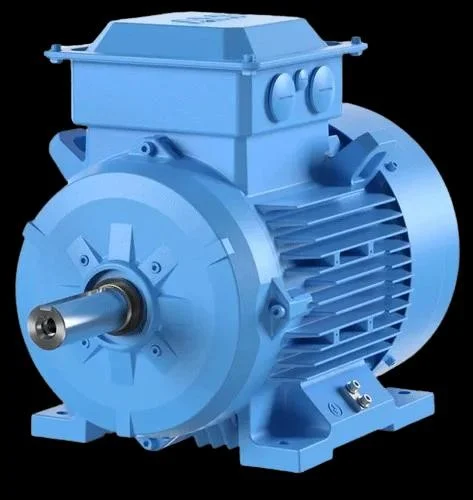
A motor running at high ambient temperature may not be able to safely deliver its full nameplate power. In this case, reducing the motor's power, that is, derating, is required. A hot motor room indirectly limits the motors' power; it may become necessary to choose a larger motor to do the same work or to cool the room. Good ventilation eliminates this need for derating and allows the motor to run at full capacity.
The Effect of Temperature on Motor Life
Winding insulation is the component most sensitive to temperature. According to a common approach, each certain amount of increase in winding temperature roughly halves the insulation's life. For this reason, a motor running constantly in a hot environment fatigues far earlier than expected. Keeping the motor room cool directly extends the motors' life.
The Relationship with Temperature Rise
The temperature rise the motor itself produces is added on top of the ambient temperature. If the environment is already hot, the total winding temperature dangerously approaches the insulation class limit. For the motor's temperature rise behavior, see our article on motor temperature rise and insulation class.
The Limits of Natural Ventilation
The simplest heat management approach is to provide natural air flow with vents placed at the lower and upper parts of the room. As hot air rises and exits from the top, cool air enters from the bottom. However, natural ventilation alone is insufficient under high heat loads or in hot climates. In this case, mechanical solutions are adopted.
Forced Ventilation
Pushing cool air into the room with fans, or expelling hot air outside, is forced ventilation. This method removes heat far more effectively than natural ventilation. The capacity of the fans is determined according to the total heat load in the room. A correctly sized forced ventilation keeps the room temperature under control.
Cooling with Air Conditioning
In cases with very high heat loads or where the outdoor air temperature is high, ventilation alone is not enough and active cooling, that is, air conditioning, is required. Air conditioning keeps the room temperature at the desired level independently of the outdoor air. In panel rooms housing sensitive power electronics, air conditioning often becomes mandatory.
The Logic of the Heat Load Calculation
For correct heat management, the total heat load in the room must be calculated. This calculation is based on summing the heat radiated by the motors and panels. The calculated heat load determines the required ventilation or cooling capacity. The table below summarizes the heat management methods and the conditions for which they are suitable.
| Method | Suitable Condition | Advantage | Limit |
|---|---|---|---|
| Natural ventilation | Low heat load, cool climate | No cost, silent | Insufficient at high load |
| Forced ventilation | Medium-high heat load | Effective heat removal | Depends on outdoor air temperature |
| Air conditioning | Very high load, hot climate | Full temperature control | Energy and investment cost |
Air Flow Design
For ventilation to be effective, not only fan capacity but also the direction of air flow matters. Cool air must reach the motors and hot air must be expelled directly outside. A design where the air flow short-circuits, that is, where cool air exits without touching the motors, provides no cooling even if the fan is running. A good design distributes the air flow throughout the entire room.
The Position of Air Inlet and Outlet
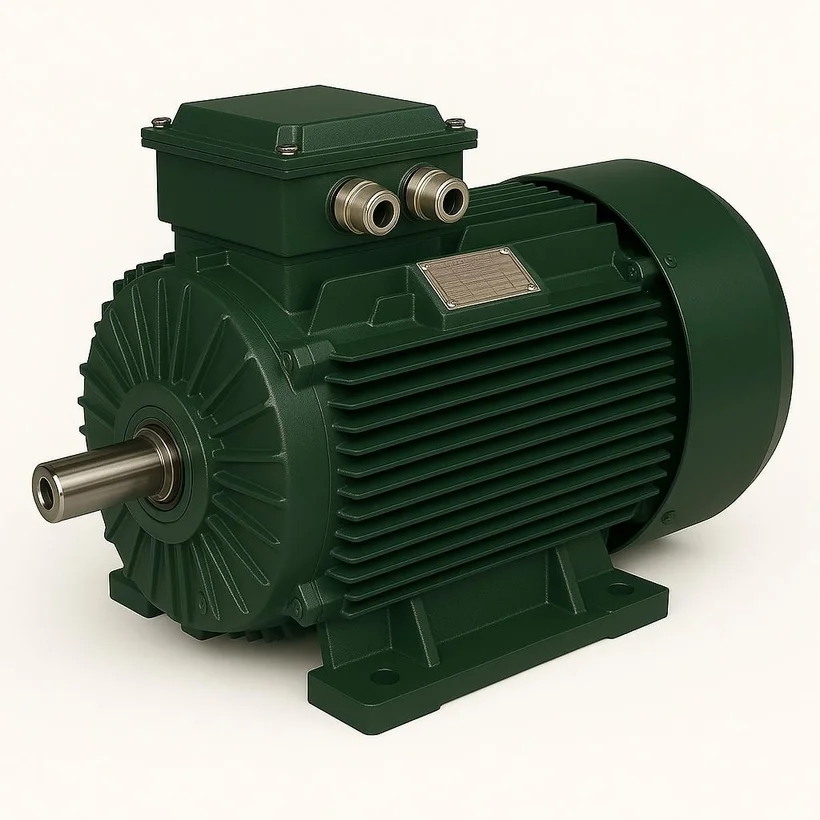
When the air inlet is positioned at the lower part of the room and the outlet at the upper part, the natural rise of hot air assists ventilation. Having the inlet and outlet at the same level or very close to each other lowers the efficiency of the air flow. Correct positioning ensures the most heat is removed with the least energy.
Maintenance of the Filters
The filters in ventilation systems catch dust coming from the outdoor air. However, a clogged filter restricts air flow and weakens cooling. Regular filter cleaning and replacement are necessary for ventilation to maintain its effectiveness. Neglected filters quietly cause the room temperature to rise.
The Effect of Dust on Cooling
Dust accumulates not only in filters but also on the motors' cooling surfaces. Dust covering the fins and cooling channels on the housing prevents the motor from dissipating its own heat. For this reason, in addition to room ventilation, regular cleaning of the motors is also a part of heat management.
Temperature Monitoring and Early Warning
Continuously monitoring the motor room's temperature is the most reliable way to verify the effectiveness of heat management. A system that gives an alarm when the set limit is exceeded reports a ventilation failure or increasing heat load early. For monitoring motor temperature, our article on electric motor temperature control is helpful.
The Effect of Seasonal Changes
Outdoor air temperature changes with the seasons; on hot summer days, the heat management of the motor room is strained the most. Ventilation and cooling systems must be sized according to the hottest conditions of the year. A system designed only for average conditions may be insufficient in the summer months.
Energy-Efficient Heat Management
Heat management itself also consumes energy. An oversized cooling system wastes unnecessary energy. A correctly sized system, on the other hand, both protects the motors and uses energy efficiently. Reducing the heat load from the outset by choosing high-efficiency motors also lowers the cost of heat management.
The Effect of Operating with a Frequency Inverter
Motors running with drives produce additional heat from both themselves and their drives. Moreover, at low speeds the motor's own fan cools less. For this reason, in rooms containing drive systems, the heat load must be calculated more carefully and ventilation designed accordingly.
A Special Case in Food and Sensitive Plants
In some facilities, the motor room temperature is important not only for the motors but also for the production process. In facilities with hygiene or process requirements, heat management is planned together with these additional conditions. For special facility requirements, our content on electric motor selection for food and beverage plants provides guidance.
An Overview in Industrial Applications
Good heat management is the invisible supporter of reliable industrial motors. For general industrial motor solutions, see our articles on industrial electric motors, and for fundamental concepts, what is an electric motor.
Redundancy and Reliability
In critical facilities, relying on a single ventilation fan or air conditioner is risky. A failure of the cooling system can cause the room temperature to rise rapidly and the motors to be damaged. Keeping a backup fan or cooling capacity is a wise precaution that increases the reliability of heat management.
Planning at the Design Stage
Heat management of the motor room is best planned when the facility is being designed. When the room size, number of motors, heat load, and ventilation paths are thought of together from the outset, costly corrections later are avoided. A well-designed motor room supports the safe operation of the motors for years.
The Layout of the Motors
The layout of the motors within the room directly affects heat management. Lining up the motors too close to each other causes the heat radiated by each to heat the next. Leaving sufficient space between them and ensuring that the air flow reaches each motor prevents the formation of local hot spots.
The Role of Ceiling Height
A room with a high ceiling offers more volume for hot air to gather above the motors and assists ventilation. In low-ceiling, cramped rooms, hot air accumulates right above the motors, making cooling difficult. Ceiling height must also be taken into account in the room design.
The Balance of Humidity and Condensation
Heat management is not only about temperature; humidity also matters. When hot and humid air enters a cold room, condensation can form, and this is risky for motor insulation. Good heat management controls the temperature while also watching the humidity balance and preventing condensation.
The Relationship with Insulation Resistance
In motors running in a hot and humid environment, the insulation resistance can decrease over time. Regular insulation resistance measurement shows early the damage that ambient conditions cause to the winding insulation. On this topic, our article on motor insulation resistance megger test is helpful.
The Balance Between Noise and Ventilation
Ventilation fans produce their own noise. High-capacity fans make more sound. A good design provides adequate cooling while keeping noise at a reasonable level. For this balance, our content on reducing electric motor noise and vibration is complementary.
Emergency Scenarios
If the ventilation or cooling system suddenly goes out of service, the room temperature can reach dangerous levels within minutes. Against such scenarios, temperature alarms and, if necessary, automatic shutdown systems should be planned. Early intervention prevents the motors from suffering permanent damage.
The Effect on Operating Cost
A hot motor room not only creates a risk of failure; it also increases energy cost by lowering the motors' efficiency. A motor with reduced efficiency draws more energy to do the same work. For this reason, good heat management is a two-way gain that reduces both maintenance and energy cost.
Preserving Maintenance Access
Ventilation ducts and cooling equipment must not block maintenance access to the motors. A good design both manages heat and allows maintenance personnel to reach the motors easily. A room that is difficult to access leads to maintenance being neglected and, indirectly, to failures.
The Importance of Air Flow Speed
Cooling depends not only on the amount of air but also on the speed at which it passes over the motors. Air flowing fast enough effectively removes heat from the motor surface. A very slow air flow can be weak at cooling even if the volume is sufficient. Flow speed is an important parameter of ventilation design. The cross-section of the air ducts, the size of the vents, and the placement of the fan are the main factors that determine the flow speed; designing these elements in a balanced way provides both adequate speed and a smooth flow distributed throughout the room.
Measurement and Verification
The only way to know whether a heat management system actually works is to measure the room temperature and the motor temperatures. Whether the values targeted in the design have been reached can only be verified by measurement. Measurements taken during commissioning show whether the system is adequate.
Long-Term Monitoring
As the facility grows or new motors are added, the heat load of the motor room increases. A ventilation that was sufficient at the start can become inadequate over time. For this reason, heat management is not a one-time design but a continuous process that must be reviewed along with the development of the facility. Re-evaluating the room's existing heat capacity before a new motor or drive is added prevents overheating problems that may occur later and allows the investment to grow safely.
The Quiet Return of a Cool Room
Motor room ventilation is an investment that is often overlooked but whose return quietly accumulates. A motor room kept cool allows the motors to run at full capacity, preserves efficiency, reduces unplanned failures, and noticeably extends motor life. Managing heat is in fact giving the motors a long and healthy working environment as a gift. At DRG Motor, with our high-efficiency AC asynchronous motors, we both provide energy savings and reduce the heat load of your motor room from the outset. For the efficient and long-lasting motor solution best suited to your facility's heat conditions, you can contact the DRG Motor expert team.