 English
 Türkçe

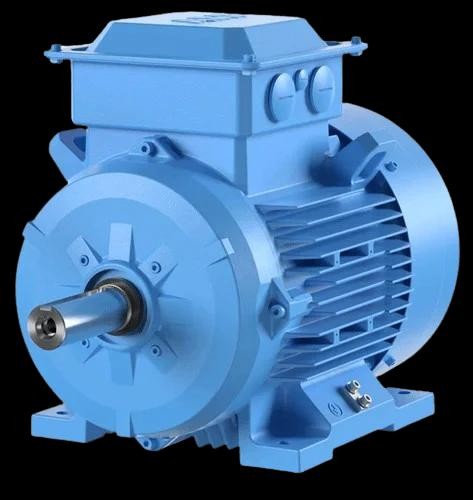

At the heart of every electric motor lies an invisible yet critical boundary between the copper windings and the metal frame: the insulation. This layer, formed by enamel, varnish and tapes wrapped around the windings, lets the motor run safely for as long as it stays intact. But when heat, moisture and vibration slowly wear it down, leakage currents, short circuits and unexpected shutdowns are right around the corner. Insulation resistance testing, commonly known as Megger testing, is the most practical way to measure how strong this invisible boundary still is before any failure occurs. At DRG Motor, both on our production line and in our field maintenance recommendations, we treat the Megger test as the pulse of a motor's insulation health. In this article we walk step by step through what insulation resistance is, how it is measured with a megger, how temperature and humidity change the results, and advanced interpretation methods such as the polarization index.
What Is Insulation Resistance?
Insulation resistance is a measure of the electrical resistance between the current-carrying conductors of a motor (the windings) and the regions that should not carry current (the frame and the chassis bonded to it). An ideal insulator would have infinite resistance and pass no current at all. In reality no insulation is perfect; it shows a very high but finite resistance. The higher this resistance, the healthier the insulation. When this value, measured in megaohms (MΩ) or gigaohms (GΩ), drops, we know that leakage currents from the winding to the frame are increasing.
Why Does Insulation Degrade Over Time?
Winding insulation does not age for a single reason but through the combination of several factors. Excessive heat breaks down the chemical structure of organic insulating materials and makes them brittle. Moisture seeps in through micro-cracks and forms conductive bridges. Vibration rubs the windings in their slots and erodes the varnish layer. Chemical vapors and dusty environments increase surface leakage. We examined the effect of each of these factors on motor life in detail in our electric motor insulation class article.
What Does a Megger Do?
A megger is an insulation test instrument that applies a high and stable direct voltage (DC) to the winding and measures the tiny leakage current flowing under this voltage. From the voltage and the current, it calculates the resistance according to Ohm's law and displays it directly in MΩ or GΩ. An ordinary multimeter cannot do this job, because the flaws of insulation only reveal themselves under high voltage.
The Difference Between a Megger and a Multimeter
Many people in the field try to measure insulation with an ordinary multimeter, but this gives misleading results. A multimeter measures resistance with only a few volts; yet the cracks and moisture paths in insulation only show themselves under hundreds of volts. Thanks to its controlled high voltage, the megger sees what the insulation does under a stress similar to its real operating conditions. For this reason, insulation health decisions are based not on a multimeter but only on a dedicated insulation tester.
Types of Megger and How to Choose
Insulation testers range widely from simple single-voltage models to advanced units offering multiple test voltages and automatically calculating PI and DAR. For a maintenance team working with low-voltage motors, an instrument capable of measuring in the 500-1000 V range covers most jobs. For large medium-voltage motors, instruments that can output 2500 V and above are required. The instrument should be selected according to the voltage range of the motor fleet to be measured.
How Is the Test Voltage Selected?
The test voltage to be applied is determined according to the operating voltage of the motor. If the voltage is chosen too low, weak insulation may appear sound; if chosen too high, sound insulation may be stressed. The table below summarizes the common test voltage selection by motor rated voltage and the interpretation of the measured value.
| Motor Rated Voltage | Recommended Test Voltage | Measured Resistance | Interpretation |
|---|---|---|---|
| 0 - 250 V | 250 - 500 V DC | < 1 MΩ | Risky - insulation insufficient, action required |
| 250 - 600 V | 500 - 1000 V DC | 1 - 5 MΩ | Borderline - monitor, consider drying |
| 600 - 1000 V | 1000 V DC | 5 - 100 MΩ | Good - suitable for operation |
| Above 1000 V | 2500 - 5000 V DC | > 100 MΩ | Excellent - healthy insulation |
These values give a general direction; the final decision should be made together with the motor's power, age and past measurements. Rather than the absolute figure of a single measurement, the trend of the same motor over time is more meaningful.
The One Megaohm Rule and Limit Values
A practical reference point often used in the field is the minimum value calculated by adding one megaohm per rated kilovolt. For a 400 V motor, for example, at least 1-2 MΩ is expected. However, since modern insulation materials give much higher values, any industrial motor falling below 50-100 MΩ should be evaluated carefully. Motors that drop below the limit values undergo drying and cleaning before being put into service.
Safety Steps Before Measurement
Because the Megger test is carried out with high voltage, safety comes first. The motor must be fully isolated from the mains, de-energized and locked out. If a drive (frequency inverter) is connected, the motor terminals must be disconnected from the drive; otherwise the electronic boards may be damaged. The charge accumulated in the windings must be discharged with a grounding rod after the measurement. This discipline protects both the operator and the motor.
Step-by-Step Megger Measurement
The measurement is made by connecting one lead of the instrument to the winding terminal and the other to a clean grounding point on the motor frame. The test voltage is selected, the instrument is started, and the value is allowed to stabilize (usually 60 seconds). In three-phase motors, the resistance of each phase to the frame can be measured separately, or the phases can be shorted together and measured collectively.
Why Does the 60-Second Value Matter?
Insulation resistance is not an instantaneous figure; it rises as voltage is applied. This is because the molecules in the insulating material slowly align under voltage. For this reason the standard measurement is read at the 60th second. In healthy insulation the resistance keeps rising over time; in degraded insulation it settles early or drops.
What Is the Polarization Index (PI)?
The polarization index is the ratio of the resistance measured at the 10th minute to the resistance measured at the 1st minute. This ratio shows not only the instantaneous but also the time behavior of the insulation. Because clean and dry insulation recovers markedly under voltage, its PI comes out high; because damp or contaminated insulation cannot recover, its PI stays low.
| PI Value (R10min / R1min) | Insulation Condition | Recommended Action |
|---|---|---|
| < 1.0 | Dangerous - insulation damaged | Do not energize, inspect the winding |
| 1.0 - 2.0 | Questionable - moisture or contamination | Dry, clean, test again |
| 2.0 - 4.0 | Good | Suitable for operation |
| > 4.0 | Excellent | Healthy, dry insulation |
Dielectric Absorption Ratio (DAR)
On time-constrained sites, DAR is used instead of PI. DAR is the ratio of the 60-second resistance to the 30-second resistance and works on the same logic. A DAR above 1.4 generally indicates healthy insulation. It is a practical alternative for quick checks where waiting ten minutes is not possible.
What Does Leakage Current Tell Us?
The leakage current that flows during a Megger measurement is in fact a direct reflection of the quality of the insulation. This current consists of three components: surface leakage, conduction current passing through the material, and the absorption current that decreases over time. In healthy insulation the total current falls over time and the resistance rises. If the current stays high and constant, it means a continuous leakage path has formed within the insulation. Understanding this behavior is far more instructive than just looking at the number.
The Balance Between Winding Temperature and Insulation Life
The life of insulating material is inversely related to operating temperature. A common engineering rule states that every 10 °C rise in continuous operating temperature roughly halves the insulation life. This explains why regular Megger measurements are so valuable: slow aging caused by temperature can only be noticed early through periodic resistance measurements. Keeping the motor within its rated temperature limits is the most natural way to preserve high insulation values.
The Effect of Temperature on Measurement
Insulation resistance is extremely sensitive to temperature. For roughly every 10 °C rise in temperature, the resistance roughly halves. For this reason, measurements taken on different days at different temperatures cannot be directly compared. For a meaningful trend, values are corrected to a common reference temperature (usually 40 °C). Monitoring the motor's operating temperature is important from this angle too; we explained this topic in depth in our electric motor temperature control article.
The Hidden Effect of Moisture
Moisture is the most insidious enemy of insulation resistance. Condensation can form in the windings of a motor that has been idle and cold for a long time; in this case the Megger value comes out unusually low. Often the problem is not permanent degradation of the insulation but temporary moisture. When the motor is properly dried, the resistance rises again. For this reason, the moisture factor should be evaluated before panicking over a low measurement.
Drying the Motor
Motors giving low resistance due to moisture are dried with hot air, frame heaters, or a controlled low-voltage current method. During drying, the insulation resistance is measured periodically; when the value rises and stabilizes, the motor is ready to be put into service. Using frame heaters (anti-condensation resistors) to prevent condensation in idle motors is a wise precaution.
When Should a Megger Test Be Done?
The Megger test should be done not only after a fault but with planned discipline. A measurement should be taken before a new motor is commissioned, before a long-idle motor is started, on the periodic maintenance calendar, and after unusual events such as floods. Placing these measurements into your electric motor maintenance steps routine greatly reduces surprises.
Trend Tracking: Is a Single Measurement Enough?
A single Megger value gives you only a snapshot of that moment. The real value lies in seeing the measurements of the same motor over time together. If values recorded at regular intervals are slowly dropping, the insulation has entered a degradation trend even if it is still above the limit value. This approach forms the basis of the electric motor predictive maintenance philosophy.
Megger as Part of the Bigger Picture
Insulation resistance alone does not tell everything. When evaluated together with inter-winding resistance measurement, surge testing and temperature monitoring, a full picture emerges. For example, an imbalance between phase resistances may point to a local short in the winding; it is useful to read this situation together with the symptoms in our electric motor phase loss article.
Relationship With Winding Quality
High and stable insulation resistance is also an indicator of a correctly made winding. Quality enamel wire, proper varnish impregnation and clean workmanship ensure that the motor gives high values from the very first day. When rewound motors show a low Megger value, it often stems from a shortfall in winding quality. For this reason, motor winding quality and insulation performance are an inseparable whole.
Overload and Insulation Aging
A motor running continuously under overload exceeds its rated temperature and the insulation ages rapidly. Sudden drops in Megger values sometimes stem not from a mechanical fault but from the motor being strained beyond its capacity. For this reason, to protect insulation health, electric motor overload protection must be set correctly.
Connection With the IP Protection Class
The enclosure protection class is also decisive in the motor's ability to maintain insulation health against moisture and dust. A sealed enclosure keeps the insulation resistance high for a long time by preventing external moisture from reaching the winding. Our electric motor IP protection class article guides you in making the right choice for your environment.
The Effect of Alignment and Mechanical Strain on Insulation
Although it seems like a mechanical topic at first glance, a poorly aligned shaft indirectly shortens insulation life. Misalignment produces excessive vibration; vibration in turn moves the windings in their slots, erodes the varnish layer and forms micro-cracks. Over time these cracks lower the insulation resistance. For this reason, doing motor shaft and coupling alignment correctly is also a guarantee of insulation health.
Indirect Relationship With Bearing Health
A worn bearing causes the rotor to drift off center and the air gap to deteriorate. This produces both extra vibration and local heating that strains the winding insulation. Behind unexplained drops in Megger values sometimes lies a mechanical bearing problem. We gathered measures for extending bearing life in our extending electric motor bearing life article.
Recording the Measurements
Every Megger measurement should be recorded together with the date, ambient temperature, humidity, test voltage and the value read. Without these records, trend tracking is impossible. Even a simple table reveals the motor's insulation history and moves maintenance decisions from intuition to data.
Common Mistakes
The most common mistakes in the field are: taking a measurement without disconnecting the drive, comparing values without temperature correction, not discharging the load after measurement, and scrapping a motor based on a single low value. The correct method is to repeat the measurement under standard conditions and rule out the possibility of moisture.
The Importance of the Grounding Point
For the Megger measurement to come out correctly, the frame lead of the instrument must be connected to clean, unpainted metal. A layer of paint, rust or oil can artificially raise the measured resistance and make damaged insulation look sound. For this reason the connection point is sanded before measurement, or a clean bolt body is preferred. A little care prevents a false sense of confidence.
The Effect of Seasonal Changes
Because moisture and temperature vary by season, insulation resistance also fluctuates throughout the year. In winter months, especially in motors standing in unheated environments, values may drop; in summer they rise. Knowing this natural swing helps distinguish a genuine degradation from a seasonal fluctuation. Writing the measurement date and ambient conditions in the records is critical precisely for this reason.
Complementary Approach With Vibration Monitoring
While insulation resistance shows the electrical health of the insulation, vibration measurement shows the mechanical health. Together they give the complete picture of the motor. For continuous condition monitoring, wireless vibration sensor condition monitoring solutions, together with periodic electrical tests like the Megger, form a strong maintenance infrastructure.
Megger Discipline in Industrial Plants
In plants with continuous production, the unexpected stop of one motor can lock up an entire line. For this reason, insulation resistance measurements are written into the regular maintenance calendar in industrial environments. Products in DRG's industrial electric motors category, with their high insulation classes and durable winding structures, fit this discipline.
Insulation Assurance With DRG Motor
Insulation resistance is a motor's silent health indicator; when measured regularly, it warns of faults weeks in advance. At DRG Motor, we prepare every motor we supply with high insulation performance, quality enamel wire and meticulous varnish impregnation processes; so that when it goes into the field, its Megger values inspire confidence from the very first day. Whenever you need a motor with high insulation health, long life and easy maintenance, the DRG Motor team is by your side from the right product selection to field support. To secure the insulation of your motors, get in touch with us and let us determine the most suitable solution for your facility's conditions together.