 English
 Türkçe

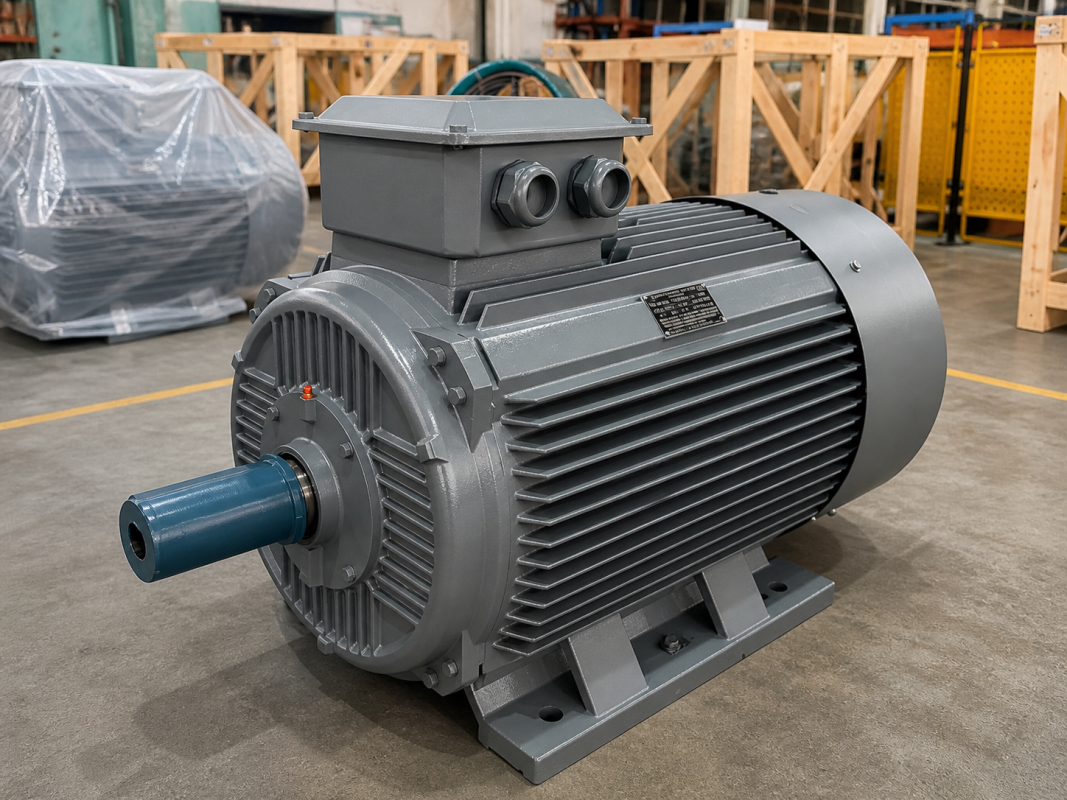

Brake electric motors are indispensable in applications that must stop quickly and safely the moment stopping is required. Cranes, elevators, conveyors, door systems, and machines requiring precise positioning are the typical fields of use for these motors. At the heart of these motors is an electromagnetic brake, and the correct operation of the brake depends entirely on the correct adjustment of a small distance called the air gap. The safety of a brake motor often rests on keeping this gap, which is on the scale of a tenth of a millimeter, at the right value; the deterioration of such a tiny distance can endanger the safety of an entire system. Over time, due to wear, this gap grows, and the brake holds late or stops holding altogether. In this article we examine, from the DRG Motor engineering perspective, how the electromagnetic brake works, what the air gap is, why it grows, how it is adjusted, the function of the manual release lever, the problems of late opening and late closing of the brake, and the importance of periodic inspection. Correct brake adjustment is critical for both operator safety and system life; we therefore examine the topic in depth so that it serves both the technician working in the field and the engineer designing the system.
What is a brake motor?
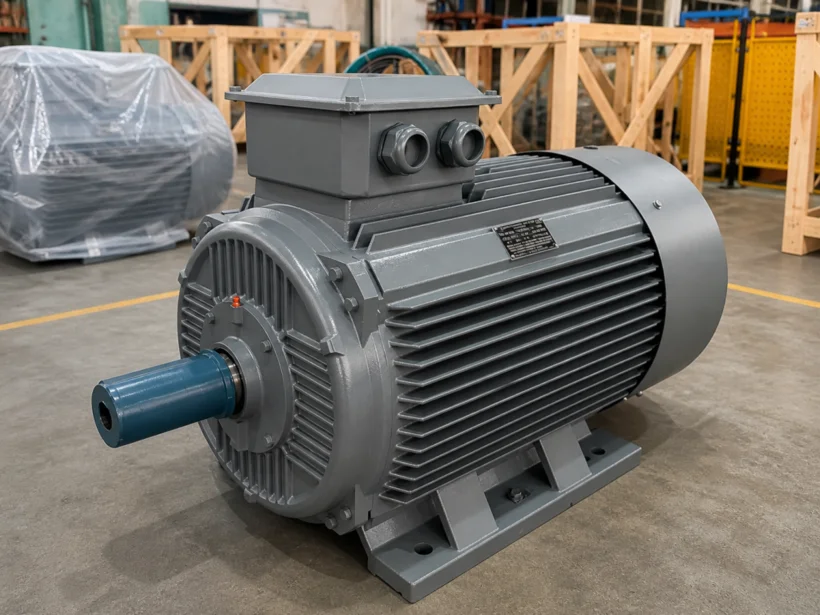
A brake motor is a standard induction motor that contains an electromagnetic brake integrated at the rear of its body. When the motor is energized, the brake opens and the shaft turns freely; when power is cut, the brake closes with spring force and stops the shaft. This structure ensures the load is held safely even during a power outage. We addressed in which situations a brake motor is necessary in our article on when a brake motor is needed.
How does an electromagnetic brake work?
An electromagnetic brake works on a normally closed logic (holding by spring pressure). When the coil is energized, the magnetic field created pulls a moving plate (armature) against the springs and separates the friction surface from the lining; thus the shaft is freed. When power is cut, the magnetic field disappears, the springs push the armature, and the lining presses against the disc to brake the shaft. Thanks to this fail-safe logic, the brake engages on its own in case of a fault.
What is the air gap?
The air gap is the small space that remains between the lining and the opposing surface in the closed state, across which the armature moves when the brake coil is energized. This space is on the scale of a tenth of a millimeter and must be kept within a certain range for the brake to work correctly. If it is too small, the brake does not open fully and drags; if it is too large, the coil cannot pull the armature and the brake does not open or opens late.
Why is the air gap important?
The entire performance of the brake depends on this small distance. At the correct air gap, the brake opens quickly, closes quickly, and holds the load with the torque it was designed for. When the gap deteriorates, the brake's response time lengthens, the holding torque drops, and system safety is endangered. The air gap is therefore the most critical parameter of brake motor maintenance.
Growth of the gap with lining wear
With every braking operation, the lining surface wears a little. As the worn lining thins, the distance the armature must travel, that is the air gap, grows. This is the natural life process of the brake. As the gap grows, the coil's magnetic force struggles to pull the armature; beyond a certain point the brake fails to open. For this reason, lining wear must be monitored regularly and the gap adjusted periodically.
How is the air gap measured?
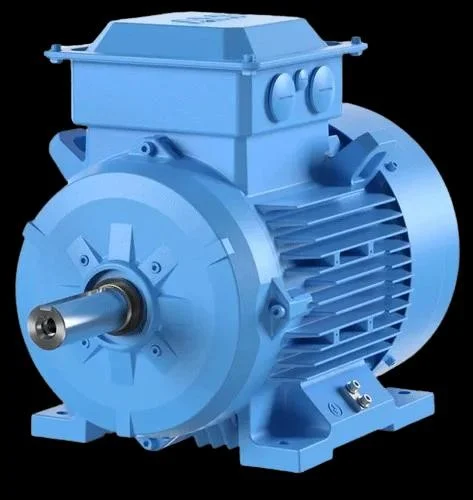
The air gap is measured with a feeler gauge (thickness gauge). With the brake de-energized, that is in the closed state, the gap between the armature and the opposing surface is measured at several points around the circumference to check whether the gap is even. An uneven gap shows that the armature is sitting at an angle and that the brake does not hold properly. The measurement must be made under the condition that the motor is stopped and the electrical connection is safely cut.
Air-gap adjustment table
The table below summarizes the brake's behavior according to the condition of the air gap and the necessary intervention. The values are illustrative for a typical medium-size brake; every brake must be evaluated according to the manufacturer's tolerance.
| Air-gap condition | Brake behavior | Necessary intervention |
|---|---|---|
| Nominal (e.g. 0.2 - 0.3 mm) | Opens/closes fast, full torque | No intervention needed |
| Slightly increased | Opening sound becomes noticeable | Monitor, adjust at next service |
| Near maximum | Opens late, torque drops | Adjust the gap immediately |
| Above maximum | Does not open or stays open | Adjust; replace lining if needed |
| Too small | Drags, heats up | Open the gap, check alignment |
As the table shows, both a too-large and a too-small gap cause problems; the aim is to keep the brake at the nominal value within the manufacturer's tolerance.
How is the air gap adjusted?
On most brake types, adjustment is made with the adjusting nuts or screws that carry the armature. When the gap grows, these elements are turned precisely to bring the armature closer to the lining and set the gap to the nominal value. Taking an even measurement around the circumference during adjustment is essential for the brake to hold properly. The operation must be carried out with the motor de-energized and in compliance with safety rules.
Brake torque adjustment
On many brakes the holding torque is also adjustable. By changing the preload of the brake springs, the torque the brake applies can be increased or decreased. High torque provides quick stopping but strains the mechanism more; low torque stops more gently but may be insufficient under heavy load. Torque should be chosen in balance according to the needs of the application. This balance is especially important in heavy lifting applications such as cranes; we addressed the topic in our article on the crane and lifting electric motor.
The manual release lever
Many brake motors have a manual release (manual opening) lever. This lever mechanically opens the brake when there is no power, allowing the load to be lowered in a controlled manner or the shaft to be turned by hand. Especially in applications such as elevators and cranes, the release lever is critical for safe intervention in emergencies. The lever's proper operation should be checked periodically.
Safe use of the release lever
The manual release lever should be used only by authorized and trained personnel. Since the load is freed when the brake is opened by hand, the lowering operation must be carried out in a controlled manner, and it must be ensured that the brake closes again when the lever is released. Some levers return on their own, others must be brought back to position manually; this difference must definitely be known. After the release lever is used, it must be returned to the normal position; otherwise the brake stays open and the load will not be held at the next operation. This simple but vital check, when neglected after an emergency, can lead to serious accidents.
The problem of late brake opening
When the air gap grows or the coil supply weakens, the brake opens late. In this case, while the motor starts, the brake continues to hold partially for a while; the lining drags, overheats, and wears rapidly. A late-opening brake also causes the motor to strain and draw excess current. As symptoms, a dragging sound at start-up, a burnt smell, and heating of the body are observed. This problem creates a vicious cycle: the late-opening brake wears the lining, the worn lining enlarges the gap further, and the enlarged gap makes the brake open even later. For this reason, when the symptom of late opening appears, intervention must be immediate and the problem should not be allowed to grow.
The problem of late brake closing
Brake closing can also be delayed. If the cutoff of the coil current is not fast enough, the magnetic field decays slowly and the brake holds late. This causes the load that should stop to slip somewhat; it spoils precision in positioning applications and creates a risk of the load falling in lifting applications. For fast closing, the brake supply circuit must be designed correctly.
The importance of periodic inspection
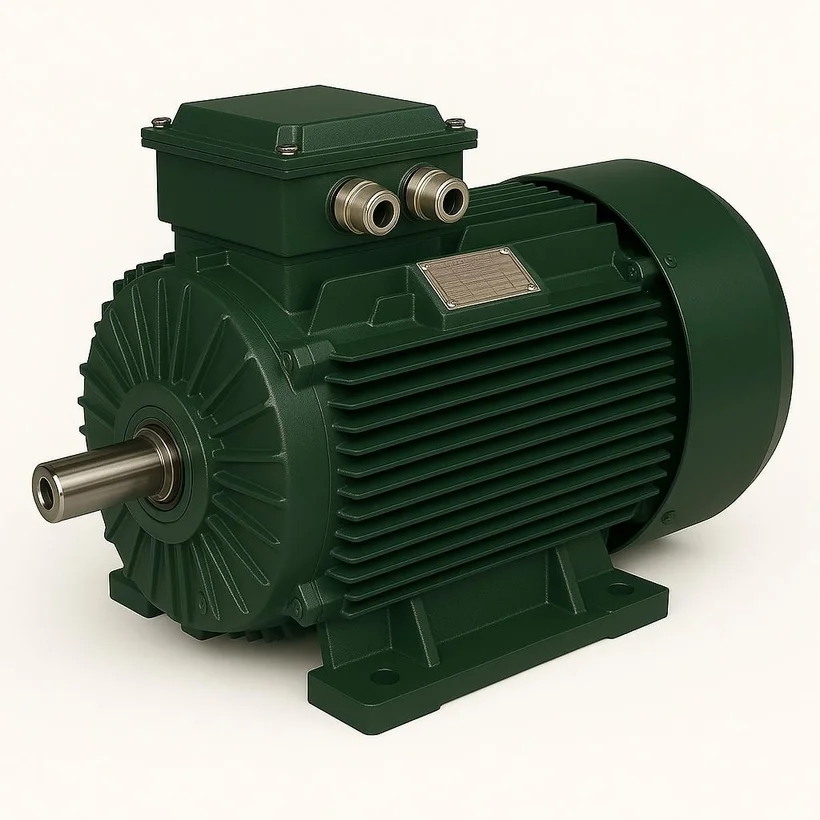
The safety of the brake motor depends on regular inspection. Air-gap measurement, lining-thickness check, and inspection of the function of the adjusting elements and the release lever should be on the periodic maintenance list. As usage intensity increases, the inspection frequency should also increase; a crane motor that brakes frequently requires far more frequent inspection than a motor that runs occasionally. The air gap measured at each inspection should be recorded and its change over time monitored. Thus how fast the lining wears is seen, and when lining replacement or adjustment will be needed is foreseen in advance. This foresight prevents the brake from failing at an unexpected moment.
The condition of the friction surface
The lining and the opposing surface must be clean, oil-free, and smooth. Contamination with oil or grease seriously reduces the brake's holding torque and leads to slipping. For this reason, the brake area must be kept away from lubrication, and if there is a leak from the motor bearing it must be eliminated immediately. In very dusty environments, dust accumulating on the lining surface also reduces holding and must be cleaned regularly. A shiny, glazed appearance of the friction surface shows that the lining has overheated and lost its holding ability; in that case the lining must be replaced. The condition of the surface is one of the first places to look at to understand the brake's health.
Heating and brake life
Every braking operation converts motion energy into heat through friction. In systems that brake very frequently or stop loads with high inertia, the brake heats up; overheating shortens lining life and reduces holding torque. A hot lining holds less than a cold one; for this reason, in applications that brake continuously, brake capacity should be chosen generously. The braking frequency of the application, the inertia of the stopped mass, and the rotational speed should be evaluated together to calculate how much energy the brake must dissipate, and a higher-capacity brake should be preferred if necessary. A brake of insufficient capacity wears out quickly and endangers safety.
Vibration and noise
A correctly adjusted brake opens and closes quietly. Excessive noise, dragging, or vibration is a sign of a deteriorated air gap, an angled armature, or a worn lining. These symptoms should not be ignored and their source should be investigated. We examined general motor vibration and noise problems in our article on reducing electric motor noise and vibration.
The importance of correct brake selection
The holding torque of the brake should be chosen sufficiently higher than the torque required by the application. An undersized brake cannot hold the load; an oversized brake strains the mechanism unnecessarily. The correct brake should be determined by evaluating the load of the application, the braking frequency, and the safety requirement together.
Brake motors in industrial applications
In industrial applications such as conveyors, doors, lifting, and positioning, brake motors are the cornerstone of safety. In these applications, the reliability of the brake is directly related to operator safety. Our article on industrial electric motors covers the requirements of these applications broadly.
Special attention in lifting applications
In lifting systems that hold a load in the air, the brake is the only safety element between the load and gravity. Here even a slight slip of the brake is unacceptable. For this reason, in lifting applications brake torque is chosen with a sufficient safety margin, the air gap is checked more frequently, and additional safety measures are usually taken. Since late brake closing would mean the load falls somewhat, the closing speed is also especially important in these applications. We addressed this delicate balance more broadly in our article on the crane and lifting electric motor.
The effect of alignment on the brake
Misalignment between the motor shaft and the driven machine puts lateral forces on the shaft and also affects the brake area. An angled shaft disrupts the smooth movement of the armature and causes the gap to be uneven around the circumference. For this reason, mechanical alignment should also be checked when performing brake maintenance; we addressed the topic in our article on motor shaft and coupling alignment.
The role of the brake supply circuit
The correct timing of the brake opening and closing depends not only on mechanical adjustment but also on the supply circuit. The rectifier feeding the coil determines how fast the brake opens and closes. In applications where fast closing is required, the circuit is designed to quickly extinguish the magnetic field. A wrong or weak supply can cause even a mechanically flawless brake to respond late. For this reason, the supply circuit must also be checked when investigating brake problems.
The effect of moisture and corrosion
In brake motors operating outdoors or in humid environments, corrosion can form on the brake disc and friction surfaces. Rust prevents the lining from holding properly and reduces holding torque. In brake motors that have stood unused for a long time, the surfaces may stick or rust; for this reason it is recommended to check the brake by hand before commissioning. Choosing a motor with a suitable protection class prevents these problems from the outset.
Commissioning checks
When commissioning a new brake motor, the air gap, holding torque, release lever, and the brake's opening-closing behavior should be checked one by one. At the first start, it should be ensured that the brake holds the load safely, and adjustment should be made if necessary. A correct commissioning prevents many problems that would arise in later years from the outset and ensures the brake starts reliably.
Reading the symptoms of failure
Brake motors usually show symptoms before they fail. A dragging sound at start-up, a burnt smell, the brake holding late, the load slipping while stopping, or excessive heating of the body all say that the brake should be looked at. An experienced technician, by reading these symptoms early, prevents a major failure with a small adjustment or lining replacement. Ignoring the symptoms, on the other hand, leads to safety risk and costly failures.
DRG Motor for safe braking solutions
The safety of a brake motor depends on the correct adjustment of a small air gap and on regular maintenance. A correctly measured gap, a correctly selected torque, and periodic inspection ensure the brake always opens and closes as expected and holds the load safely. While a small symptom that is ignored can turn into a major safety risk over time, regular and disciplined maintenance eliminates these risks from the start. DRG Motor produces reliable brake AC induction motors for lifting and positioning applications; you can contact the DRG Motor engineering team for the right brake torque, correct motor selection, and a maintenance plan suited to your application. A safe stop begins with a correctly adjusted brake; and the right motor forms the foundation of that safety.