 English
 Türkçe

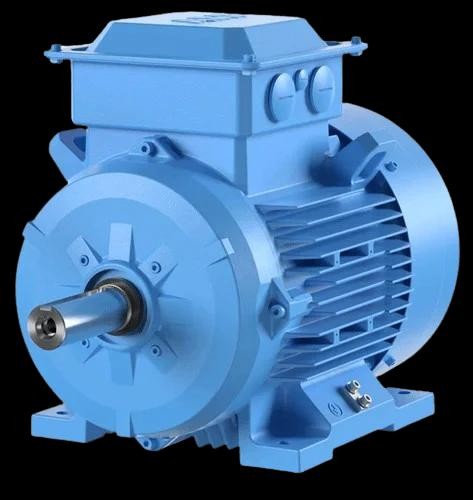

Not all of the sound you hear from a running electric motor is mechanical in origin. Alongside bearing friction and fan noise, there is also magnetic noise, which is born in the motor's magnetic circuit and is often felt as a thin, whistle-like tone. This noise arises from the slots in the stator and rotor, the fluctuation of the magnetic field in the air gap, and, under inverter operation, the influence of the switching frequency. In DRG AC asynchronous motors, recognizing and managing magnetic noise directly affects both acoustic comfort and the mechanical health of the motor. In this article we examine in detail where magnetic noise comes from, how slot harmonics form, and the methods used to reduce them.
What Is Magnetic Noise?
Magnetic noise is the sound produced when the electromagnetic forces generated in the motor's air gap make the stator and rotor iron core vibrate. The magnetic field in the gap is not constant; it fluctuates both spatially and in time. These fluctuating forces push on the stator yoke especially in the radial direction, causing the iron core to vibrate at certain frequencies. Unlike mechanical noise, magnetic noise is present even when the motor runs unloaded, and its character changes as the load changes.
The Three Main Sources of Sound
In an AC motor, total noise is the sum of three components: mechanical (bearings, fan, imbalance), aerodynamic (fan blades and airflow), and electromagnetic (magnetic noise). At low speeds the magnetic component dominates, while at high speeds fan noise comes to the fore. Making this distinction is the first step toward the right solution. To approach the topic as a whole, our article on reducing electric motor noise and vibration is a good starting point.
The Magnetic Field in the Air Gap
The origin of magnetic noise is the distribution of magnetic flux density in the air gap. In an ideal motor this distribution would be a smooth sine wave; however, in real motors the flux wave contains harmonics because of winding distribution, slot geometry, and saturation effects. These harmonics determine the Maxwell forces acting on the iron surface.
Maxwell Forces and Radial Vibration
The radial magnetic force in the air gap is proportional to the square of the flux density. Because the flux density is made up of components at different frequencies, squaring it multiplies these components together and creates force components at new frequencies. These forces bend the stator iron like a drumhead in specific patterns; this is the true cause of magnetic noise.
What Is a Slot?
The stator and rotor laminations have slots in which the winding wires are placed. Since slots behave magnetically like gaps, the magnetic permeability of the air gap changes periodically along the slot lines as the rotor turns. This periodic change adds extra harmonics to the magnetic field and is the fundamental factor shaping the noise character.
How Do Slot Harmonics Form?
As the rotor slots pass in front of the stator slots, the reluctance of the air gap fluctuates. This fluctuation modulates the main magnetic field and produces high-frequency components called slot harmonics. The frequency of these harmonics is directly related to the number of rotor slots and the rotational speed; therefore, when you look at a motor's noise spectrum, the slot passing frequency can be seen as a peak.
The Relationship Between Stator and Rotor Slot Counts
One of the most critical design decisions for magnetic noise is the combination of stator and rotor slot counts. Certain slot-count pairs produce low-order force patterns (for example order 0, 1, or 2), and because these easily set the stator frame vibrating, they lead to high noise. In a good design the slot counts are chosen so as to minimize low-order forces.
Force Order and Mode Shapes
The stator frame tends to vibrate in certain "mode shapes," which can be oval, triangular, or more complex deformation patterns. When the order of the magnetic force coincides with the frame's natural mode shape, resonance occurs and noise increases dramatically. For this reason, designs aim to keep the magnetic force order from overlapping with the mechanical mode number.
The Magnetostriction Effect
Another physical phenomenon contributing to magnetic noise is magnetostriction. When ferromagnetic materials such as iron are exposed to a magnetic field, their dimensions change by a very small amount. These micro dimensional changes produce vibration at twice the line frequency (100 Hz on a 50 Hz supply) and its multiples. Magnetostriction is also the cause of the hum in transformers and is heard in motors as a low-frequency drone.
The Twice-Line-Frequency Component
Both Maxwell forces and magnetostriction create a dominant component at twice the line frequency, because the magnetic field reverses direction twice per cycle. It is therefore common to see a pronounced vibration peak around 100 Hz in motors fed at 50 Hz, and this is entirely magnetic in origin, not a mechanical fault.
Saturation Harmonics
When the iron approaches magnetic saturation, the magnetic field deviates from a sine and flattens. This deviation adds odd harmonics to the flux wave. Saturation harmonics increase noise especially at high voltage or over-excitation; therefore running the motor at its nameplate values is also important acoustically.
Inverter Switching Noise
In motors driven by a frequency inverter, an additional source of magnetic noise comes into play: PWM switching. The inverter applies not a pure sine but a voltage pulsed at high frequency to the motor. These pulses produce current ripple at the switching frequency and its multiples; this ripple in turn makes the motor iron vibrate, creating a characteristic high-pitched sound. Our article on energy saving with a frequency inverter details how the drive interacts with the motor.
The Effect of Switching Frequency on Sound
When a low switching frequency (for example 2-4 kHz) is selected, the high-pitched sound can fall into the region where the ear is most sensitive and become annoying. Raising the switching frequency (8-16 kHz) moves this sound above the audible band, reducing perceived noise; however, the inverter's switching losses increase. A balance must be struck here between acoustic comfort and efficiency. For the differences between inverter control modes, take a look at our article on the difference between V/f and vector control in inverters.
Current Harmonics and Iron Losses
Inverter-induced current harmonics create not only noise but also extra losses and heating in the iron core. Since this extra heat can affect the insulation life of the motor, noise and heating should be evaluated together. For thermal management, our article on motor temperature rise will be helpful.
Eccentricity and Air-Gap Irregularity
If the rotor center is not exactly in the middle of the stator, the air gap is not uniform around the circumference. This eccentricity adds extra modulation to the air-gap magnetic field, increasing noise at certain frequencies. Static eccentricity (a fixed offset) and dynamic eccentricity (an offset that rotates with the rotor) leave different spectral signatures and can be distinguished from each other in diagnosis.
The Difference Between Sound Power and Sound Pressure
When measuring magnetic noise, it matters which quantity you measure. The total acoustic energy radiated by the motor is sound power, while what is heard at a given point is sound pressure. For comparisons to be fair, these two concepts must be separated; for the details we recommend our article on sound power and sound pressure (dB) in motors.
Recognizing Magnetic Noise in the Spectrum
The most powerful diagnostic tool for magnetic noise is frequency analysis. In the FFT spectrum, peaks at twice the line frequency, the slot passing frequency, and the switching frequency reveal the magnetic origin. This makes it possible to determine with certainty whether the noise is mechanical or magnetic. Our article on motor vibration analysis (FFT spectrum) explains this method step by step.
Reduction with Slot Skew
One of the most effective design methods for reducing magnetic noise is slot skew. When the rotor slots are placed not parallel to the axis but at a slight angle, the effect of the slot harmonics is spread along the length and largely damped. The slot skew applied in DRG AC motors markedly lowers the slot-passing noise and the associated torque ripple.
Harmonic Reduction Through Winding Design
Shortening the winding pitch (short-pitch winding) and distributing the winding in a balanced way among the phases reduces the harmonic content of the air-gap flux. A cleaner flux wave means fewer magnetic force harmonics and therefore lower noise. This is a permanent measure taken at the design stage.
Iron Core and Mechanical Stiffness
Even if the magnetic force stays the same, a stator frame designed to be sufficiently stiff will vibrate less. Increasing the yoke thickness, reinforcing the frame with ribs, and moving the natural frequencies outside the operating band all reduce noise. The goal here is to prevent the magnetic excitation from coinciding with the frame's resonance region.
Measures on the Inverter Side
Moving the switching frequency above the audible band, adding an output filter (dU/dt or sine filter) to the motor, and keeping the cable length appropriate all reduce inverter-induced noise. When the drive parameters are set correctly, magnetic noise can be brought down to levels close to direct line supply.
Mounting and Preventing Resonance
When the motor is not bolted to a solid foundation, the magnetic excitation can be amplified and transmitted through the base or connected structure. Flexible coupling elements, vibration mounts, and a rigid mounting surface prevent the magnetic noise from being transmitted to the structure. Often a low-cost mounting improvement noticeably reduces the perceived sound.
Maintenance and Monitoring
Air-gap irregularity, a loose iron core, or increasing eccentricity can worsen magnetic noise over time. Regular vibration measurement and spectral monitoring catch these changes early. The growth of magnetically originated peaks over time can be a harbinger of mechanical degradation.
Magnetic Noise and Load
The current drawn by the motor rises as the load increases, and the components of the magnetic field in the air gap change accordingly. For this reason, the same motor may sound noticeably different under load while appearing quiet at no load. Especially during heavy starting, the multiplication of current temporarily increases the magnetic forces, creating short-lived noise bursts. In applications with a variable load profile, taking this into account is important for predicting the motor's real acoustic behavior.
The Effect of Pole Count on Noise
The motor's pole count determines both the rotational speed and the spatial distribution of the magnetic field. Low-pole motors (for example 2-pole) turn at high speed, so fan and magnetic noise shift toward the higher-pitched region, while in high-pole motors the magnetic force patterns concentrate at different orders. The interaction between pole count and slot count directly determines the noise orders. To see the relationship between pole count and speed in detail, our article on pole count and speed in electric motors will be helpful.
Relationship with Torque Ripple
Slot harmonics do not only produce sound; they also cause small fluctuations in the rotating torque. This torque ripple (a cogging-like effect) is felt especially at low speeds and turns into unwanted vibration in applications requiring precise positioning. Slot skew reduces this ripple, while an appropriate control algorithm on the drive side also ensures smooth rotation. To understand the relationship between power, torque, and speed, see our article on power, torque, and speed in motors.
The Acoustic Measurement Environment
When evaluating magnetic noise, the environment in which the measurement is made directly affects the results. A measurement taken in a reverberant workshop may come out higher than it really is because of sound reflecting off surfaces. For comparable results, measurements must be made under similar conditions, at a fixed distance from the motor, and in a low-background-noise environment. Otherwise, comparing two motors becomes misleading.
Temperature and Magnetic Behavior
The magnetic properties of iron change somewhat with temperature; in a heated motor the flux path and saturation behavior shift. This can slowly change the magnetic noise spectrum over the course of operation. The sound of a motor when it first starts may therefore differ from its sound after a long time under load. This indirect effect of heating on magnetic noise explains why measurements made when the motor has reached thermal equilibrium are more reliable.
The Effect of Voltage Imbalance
In a three-phase supply, voltage imbalance between the phases creates a magnetic field component rotating in the reverse direction in the air gap. This component leads to both extra heating and additional vibration and noise at multiples of the line frequency. Since even a small voltage imbalance can noticeably increase magnetic noise, supply quality is important acoustically as well. For this reason, checking the supply voltage is a practical first step in noise complaints.
Soft Starting and Noise
In direct starting, the motor draws high current at the first instant, and the associated magnetic forces create a sudden noise burst. A soft starter or controlled startup via an inverter spreads out this sudden magnetic stress, reducing both noise and mechanical stress. In applications with frequent start-stop cycles, this difference is significant for both acoustic comfort and motor life.
In Which Applications Is It Critical?
Magnetic noise comes to the fore where quietness is important, in air-conditioning and ventilation systems, and in elevator and crane drives. In applications that change speed under load, inverter noise is added as well. For lifting applications, our article on crane and lifting electric motors contains topic-specific information.
Magnetic Noise in Industrial Selection
When selecting a motor, the noise value in the catalog is usually for line supply; if it will run with an inverter, the real noise may be different. It is therefore necessary to evaluate the application as a whole. For a wide range of motors, our article on industrial electric motors helps with the selection process.
Common Mistakes
Mistaking magnetic noise for a mechanical fault and performing unnecessary bearing replacement, lowering the switching frequency at random, and mounting the motor on a weak foundation are the most frequently encountered mistakes. Correctly diagnosing the source of the sound first saves both time and cost.
DRG Motor for Quiet and Stable Drive
Magnetic noise is a phenomenon that can be largely prevented at the design stage through correct slot design, slot skew, balanced winding, and a solid iron core. DRG AC asynchronous motors are produced with attention to low magnetic noise and compatibility with inverter operation. If you want acoustic comfort and mechanical stability together in your application, explore our DRG electric motor products; let us determine the right motor for your needs together.