 English
 Türkçe

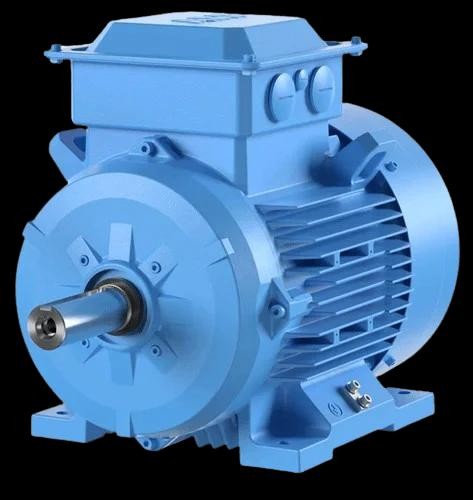

The efficiency of waste management depends largely on how effectively the waste is compacted. Waste reduced in volume takes up less space, is easier to transport and becomes more suitable for recycling processes. At the heart of this compaction process sits an electric motor capable of withstanding high torque and heavy-duty conditions. Waste presses and baling machines often encounter unexpected resistances, hard and irregular materials, and frequent start-stop cycles. This article examines why motor selection is so critical in waste presses and compaction systems, the hydraulic and direct-drive solutions, and the importance of high torque together with overload protection.
Waste press applications involve some of the most demanding operating conditions for a motor. The resistance of the material is unpredictable, the load can rise suddenly, and the machine engages and disengages hundreds of times a day. For a broad framework on the subject, our article on industrial electric motors offers a good foundation.
The Decisive Role of the Motor in Waste Compaction
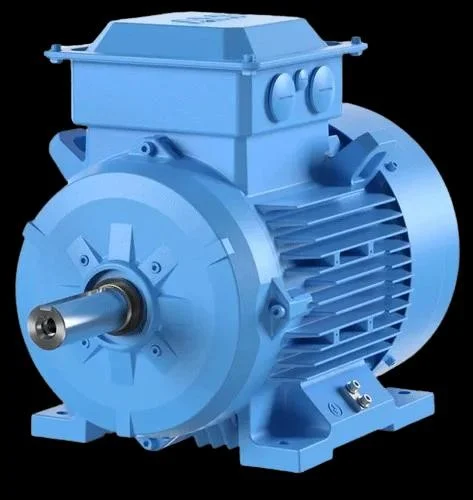
In a waste press the motor is the main element that directly determines the power and compaction capacity of the system. Whether it turns a hydraulic pump or directly drives a mechanism, the motor must reliably provide high torque. As the density and hardness of the waste material change, so does the load the motor encounters; for this reason the motor must be selected according to the most demanding conditions.
Hydraulic Press Pump Motor
The vast majority of waste presses are hydraulically driven. In these systems the electric motor pumps high-pressure hydraulic oil to generate the compaction force of the press. As the press closes the motor runs under full load, and the pressure rises as the material is compacted. This variable and high load profile requires the motor to be both powerful and durable. We examined the principles of correct motor selection in such applications requiring high starting torque, with examples, in our article on compressor motor starting torque.
Direct-Drive Compaction Systems
In some compaction systems, the motor directly drives the compaction mechanism through a gearbox. In this approach the hydraulic intermediary is eliminated and the motor's torque turns directly into compaction force. Because direct drive involves fewer intermediate elements, maintenance needs are reduced; however, the motor must produce very high torque and withstand sudden loads. In this application the motor is selected to provide high torque at low speed and is usually paired with a powerful gearbox.
The Source of the High Torque Requirement
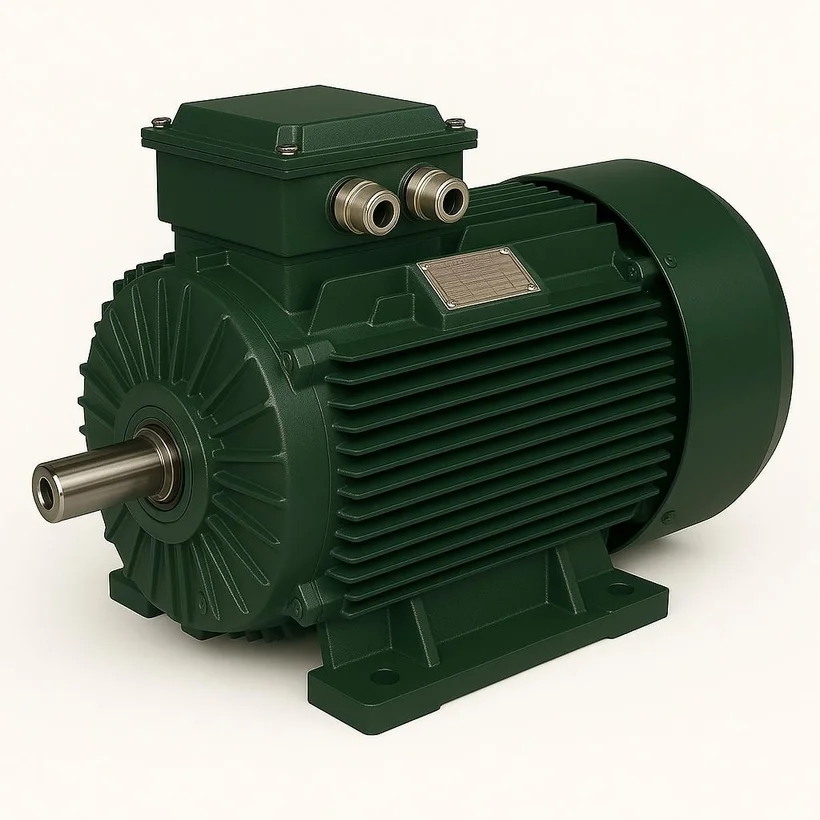
The most distinctive feature of a waste press is its high torque demand. The material being compacted resists, and this resistance increases as compaction progresses. The motor must have enough torque to overcome this growing resistance. Moreover, hard objects within the waste can create unexpected torque peaks. For this reason waste press motors are selected to have both high rated torque and the capacity to withstand transient overloads. A strong rotor winding and a robust structure are the foundation of producing this torque reliably.
Frequent Start-Stop Cycles and Thermal Load
Waste presses perform a large number of compaction cycles per day, depending on the production or collection pace. Each cycle means a start and a stop for the motor. During starting the motor draws a high current and heats up; frequently repeated starts accumulate this heating. For this reason waste press motors must have a thermal design suited to the frequent start-stop regime. A correctly selected motor runs without overheating despite hundreds of cycles a day and lasts for many years.
Comparison: Compaction System and Motor Expectation
The main types of waste compaction systems and their demands on the motor are summarized in the table below:
| System Type | Load Character | Key Expectation |
|---|---|---|
| Hydraulic press | Variable, high peak load | Power and durability |
| Direct drive | Low speed, very high torque | Torque capacity |
| Baling press | Frequent start-stop | Thermal endurance |
| Screw compactor | Continuous high torque | Speed stability |
Overload Protection and Safety
In a waste press, overload is not an occasional possibility but a constant reality. A hard, incompressible object mixed into the waste can suddenly block the motor. In this case an effective overload protection is essential to prevent damage to the motor and the mechanism. Thermal protection relays, overcurrent limiters and correctly set control systems protect the motor from these sudden loads. Well-designed protection both extends the life of the motor and prevents unexpected failures.
Soft Start and Mechanical Protection
Since waste press mechanisms are large and heavy, the motor engaging with a sudden torque stresses the mechanical transmission elements. A sudden start leads to excessive stress on gears and couplings. Using a frequency inverter or soft starter reduces this stress by accelerating the motor gradually. A soft start both extends the life of the transmission elements and limits the starting current on the grid. We addressed the control advantages provided by the frequency inverter in our article on energy saving with a frequency inverter.
Conveyor and Feeding Systems
Material is usually fed to the waste press through belt conveyors. These conveyors carry the waste to the press at a controlled pace and provide a continuous flow. The reliable and continuous operation of the conveyor motors is necessary for the press to be used efficiently. We examined the subtleties of conveyor motor selection in detail in our article on conveyor belt electric motor selection. The harmony of the feeding pace with the press cycle determines the overall efficiency of the line.
Baling and Discharge Systems
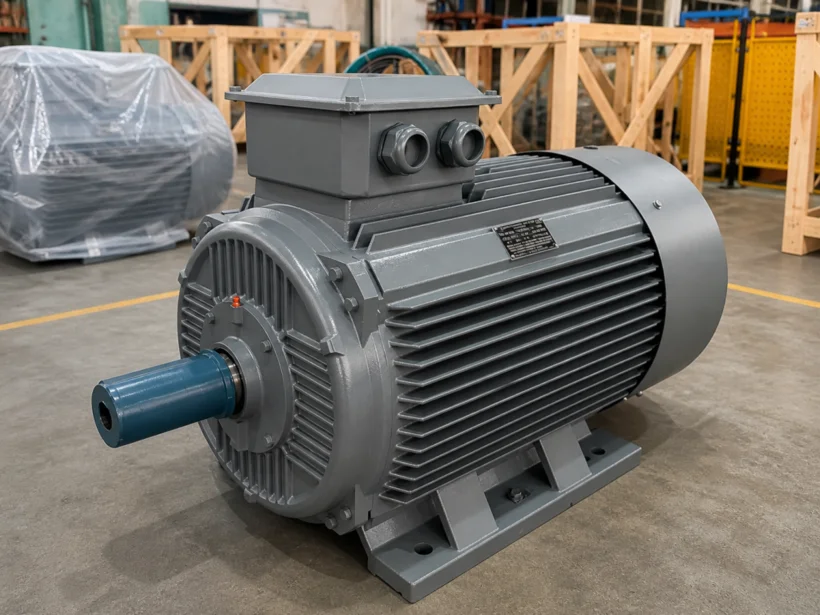
The compacted waste is often baled, tied and discharged from the press. These baling and discharge operations are also driven by electric motors. The baling mechanism ensures the bale is tightly tied, while the discharge system carries the bale out of the press. The reliable operation of these auxiliary drives is necessary for the press to perform an uninterrupted cycle. In systems where heavy bales must be lifted and moved, we addressed the fundamentals of motor selection for lifting applications in our article on crane and lifting electric motor.
Requirements of Heavy-Duty Design
Waste press motors are exposed to some of the heaviest-duty conditions in the sector. Dust, moisture, vibration and continuous high load stress the motor from every direction. To withstand these conditions the motor must have a robust housing, strong bearings and a durable winding structure. Heavy-duty design ensures the motor runs reliably for many years in this demanding environment. A correctly designed motor minimizes unexpected downtime and secures the continuity of waste management.
Environmental Conditions and Protection Class
Waste facilities are demanding environments where dust, moisture and corrosive substances are intense. The protection class of motors operating in these conditions must be selected to suit the environment. High IP protection prevents dust and water from entering the motor, protecting the insulation and bearings. We explained which protection class is required in which environment in our article on electric motor IP protection class. The correct protection class directly extends the life of the waste press motor.
Temperature Management and Continuous Monitoring
Frequent start-stop cycles and high load thermally stress the waste press motor. Monitoring the winding temperature of the motor enables overheating to be detected early and precautions to be taken. Continuous temperature control ensures the motor operates within a safe range and is long-lasting. We explained this topic in detail in our article on electric motor temperature control. For those who want to recall the basic working principles of the motor, our article on what is an electric motor will be useful.
Energy Efficiency and Operating Cost
Since waste presses run frequently and intensively, the efficiency of the motors directly affects the operating cost. Motors in the IE3, IE4 and IE5 efficiency classes produce significantly fewer losses than standard motors. These losses reach a large figure by the end of the year in a facility operating under continuous load. We explained in detail what the efficiency classes mean in our article on high-efficiency electric motors. A high-efficiency motor both lowers the energy bill and lasts longer by heating up less.
Correct Sizing and Reserve Margin
The sizing of a waste press motor must be based on peak load rather than average load. The sudden torque peaks that occur during compaction can trip out a motor selected only for average load. For this reason the motor is selected to have a sufficient reserve margin against peak load. Correct sizing is decisive for both reliability and long life. An oversized motor runs inefficiently at low load, while an undersized motor is constantly stressed; the right balance gives the best result.
Maintenance Strategy and Continuity
The continuous operation of the waste press is critical for the smooth flow of waste management. An unplanned stop leads to the accumulation of waste and the clogging of the facility. For this reason regular maintenance, bearing checks and vibration monitoring are necessary to prevent unexpected failures. Keeping spare motors of common power and speed values in stock makes rapid intervention possible in case of a fault. A well-planned maintenance strategy secures the uninterrupted operation of the waste press.
Compaction Needs by Different Waste Types
Waste compaction is not limited to a single material. Paper and cardboard waste compacts relatively easily and requires moderate torque. Plastic bottles and packaging waste, due to their flexible structure, demand more compaction. Metal waste, on the other hand, requires very high torque and a durable mechanism, because metal shows strong resistance to compaction. Mixed household waste, since it contains hard and irregular objects, requires the motor to be ready for sudden loads. Each waste type imposes a different load profile on the motor, so the motor of the compaction system must be selected according to the type of waste to be processed. The correct motor selection determines both the compaction efficiency and the reliability of the system.
Compaction Ratio and Volume Gain
The success of a waste press is measured by the compaction ratio it achieves. A high compaction ratio greatly reduces the volume of the waste, lowering transport and storage costs. However, reaching a high compaction ratio demands more torque from the motor; the resistance increases exponentially as the material is compacted. For this reason the desired compaction ratio is a decisive criterion in motor selection. A motor with sufficient power reliably reaches the targeted compaction ratio, while an inadequate motor cannot achieve the desired density and is constantly stressed. The correct motor directly determines the compaction capacity and therefore the efficiency of the operation.
Noise and Vibration Management
Waste presses can be a significant source of vibration and noise due to high torque and heavy mechanisms. An unbalanced motor or a worn transmission element increases this vibration, shortening the life of the machine and adversely affecting the working environment. Balanced, low-vibration motors provide longer life and quieter operation on waste press lines. Reducing vibration also delays the wear of bearings and couplings. We gathered the ways to reduce vibration in our article on reducing electric motor noise and vibration.
Automation and Cycle Control
Modern waste presses operate with automatic cycle control. The system automatically manages the loading, compaction and discharge of the material. In this automation the motor must integrate seamlessly into the control system. The frequency inverter makes it possible for the motor to provide the correct speed and torque at each cycle stage and supports the efficient operation of the system. The feedback data of the inverter enables the early detection of problems that may arise during the cycle. A well-integrated drive system reliably uses the full capacity of the waste press.
Stationary and Mobile Press Applications
Waste compaction systems can be stationary or mobile depending on where they are used. Stationary presses operate continuously at waste transfer stations and large facilities; in these the motor is selected according to a high cycle count and continuous load. Mobile presses and compaction waste collection vehicles, on the other hand, have a more variable operating pace, and the motor is expected to adapt to different conditions. Both applications require high torque and overload endurance, but they differ in terms of cycle frequency and continuity. For this reason motor selection must be customized to the location of use and the operating profile of the press. The correct selection provides reliable and efficient operation in both stationary and mobile applications.
Inverter-Compatible Motor and Speed Flexibility
The use of a frequency inverter in waste presses provides both a soft start and speed flexibility. The inverter optimizes the compaction process by adjusting the motor speed according to the resistance of the material; it can lower the speed and increase the torque in demanding sections. This flexibility makes it possible to process different waste types efficiently on the same machine. It is important that motors running with an inverter have insulation reinforced to withstand switching voltages. Selecting the motor and drive as a whole increases both efficiency and reliability. A well-matched motor-drive pair ensures the stable operation of the waste press under all conditions.
Spare Planning and Rapid Intervention
An unplanned stop of the waste press can affect the entire facility due to waste accumulation. For this reason spare motor planning for critical drive points is a wise investment. Motors produced in standard frame sizes and common mounting arrangements make this spare strategy easier; the same motor type can be used at different points. In case of a fault, rapid intervention with a spare motor from stock allows the facility to restart quickly. This standardization both lowers stock cost and eases the work of the maintenance team. A well-planned spare strategy is the assurance of waste management continuity.
DRG Motor Advantage for Waste Presses and Compaction Systems
DRG Motor offers IE3, IE4 and IE5 efficiency-class AC induction motors designed to withstand the heavy-duty and high-torque conditions of waste presses and compaction systems. A robust structure resistant to peak loads, a thermal design suited to frequent start-stop regimes, high IP protection for dusty and humid environments, and reliable performance against overload conditions make DRG motors a reliable choice for hydraulic press, direct-drive compaction, baling and feeding applications. To select a solution with the right torque, speed and efficiency class for every point of your waste management line, you can contact the DRG Motor engineering team and lower your operating cost while increasing your compaction capacity.