 English
 Türkçe

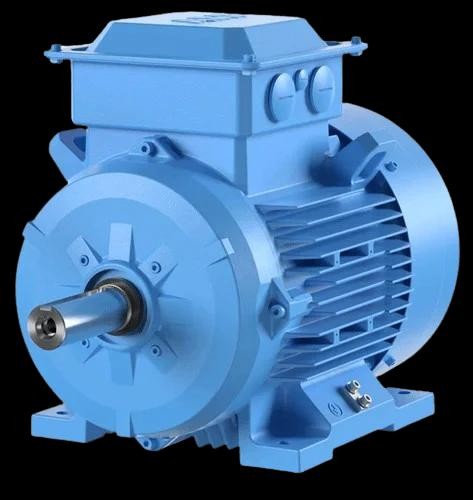

The efficiency of an electric motor is not a fixed value; it changes with operating temperature. As temperature rises, the electrical resistance of the winding copper increases, which raises copper losses and lowers efficiency. At the same time, high temperature accelerates the ageing of the insulation, shortening the motor's life. For this reason the relationship between temperature and efficiency lies at the heart of motor selection, both for energy saving and for long life. In this article we explain the effect of high temperature on motor efficiency, the copper loss mechanism, the concepts of ambient temperature and derating, the role of cooling, and why an efficient motor heats up less, drawing on DRG's manufacturing experience. Our articles on motor efficiency losses and motor temperature control are foundational resources that complement this subject.
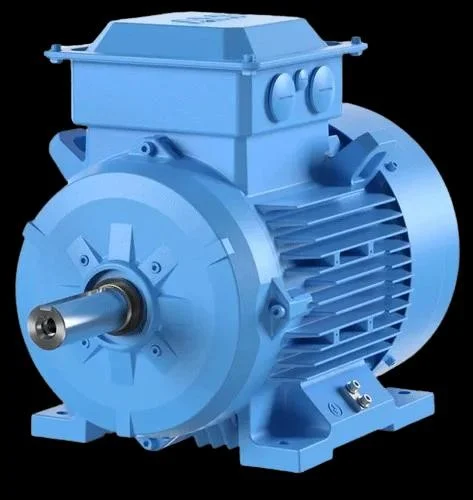
Why Are Temperature and Efficiency Related?
Most energy losses in a motor turn into heat, and this heat raises the temperature. The rising temperature in turn increases the resistance of the conductors, causing more loss. This is a self-feeding loop: loss produces heat, heat increases loss. An efficient motor is designed to keep this loop under control from the start. Part of the electrical energy supplied to the motor inevitably turns into losses; but the magnitude of these losses and how they are managed determine the motor's real performance. Because temperature is both the result of these losses and the cause of new ones, it lies at the centre of the efficiency equation.
The Increase of Copper Resistance with Temperature
The electrical resistance of copper increases almost linearly with temperature. As the winding temperature rises, the same current produces more voltage drop and therefore more power loss. This increase cannot be ignored; for example a significant rise in winding temperature can markedly increase copper loss. For this reason keeping the temperature low means directly preserving efficiency.
What Is Copper Loss (I²R Loss)?
Copper loss is the heat loss produced as current passes through the conductor resistance, and it depends on the square of the current multiplied by the resistance. Because resistance increases with temperature, copper loss rises. This loss is one of the largest items in motor efficiency losses and the one most sensitive to temperature. Occurring in both the stator and the rotor, this loss grows rapidly with current as the load increases. Controlling copper loss is therefore a design goal that must be addressed together with both the correct conductor cross-section and effective cooling.
The Mechanism of Efficiency Decline
As temperature rises, copper loss increases, this extra loss produces more heat, and efficiency gradually falls. The efficiency decline not only increases the energy bill but also causes the motor to produce the same mechanical power while drawing more electrical energy. A motor running at low temperature is more economical in this respect.
Iron Losses and Temperature
Although not as dominant as copper loss, iron (core) losses are also affected by temperature. The properties of the magnetic material change with temperature, which can affect hysteresis and eddy current losses. In the total loss picture, iron losses are evaluated as an integral part of temperature management.
The Effect of Temperature on Motor Life
High temperature accelerates the chemical ageing of the winding insulation. As a general approach, a certain rise in winding temperature significantly shortens insulation life. For this reason temperature directly determines not only efficiency but also the total lifespan of the motor. Insulation class selection is critically important at this point.
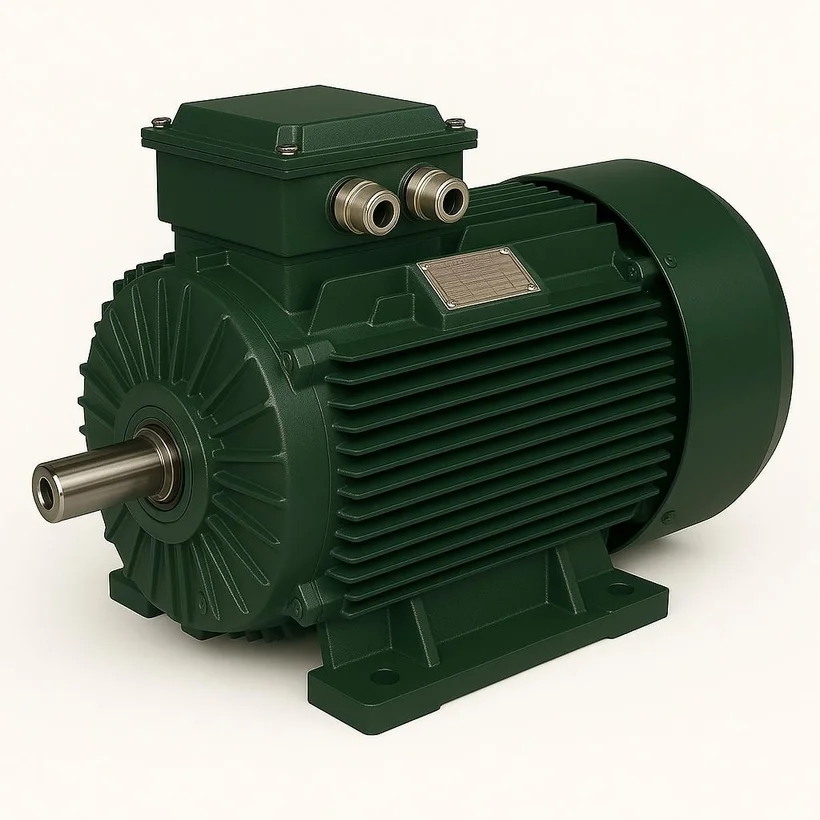
An Overview of the Temperature-Efficiency Relationship
The table below outlines the main effects of a rise in winding temperature on the motor. This relationship clearly shows why controlling temperature is so important for efficiency and life.
| Temperature State | Copper Resistance | Copper Loss | Efficiency | Insulation Life |
|---|---|---|---|---|
| Low / normal | Low | Low | High | Long |
| Moderate rise | Increases | Increases | Slightly falls | Begins to shorten |
| High | Markedly increases | Markedly increases | Falls | Markedly shortens |
| Excessive | Very high | Very high | Seriously falls | Rapidly depletes |
The Role of Ambient Temperature
The ambient temperature in which the motor operates is the starting point of the winding temperature. Standard motors are usually designed for a 40°C ambient. At a higher ambient temperature the motor runs hotter at the same load and its efficiency drops. Hot environments must be specifically considered in motor selection.
Derating: Reducing Power in Heat
When the ambient temperature exceeds the design value, the load the motor can safely carry decreases. This power reduction is called derating. At high temperature the motor is run below its rated power to prevent overheating and efficiency loss. Derating is an important practice that protects motor life in hot environments.
The Effect of Altitude
At high altitude the air density drops and cooling effectiveness decreases. This causes the motor to run hotter. Temperature and altitude are two environmental factors that together affect cooling capacity, and motor selection in high-altitude plants is made accordingly.
The Effect of Cooling on Efficiency
Effective cooling limits copper loss and preserves efficiency by keeping the winding temperature low. Fan cooling, frame fins and, when needed, auxiliary cooling enable the heat to be expelled to the environment. A well-cooled motor runs at a lower temperature at the same load and is therefore more efficient. Motor temperature control enables the monitoring of cooling performance.
The Relationship Between Fan Cooling and Speed
In most motors the cooling fan is attached to the motor shaft; therefore cooling effectiveness depends on the speed. At low speed the fan provides less air movement and cooling weakens. The relationship of pole count and speed therefore also affects cooling design. Auxiliary cooling is often needed in low-speed motors.
Why Does an Efficient Motor Heat Up Less?
A high-efficiency motor converts a larger portion of the energy it draws into mechanical power; less remains as heat loss. Less loss means less heating. This is a self-reinforcing positive loop: low loss, low temperature, preserved efficiency and long life. A high-efficiency motor is therefore advantageous in terms of both energy and durability.
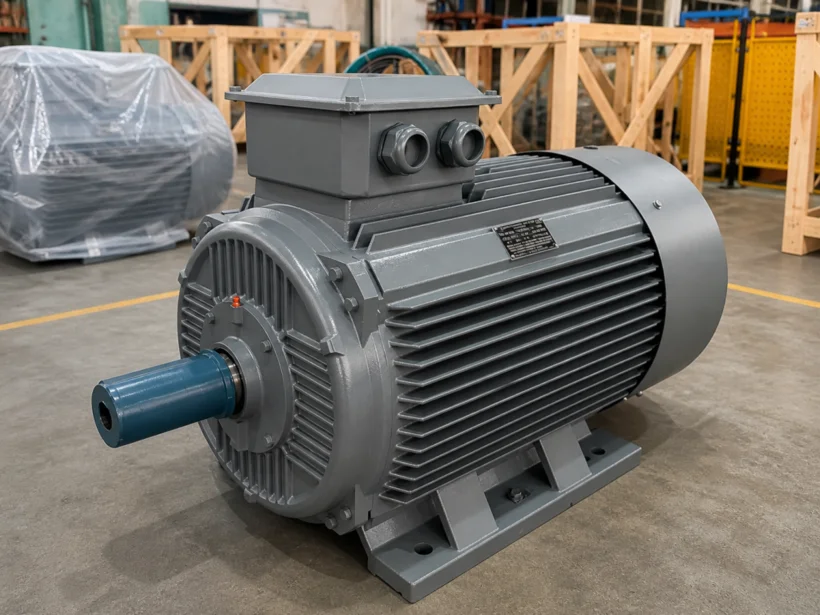
The Thermal Advantage of IE3 and IE4 Classes
IE3 and IE4 efficiency class motors heat up less because they are designed to run with lower loss. This low temperature ensures both the preservation of efficiency and the extension of insulation life. As the efficiency class rises, the motor's thermal behaviour also improves; this is the long-term return on the initial investment.
The Effect of Load Ratio on Temperature
When a motor runs close to its rated load, its efficiency is at its highest. At overload the temperature and loss rise rapidly; at very low load the efficiency can also fall. Correct sizing ensures the motor runs in its efficient temperature range. This balance is important in the choice of high and low kW motors.
Overload and Thermal Risk
When a motor is continuously run in overload, the winding temperature rises to dangerous levels. This both seriously lowers efficiency and rapidly degrades the insulation. A thermal protection relay and temperature sensors protect the motor by preventing this risk. Overload is the most common cause of temperature-related failures.
Temperature Monitoring Methods
The winding temperature can be monitored with a PTC thermistor, PT100 sensor or thermal protection elements. These sensors prevent damage by stopping the motor when the temperature exceeds a critical threshold. Temperature control systems are an active means of preserving both efficiency and life.
Duty Type and Continuous Operation
Continuously running motors reach thermal equilibrium and run at a stable temperature. In frequently stopping-starting motors there is additional heating at each start. The duty type (such as S1, S2, S3) is a parameter that affects the motor's thermal behaviour and therefore its efficiency.
Starting Current and Instantaneous Heating
During start the motor draws several times its rated current; this short-lived high current causes sudden heating in the winding. Frequent starting leads to the accumulation of this heating. Selecting the starting method correctly limits the thermal load arising from starting.
The Effect of Supply Quality on Temperature
Unbalanced phase voltage or harmonics produce extra loss and heating in the motor. A clean and balanced supply enables the motor to run at its design temperature. Supply cable sizing keeps heating under control by limiting voltage drop.
Cable and Connection Heating
An undersized cable or a loose connection heats up on itself, both producing loss and heating the motor's terminal region. The correct cable cross-section and a sound connection eliminate this extra heat source. Low resistance across the system means low temperature.
Thermal Management in Cranes and Heavy Drives
In applications that frequently start and stop, such as cranes, thermal management is critical. Crane and lifting motors are exposed to heat build-up due to repeated load cycles. Correct cooling and temperature monitoring preserve efficiency and life in these applications.
Temperature in Mills and Continuous Heavy Load
Motors running under continuous heavy load, such as mills, operate at a high thermal equilibrium. In mill and grinding motor applications, the cooling capacity determines whether the motor can run safely under continuous high load. Thermal design is the basis of the reliability of these motors.
Temperature Control in Industrial Environments
Hot industrial environments such as the vicinity of furnaces, foundries or sun-exposed open sites raise the motor temperature. Industrial electric motors are selected with suitable insulation class and cooling solutions for these environments. Environmental analysis is the precondition for correct motor selection.
The Relationship Between Energy Saving and Temperature
Running the motor at low temperature provides direct energy saving. Every degree of unnecessary heating means a certain amount of extra loss. In continuously running motors these losses accumulate throughout the year, creating a significant cost. Low temperature is both an environmental and an economic gain.
The Effect on Total Cost
The greater part of a motor's lifetime cost comes from energy consumption. Temperature-related efficiency loss quietly increases this cost. An efficient motor running at low temperature improves the total cost of ownership by lowering both the energy bill and maintenance and replacement costs.
The Thermal Benefit of Correct Motor Selection
A motor selected with power suited to the application, the right efficiency class and suitable cooling runs in its efficient temperature range. This selection preserves efficiency, extends life and lowers energy cost. Temperature should be regarded as an unseen but decisive criterion of motor selection.
Lubrication and Bearing Temperature Relationship
High temperature affects not only the winding but also the bearings and grease. As temperature rises, grease life shortens and the lubrication interval must be reduced. An overheated bearing increases friction loss and reflects negatively on efficiency too. Temperature management is a holistic approach that protects bearing health as much as the winding.
Thermal Margin in Design
A good motor design leaves a thermal margin that keeps the winding temperature within the safe limits of the insulation class even in the expected worst case. This margin acts as a buffer against sudden load increases and ambient temperature fluctuations. DRG determines this margin in design according to the real conditions of the application.
Hot Spot and Average Winding Temperature
Not every point of the winding is at the same temperature; the hot spot, the hottest region, is higher than the average winding temperature. It is this hot-spot temperature that truly determines insulation life. In design the insulation class is selected taking the hot spot into account. Looking only at the average temperature can therefore be misleading; what is critical is keeping the hottest region within safe limits.
Thermal Equilibrium Time
When a motor begins to run its temperature does not stabilise immediately; it rises over a certain period to reach thermal equilibrium. This time depends on the motor's mass, load and cooling. The efficiency of a motor that has reached thermal equilibrium also settles at this point. Short-term measurements may not fully reflect the motor's real operating temperature and efficiency.
Cooling Type Options
Motors can be cooled by different methods such as self-fanned surface cooling, auxiliary-fanned (independent) cooling or water cooling. In motors running continuously at low speed or high load, an independent fan provides constant cooling regardless of speed. Selecting the cooling type according to the application plays a decisive role in preserving efficiency.
The Effect of Dust and Dirt on Cooling
Dust accumulating on the frame fins and fan cover hinders heat dissipation and makes the motor run hotter. Regular cleaning preserves the effectiveness of the cooling surfaces. A neglected cooling surface is a silent cause of efficiency loss and overheating. The cleaning of cooling channels is a priority check item in maintenance.
Efficiency Class and Payback Period
A higher efficiency class motor provides both energy saving and low maintenance by heating up less. The difference in initial investment is recovered over a certain period thanks to low energy consumption and long life. In continuously running motors this payback period is usually short; afterwards the efficient motor begins to produce a net gain. Keeping the temperature low makes this gain lasting over time.
The Role of Monitoring and Preventive Maintenance
Regular monitoring of temperature shows efficiency loss and approaching failures early. The cleanliness of the cooling channels, the health of the fan and checking the load balance keep the motor at its design temperature. Preventive maintenance preserves both efficiency and life over a long period.
DRG Motor for the Balance of Temperature and Efficiency
DRG designs the AC induction motors it manufactures in IE3 and IE4 efficiency classes with the goal of low loss and low heating. In demanding conditions such as high ambient temperature, high altitude or heavy load, we secure your motor's efficiency and life with the correct insulation class, suitable cooling and, when needed, derating solutions. A motor that heats up less is a more efficient and longer-lasting motor. Get in touch with the DRG engineering team for temperature, cooling and efficiency optimisation; together we will select the coolest, most efficient motor best suited to your project.