 English
 Türkçe

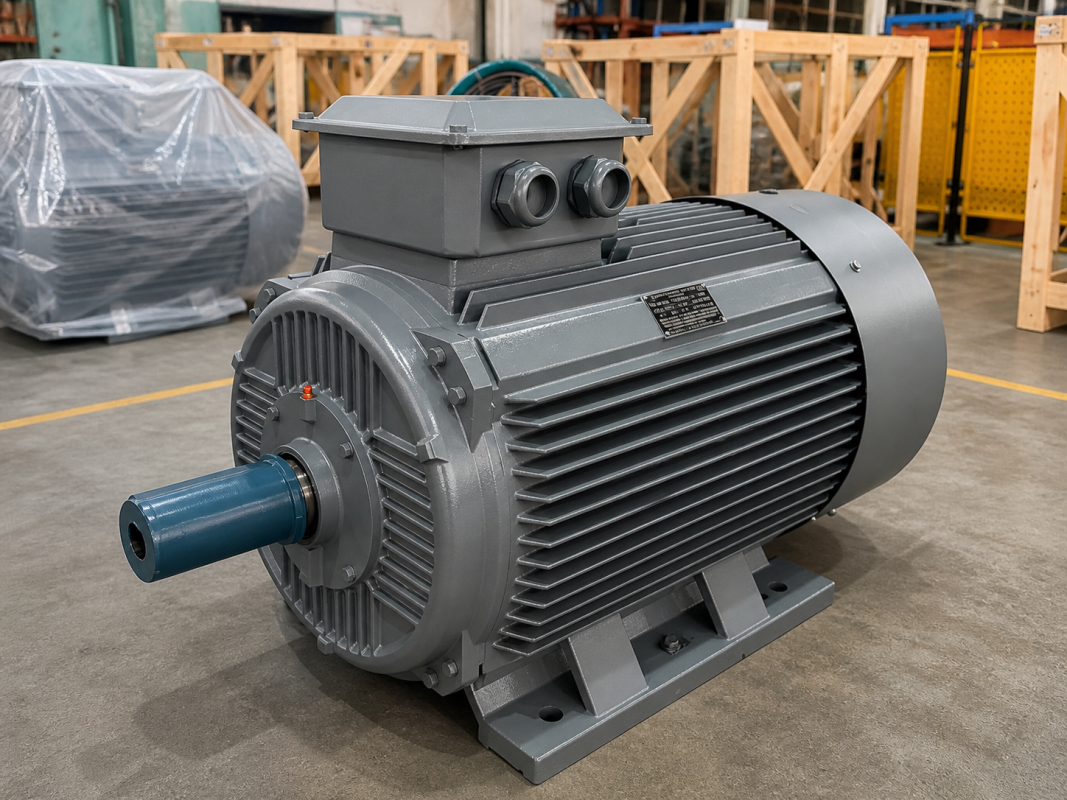

At the heart of an induction motor there is a part that often goes unnoticed but directly determines efficiency: the squirrel-cage rotor. The rotating magnetic field produced by the stator induces a current in the rotor bars, and this current makes the motor turn. The metal from which these bars are cast determines how much energy is converted to heat, that is lost, in the rotor. Traditionally made of aluminum, these bars, when replaced with copper, markedly reduce rotor loss and let the motor reach higher efficiency classes. In this article we look at the difference between aluminum and copper die-cast rotor bars, copper's contribution to efficiency, the challenges in manufacturing, and in which power class this choice is economical.
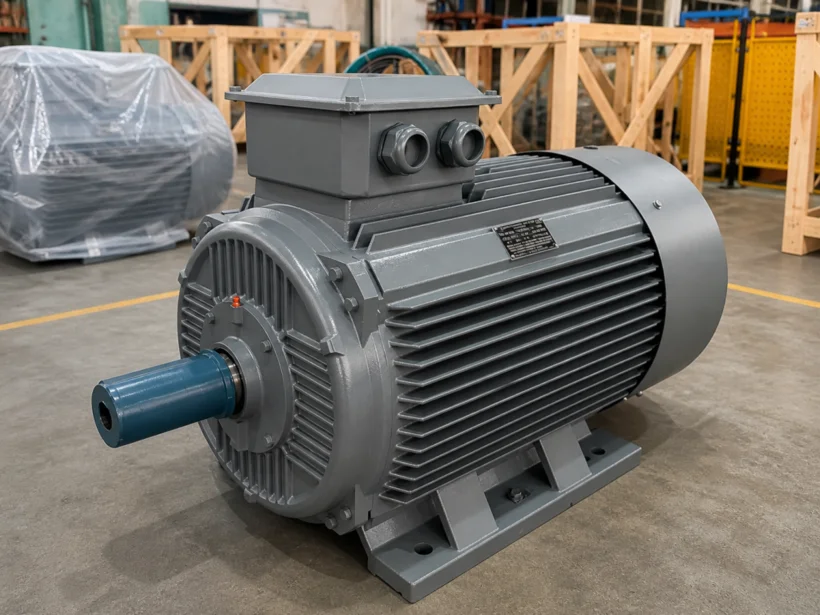
How does a squirrel-cage rotor work?
The squirrel-cage rotor takes its name from its structure: conductor bars placed in the slots of a cylindrical lamination stack are joined at both ends by rings and look like a cage. As the stator field rotates, a current is induced in these bars and the resulting force turns the rotor. This structure is a simple, robust and maintenance-free design.
Is a rotor bar the same as a rotor winding?
There is an important distinction here. The subject of this article is the squirrel-cage rotor bars produced by die casting. A wound rotor is a completely different structure; there, copper windings are deliberately placed in the rotor and these windings can be connected to an external circuit. Our article on rotor copper-wound electric motors deals with that WOUND structure. In this article the subject is not the winding but the die-cast bar; the two must not be confused.
Why did aluminum become the common choice?
The aluminum die-cast rotor has been the standard solution for decades. Aluminum has a low melting temperature, is suitable for pressure die casting, and its cost is reasonable. These properties make aluminum a practical and economical option in mass production. Most standard motors are therefore produced with an aluminum cage.
Copper's basic advantage: low resistance
Copper's electrical resistance is markedly lower than aluminum's. The current flowing in the rotor bars, multiplied by the bar's resistance, produces heat, that is loss. At the same current, a lower-resistance copper bar produces less heat. This directly means a reduction in rotor loss.
To make this difference concrete: of two bars carrying the same current, the more resistive one heats up more, and this heat is lost before it can turn into useful work. Copper's lower resistance means doing the same job while spending less energy. Moreover, this gain is repeated every hour the motor runs; that is, it is not a one-off but a continuous advantage. Since the rotor is one of the hottest regions of the motor, every improvement here reflects disproportionately on total efficiency.
How does rotor loss affect efficiency?
Rotor loss has an important share in a motor's total losses. In our article on where efficiency losses come from we covered the origin of the losses. Lowering the resistance of the rotor bar reduces this item and raises the motor's overall efficiency. This is precisely one of the factors that can move the efficiency class up a notch.
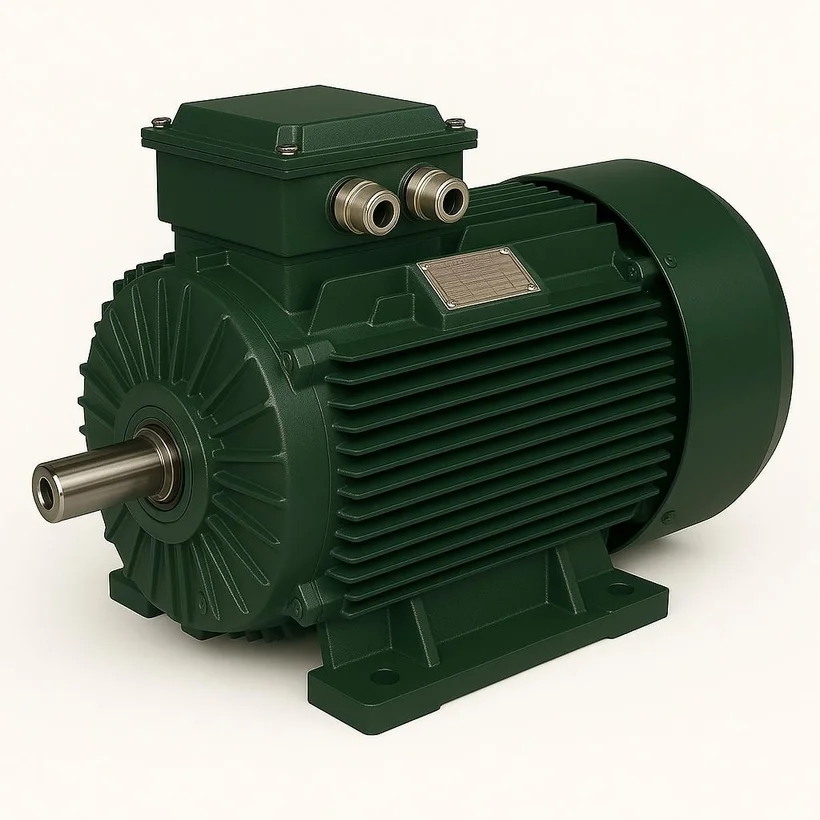
Contribution to IE4 and IE5 efficiency
Reaching high efficiency classes requires improvement in every loss item. In our article on what is a high-efficiency motor we discussed the differences between IE3, IE4 and higher classes. The copper die-cast rotor, especially for IE4 and IE5 targets, is an important design decision that makes reaching these classes easier by lowering rotor loss.
The relationship between slip and efficiency
In an induction motor the rotor turns slightly slower than the stator field; this difference is called slip. As rotor resistance drops, the slip required for the same torque decreases. Lower slip means less heat loss in the rotor. The copper bar lowers the slip, brings the motor closer to its rated speed, and raises efficiency.
Reduced slip also means the motor holds its speed better under load. When the load changes, a copper-rotor motor experiences less speed drop than an aluminum one; this is an additional advantage in applications where speed stability matters. This way of efficiency and speed stability going hand in hand makes the copper rotor valuable not only for energy but also for process quality.
Why is copper rotor manufacturing difficult?
With copper's advantages so clear, why is not every motor produced with a copper rotor? The answer lies in manufacturing. Copper's melting temperature is far higher than aluminum's. This requires the casting molds to withstand much harsher conditions and shortens mold life. Copper casting demands special equipment and a more complex process.
While the high-temperature molten copper is poured into the mold, the metal must fully fill the slot voids and must not leave gaps due to shrinkage during cooling. This makes precise control of the casting temperature, pressure and cooling rate mandatory. When the process is not managed correctly, invisible voids form in the bars and these can wipe out the efficiency gain. This difficulty explains why the copper rotor is preferred more in motors targeting high efficiency and in certain power ranges; manufacturing maturity and volume are the factors that make this choice economical.
Casting quality and the void problem
The most critical issue in a copper die-cast rotor is that the bars are cast void-free and homogeneously. Small voids left inside a bar narrow the current path, increase resistance and overshadow the expected efficiency gain. For this reason copper die casting requires tight process control and experience. A voided copper bar promises copper's low resistance on paper but cannot keep that promise in the field; because the current is forced to detour around the voids and the effective cross-section shrinks. Therefore the advantage of the copper rotor arises not only from the material itself but from the quality of the casting. Without good casting, copper's potential remains on paper.
Thermal behavior and heat dissipation
Copper conducts heat better than aluminum. This allows the heat generated in the rotor to dissipate faster. A cooler-running rotor contributes to the motor in terms of both insulation and bearing life. In our article on electric motor insulation class we covered the effect of temperature on insulation.
Considering it together with lamination quality
Rotor efficiency depends not only on the bar material but also on the quality of the lamination stack. In our article on the effect of low-loss electrical steel on motor efficiency we addressed this subject. When the copper bar and low-loss lamination come together, rotor loss is minimized.
Starting behavior and torque
The material and shape of the rotor bar affect the motor's starting torque and starting current. Although the copper rotor, thanks to its low resistance, is efficient in rated operation, its starting characteristic must be carefully balanced through bar geometry. A well-designed copper rotor offers both efficient operation and adequate starting torque.
Bar geometry and slot shape
Rotor performance is determined not only by the material but also by the geometry of the bar and the slot. The depth and width of the bar and the shape of the slot affect both starting torque and rated efficiency. When working with a low-resistance material such as copper, this geometry is carefully designed to keep the starting characteristic at the desired level. Thus copper's efficiency advantage is obtained without compromising starting performance. Geometry and material are two complementary design decisions.
Compatibility with soft starting
A copper-rotor motor works well with controlled starting in applications where the starting current must be managed. In our article on the advantages of soft starting we explained the benefits of controlled starting. Soft starting combines the copper rotor's efficiency advantage with mechanical comfort.
Efficiency together with drive feeding
The low loss of the copper rotor shows itself in applications running at variable speed with a frequency inverter too. In our article on how a frequency inverter saves energy we covered the drive's role in energy gain. An efficient rotor, together with a drive, raises system efficiency even further.
In which power class is it economical?
The extra cost of the copper rotor must be compared with the energy gain it provides. In motors running continuously for long hours, the savings of low rotor loss accumulated over the years can more than cover the extra production cost. In small motors running briefly and infrequently, this equation is not always set in copper's favor.
Operating hours and payback
How many hours a year a motor runs directly determines the copper rotor's payback period. An industrial motor running long hours a day quickly pays back its extra cost thanks to its lower loss. Payback analysis is the foundation of the right choice. In this analysis not only the energy price but also the total consumption accumulated over the motor's life must be taken into account. The purchase price of a motor is often small next to the energy it spends over its lifetime. For this reason even a few points of efficiency difference turn into considerable savings in a long-running motor. When assessing the extra cost of the copper rotor, the decision must rest not on the initial price alone but on total cost of ownership.
Together with correct sizing
To benefit fully from the copper rotor's gain, the motor must be correctly sized. In our article on the oversized motor partial-load trap we covered how wrong sizing overshadows efficiency. Even the most efficient rotor cannot show its potential in an oversized motor running at partial load.
Integrity with frame material
The gain produced by an efficient rotor is preserved by the motor's ability to dissipate heat. In our article on the cast iron electric motor we explained the heat-dissipation advantages of a cast frame. The copper rotor and a solid cast frame are two complementary parts of an efficient and durable motor.
The copper rotor in industrial applications
Continuously running industrial applications such as pumps, fans, compressors and conveyors are the areas that benefit most from the copper rotor's efficiency advantage. In our article on industrial electric motors we covered the requirements of different applications. Every application with high operating hours makes the copper rotor economical.
In crane and lifting applications
In lifting applications torque and efficiency matter together. In our article on crane and lifting electric motors we covered the requirements of this application. The copper rotor, when correctly designed, can offer an advantage in both efficiency and torque in these applications.
Reading the efficiency class from the nameplate
It is possible to read a motor's efficiency class, and therefore the quality of its rotor design, from its nameplate. Our article on reading the IE class from the motor nameplate shows how to interpret the values on the nameplate. A high efficiency class is often the sign of a well-designed rotor.
Verifying the gain through energy monitoring
The savings provided by the copper rotor become concrete only through measurement. In our article on energy monitoring in electric motors we described monitoring strategies. A before-and-after consumption comparison shows the value of the choice.
Insulation in drive-fed use
If an efficient copper-rotor motor is to run with a drive, the winding insulation must be suited to this as well. In our article on reinforced insulation in inverter-fed motors we covered this subject. The efficiency gain becomes permanent together with insulation endurance.
Shaft voltage and bearing protection
In efficient motors fed by a drive, shaft voltage and bearing currents must not be neglected. In our article on VFD shaft voltage and bearing currents we addressed this subject in depth. The life of an efficient motor is also protected by bearing protection.
When choosing between copper and aluminum
The right choice depends not on a single rule but on the whole of the application. Operating hours, load profile, initial investment budget and the targeted efficiency class must be assessed together. In some applications aluminum is sufficient and economical, while in continuously running high-power motors the copper rotor offers a clear gain.
Weight and mechanical balance
Copper is a denser metal than aluminum. This affects the rotor mass, and therefore the inertia, of a copper-rotor motor. In design this difference must be taken into account in terms of starting behavior and dynamic balance. A well-designed copper rotor balances this difference to offer stable operation. While increased inertia may lengthen the starting time in some frequently start-stop applications, it creates no notable disadvantage in applications running at constant speed. What matters is that the rotor design is compatible with the application's operating regime; when this compatibility is achieved, the weight difference does not become a problem.
Standards and comparability
Efficiency classes and measurement methods are defined by international standards. The gain provided by the copper rotor becomes concrete through efficiency values measured according to these standards. A standard measurement allows different motors to be compared fairly.
Maintenance and long life
The squirrel-cage rotor is a robust, maintenance-free structure. The cooler operation of the copper bars reduces the thermal load on the rotor and the surrounding components, indirectly contributing to motor life. A low-loss rotor brings not only energy but also durability.
Future efficiency targets and rotor design
Efficiency-class targets rise every year, and this places more burden on rotor design. Every design decision that lowers rotor loss makes reaching the future's targets easier. The copper die-cast rotor is an important but not by itself sufficient step on this path; the real gain arises from the harmonious design of the rotor, lamination, winding and frame.
DRG Motor for the right rotor solution
From the outside, the metal from which the bars inside a motor are cast may look like an unimportant detail. Yet this choice directly affects the energy the motor will spend over the years, the heat it will produce and the efficiency class it can reach. The copper die-cast rotor, in the right application, offers a large efficiency gain for a small cost difference. What determines the choice is not the material itself but the application's operating profile and the targeted efficiency. At DRG Motor we stand by you to help you select our IE3, IE4 and IE5 efficiency-class induction motors with the right rotor solution according to your application's operating hours and efficiency target; to identify the most suitable motor for your need, get in touch with us.