 English
 Türkçe

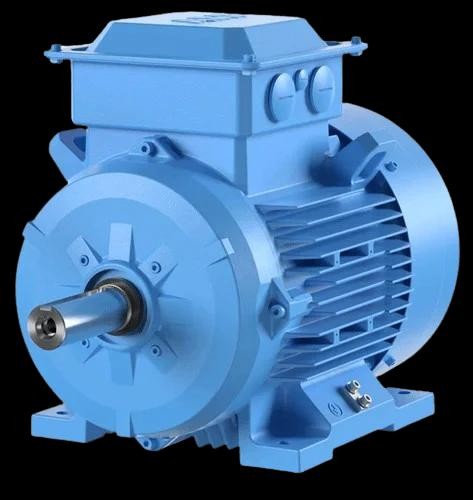

When buying an electric motor, many businesses reach for a slightly larger frame "just to be safe." On the surface this feels prudent, but it quietly turns into a trap that drains money for the entire life of the motor. An AC induction motor reaches its most efficient operating point when its rated power is genuinely used. When it runs far below rated load, say at 30-50% load, both its efficiency and its power factor fall significantly. In this article we explain why oversizing is a cost rather than a saving, what right-sizing gives a business, and how you can detect oversized motors in your existing facility, drawing on DRG Motor's experience with IE3, IE4 and IE5 induction motors.
What is oversizing and why is it so common?
Oversizing means selecting a motor whose power clearly exceeds the real demand of the application. Fitting a 37 kW motor to a 22 kW load is a textbook example. This habit has many causes: stacked safety margins during design, the desire to leave headroom for possible future expansion, replacing an old motor with the same rating without thinking, or simply never measuring the load at all. The result is that facilities are full of motors using less than half of their rated power. In the selection of industrial electric motors this issue is often overlooked.
Another source of oversizing is that different disciplines add safety margins one after another. The process engineer calculates the demand and adds a margin; the mechanical designer adds another margin on top; the procurement team says "let's round up to the next standard rating." When all these small margins stack, a motor far above the real need lands on site. This chain of margin-stacking is the most common driver of oversizing in industry.
When does a motor run at its most efficient point?
The efficiency curve of an AC induction motor is not a flat line. Efficiency starts climbing from roughly 50% load and usually reaches its peak between 75% and 100% load. This band is called the motor's "sweet spot." As the load drops below this band the efficiency curve bends downward, and below 30% load the decline accelerates. The goal of right-sizing is therefore to keep the motor running continuously inside that sweet spot.
The shape of the efficiency curve also depends on the efficiency class. The curve of a high-efficiency motor stays flatter in the partial-load region, meaning efficiency drops less when load falls. A lower-class motor, by contrast, loses efficiency much faster as it moves away from its sweet spot. Choosing both the right power and the right efficiency class together is the strongest protection against the partial-load risk.
Why does efficiency fall at partial load?
A motor's losses fall into two main groups: load-dependent losses and load-independent fixed losses. Copper losses (heating in the winding resistance) rise with load. But iron losses, friction and windage losses are constant regardless of load; they exist even when the motor spins with no load. At low load the output power shrinks while these fixed losses stay the same, so the ratio of losses to total power grows and efficiency falls. It is worth studying where efficiency losses come from in detail at this point.
Power factor falls even harder at partial load
The quantity that drops even more dramatically than efficiency is power factor. The magnetizing current an induction motor draws to build its magnetic field is almost independent of load; this reactive current flows even at no load. While power factor sits at 0.85-0.90 at full load, it can drop below 0.5 at 30% load. A low power factor means drawing more current from the grid to do the same useful work. Our article on power factor and cosφ details this mechanism.
The physical reality underneath is this: the total current an induction motor draws consists of an active component that does useful work and a reactive component that builds the magnetic field. As load drops the active component shrinks but the reactive component stays nearly constant. The share of reactive current in the total grows, the phase angle widens, and the power factor falls. In an oversized motor this condition is permanent, because the motor is never loaded enough to fill its magnetic field.
The reactive-current penalty: the hidden line on the bill
The cost of a low power factor is not limited to efficiency. In industrial tariffs, a power factor that drops below a certain threshold triggers a reactive-energy penalty. Oversized motors running at partial load are among the chief reasons a facility's average power factor is dragged down. So a large motor not only runs less efficiently, it also adds a direct penalty line to the bill.
Many businesses try to offset this penalty by installing power-factor correction banks. Correction is a valid measure, but it addresses the symptom rather than the source. If most of the reactive load comes from oversized motors permanently turning at partial load, the smartest path is to right-size the motors first and then correct only the remaining need. That way the correction investment shrinks and the efficiency gain comes as a bonus.
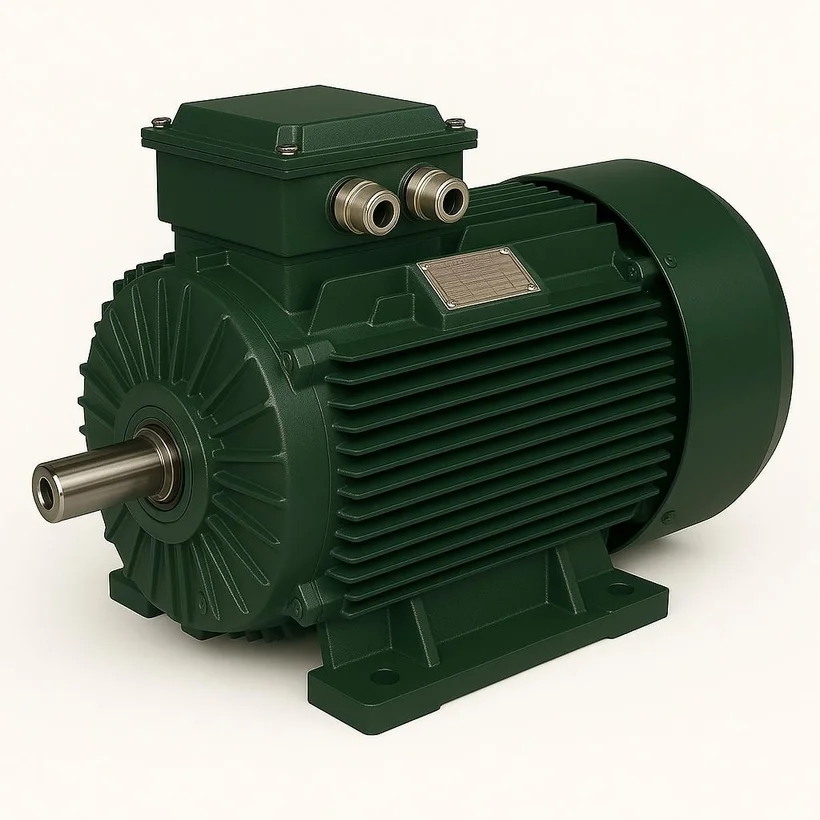
The upfront cost of oversizing
The penalty for a large motor starts on day one. A higher-power motor is more expensive, heavier and physically larger. Accordingly the cable cross-section, protection devices, contactors and even the foundation and mounting structure all grow with it. So before the business has spent a single kWh of energy, it has already invested extra for power it does not need.
Running cost: a small efficiency gap, big numbers
For a motor that runs continuously, the annual energy cost is many times the purchase price. Even a few percentage points of efficiency loss at partial load turns into a substantial figure on a motor running thousands of hours a year. Oversizing is therefore not a one-off loss but a lifelong one.
Within a motor's total cost of ownership the purchase price is usually a very small share; the real weight is the energy it consumes over its life. This fact explains why the "let's buy a bit bigger" logic is so expensive. The extra purchase price of the large motor compounds over the years through the efficiency lost at partial load. Right-sizing eliminates this hidden lifetime cost from the start.
The cooling-fan paradox
An overlooked disadvantage of oversized motors is that their own cooling fans are also large. The cooling fan on the motor shaft is designed in proportion to the motor's power and consumes energy as it spins. A lightly loaded large motor, despite producing very little useful work, has to keep spinning an oversized fan continuously. This is part of the fixed losses that pull efficiency down at low load, and it falls directly with right-sizing.
Right-sizing: actually measuring the load
The first step of right-sizing is to stop guessing and start measuring. Monitoring the current, power and operating profile the motor draws over a period reveals the real load level. In many cases the measurement shows the motor running far below its rated power. The methods of electric motor energy monitoring form the foundation of this detection.
The sweet spot: a 75-95% load target
A right-sized motor should be loaded to roughly 75-95% of its rated power under normal operating conditions. This band guarantees both the highest efficiency and a healthy power factor, while still leaving enough headroom for short-term load increases. The goal is not to constantly strain the motor but to keep it at the operating point it was designed for.
The effect of dropping one frame size
The solution is often undramatic: even dropping a single frame size makes a big difference. Moving from 37 kW to 30 kW, or from 30 kW to 22 kW, noticeably improves both efficiency and power factor once the load is brought into the sweet spot. Determining the right power through the kW and speed table makes this decision easier.
Efficiency class and sizing must be considered together
The right frame choice alone is not enough; the motor's efficiency class is critical too. A right-sized IE4 or IE5 motor consumes far less energy than an oversized IE3 motor. DRG Motor's high-efficiency motors are designed to keep the efficiency curve higher even in the partial-load region.
Speed control is not always the answer
Adding a frequency inverter to an oversized motor helps in some cases but does not solve the underlying problem. If the load is fixed and only the motor is large, the right solution is to select the motor in the right size. In variable-flow pump and fan applications, on the other hand, saving energy with a frequency inverter truly makes sense. The two approaches should not be confused.
Pole count and speed matching
Sizing is not only about power; the correct speed also affects efficiency. Choosing the pole count that matches the speed the application requires eliminates unnecessary belt-and-pulley reductions and the losses they bring. When the relationship between pole count and speed is set up correctly, system efficiency rises too.
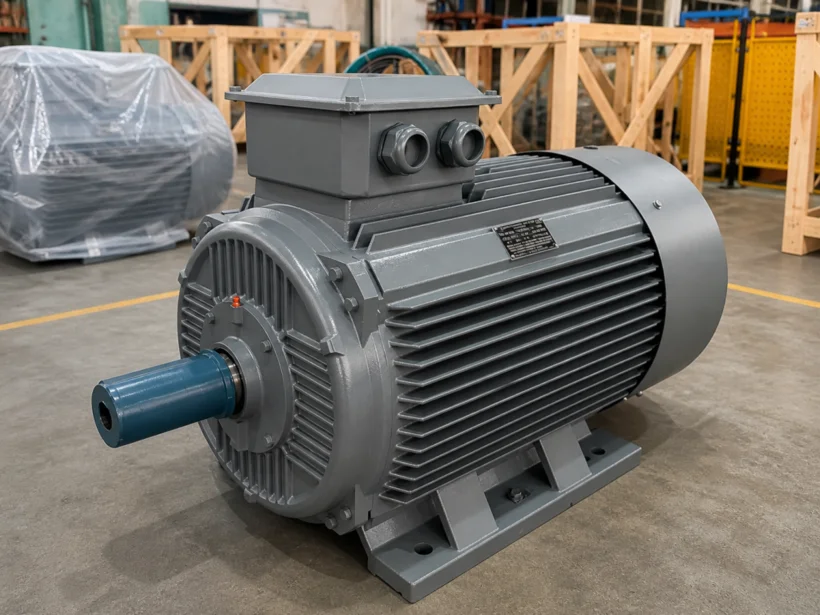
How are oversized motors detected?
There are several practical indicators for finding the large motors in your facility. The first sign is that the current the motor draws stays well below its rated current; even a clamp-meter reading at the panel gives a clue. The second sign is that the motor runs unusually cool; a motor at full load reaches a certain temperature, and one that stays cold permanently is probably lightly loaded. The third indicator is a low power factor and reactive-penalty bills.
Deciding with monitoring data
A single measurement can be misleading; the real decision should be made by monitoring the operating profile over a period. If the load changes during the day, what matters is the load level where the motor spends most of its time. When temperature control and current monitoring are evaluated together, it becomes clear which motors can be downsized.
When evaluating monitoring data, looking at the load histogram is very enlightening. This chart shows how long the motor spends at each load level. If the center of gravity of the histogram is below the 40-50% band, the motor is almost certainly oversized. If it gathers in the 75-90% band the motor is correctly chosen. This simple visual analysis lifts the sizing decision out of intuition and bases it on data, making investment decisions far more reliable.
The role of the cast-iron frame in sizing
For a right-sized motor to stay healthy throughout its life, a durable mechanical structure is required. DRG Motor's cast-iron-bodied induction motors dissipate heat steadily and resist vibration, keeping the motor at its designed operating point for a long time. A solid body protects the efficiency gain of right-sizing for years, because a motor that is not mechanically strained does not stray from its efficiency curve.
Winding and coil quality matter at partial load too
A significant part of the fixed losses at partial load comes from the winding and the magnetic circuit. A motor that uses quality copper winding and a low-loss lamination stack produces fewer fixed losses even when lightly loaded. Rotor and copper winding quality and winding quality directly determine how flat a motor's efficiency curve stays outside the sweet spot. So the right-sizing decision delivers its best result when combined with a motor of high manufacturing quality.
The total contribution of right-sizing to the business
Right-sizing does not only lower the energy bill. A correctly loaded motor runs with a more stable power factor, escapes the reactive penalty, is installed with a smaller and cheaper infrastructure, and usually shows lower maintenance needs. When all these items come together, avoiding oversizing markedly reduces the business's total cost of ownership.
DRG Motor: the right power, the right efficiency
At DRG Motor our belief is clear: the best motor is not the one bigger than you need, but the one that fits your need exactly. Our IE3, IE4 and IE5 induction motor range lets you match the right power for the real load of your application with the right efficiency class. To find out whether the motors in your facility are oversized and to move to a solution at the right power, you can review our DRG Motor product page and we can determine the most suitable motor for your project together. Right-sizing is the quietest yet most lasting form of saving.