 English
 Türkçe

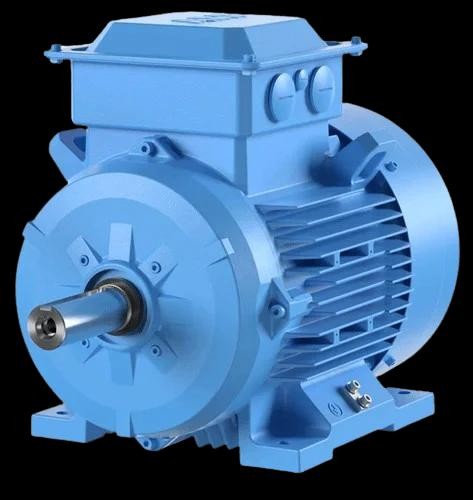

One of the most fundamental questions when designing a drive system is this: AC motor or DC motor? This choice is not merely a technical preference; it shapes the entire life cycle of a plant, from energy cost and maintenance burden to ease of installation and service life. The right answer is rarely a simple "one is always better than the other"; the answer lies in the application itself. In this article we compare AC and DC motors in a balanced way across operating principle, speed control, maintenance, cost, and field of use, and we explain why AC induction motors paired with frequency inverters have become the dominant solution in modern industry. For a broader look at the basics, our what is an electric motor article is a good starting point.
The Core Difference Between AC and DC Motors
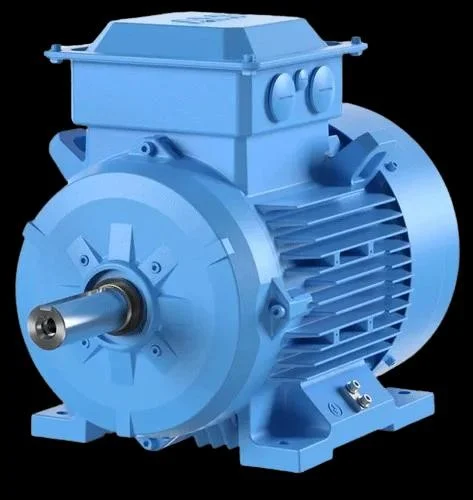
In the simplest terms, AC motors run on alternating current while DC motors run on direct current. But the difference goes far deeper than the direction of the current. In a DC motor, the current must be delivered to the rotor windings in a specific sequence to produce rotation; in traditional designs, brushes and a commutator handle this task. In an AC motor, rotation is produced by a self-rotating magnetic field created in the stator windings. This basic distinction defines the entire character of the two motor families: a DC motor needs mechanical parts in contact to rotate, whereas an AC induction motor rotates through a contactless magnetic interaction.
How an Alternating Current Motor Works
In a three-phase AC induction motor, currents applied to the stator windings with a 120-degree phase shift create a magnetic field that rotates within the air gap. This rotating field induces a current in the rotor, and the rotor turns as it tries to catch up with the field. The fact that the rotor can never quite reach the speed of the rotating field is called "slip," and it is the fundamental operating condition of the induction motor. If you want to explore this phenomenon in detail, our induction motor slip explained article covers it in depth.
How a Direct Current Motor Works
A DC motor has a fixed magnetic field and an armature that rotates within that field. The direction of the direct current applied to the armature must be reversed each time the rotor completes a half turn so that the torque always stays in the same direction. In traditional DC motors, the commutator and brush set perform this reversal. In brushless designs, an electronic drive takes over this duty. The greatest strength of the DC motor is that torque can be controlled almost directly and linearly with current, and speed with voltage.
Speed Control: The Real Battle Between Two Worlds
Historically, the DC motor's biggest advantage was the ease of speed control. Adjusting speed by changing voltage and torque by changing current was simple and linear. The speed of an AC induction motor depends on frequency, so at a fixed mains frequency the speed remained constant. However, the spread of frequency inverters changed this balance entirely. Today the speed of an AC motor can be precisely adjusted from zero to above the nominal value with a frequency inverter. You can find the practical aspects of this topic in our frequency inverter energy saving article.
How the Frequency Inverter Changed the Game for AC Motors
The frequency inverter eliminated the "fixed speed" issue that was considered the AC induction motor's only weak point. Now the AC motor keeps its rugged structure while offering performance close to the flexible speed control of a DC motor. Moreover, the inverter does not only adjust speed; it provides soft starting, limits inrush current, protects the motor against overload, and reduces energy consumption. For this reason, in modern industry the "AC motor + inverter" combination has taken over many fields where DC motors were once preferred.
AC and DC Motors Side by Side
The table below summarizes the two motor families across key headings. The table offers general guidance; the final decision should always be made according to the application's load, speed, and environmental conditions.
| Criterion | AC Induction Motor | DC Motor |
|---|---|---|
| Operating principle | Rotating magnetic field, contactless | Brush-commutator or electronic commutation |
| Speed control | Wide and precise with frequency inverter | Direct, linear via voltage |
| Maintenance burden | Low (no brushes) | High (brush/commutator wear) |
| Durability | Very high, long service life | Limited by wearing parts |
| Initial investment | Cheap motor, inverter adds cost | Relatively expensive motor, drive required |
| Dust/moisture/explosion risk | Suitable with high protection class | Brush sparking poses a risk |
| Typical use | Industrial drives, pumps, fans, conveyors | Precise positioning, vehicle traction |
Which Is More Advantageous in Terms of Maintenance?
Maintenance is one of the clearest distinctions between the two motor families. In a traditional DC motor, the brushes and commutator are in constant contact, so they wear, must be replaced at intervals, and produce sparks. In an AC induction motor, the only mechanical element in contact is the bearing. This greatly simplifies the maintenance plan. In AC motors, most maintenance focuses on bearing and insulation checks; for practical steps you can look at our electric motor maintenance steps article.
Cost Comparison: Initial Investment and Lifetime Cost
Evaluating cost by sticker price alone is misleading. The AC induction motor itself is usually more economical; however, if variable speed is needed, the frequency inverter adds cost. In a DC motor, the motor itself can be relatively expensive and a drive is always required. The real determining difference is lifetime cost: the low maintenance burden and long service life of the AC motor more than make up for the difference in initial investment over time.
Efficiency and Energy Consumption
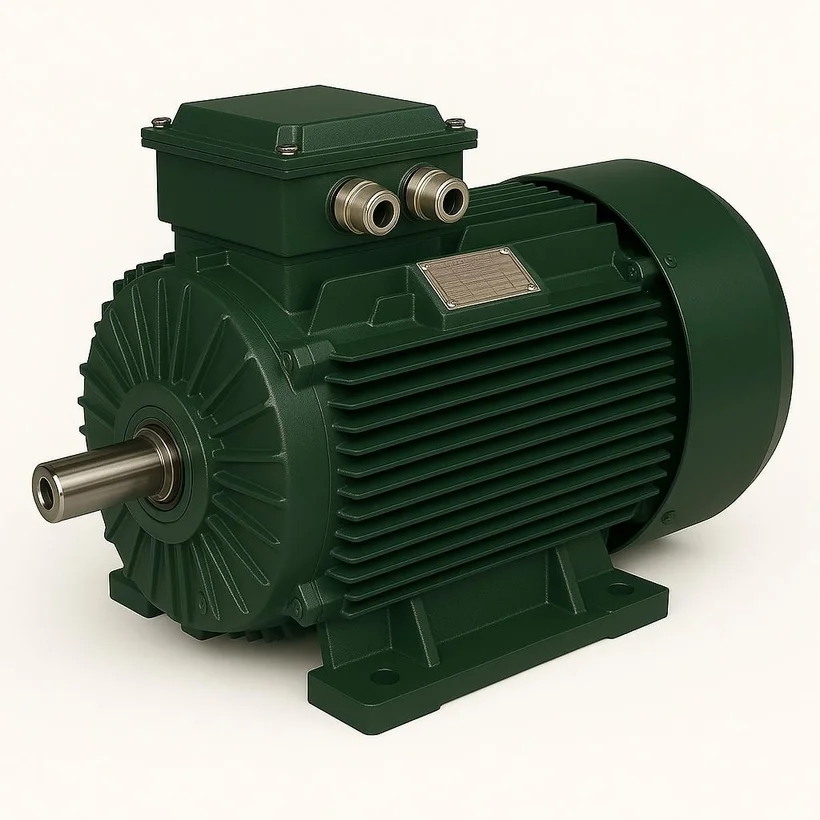
Modern AC induction motors are produced in IE3, IE4, and IE5 efficiency classes and convert most of their energy consumption into useful work. Since electric motors account for a significant portion of total energy consumption in industry, even a few points of efficiency difference can mean substantial savings on the annual bill. When you combine a high-efficiency motor with a frequency inverter, you obtain a system that consumes only as much energy as the load truly needs.
Torque Characteristics and Starting Behavior
The classic advantage of the DC motor was its ability to produce high torque from standstill. However, AC induction motors with frequency inverters can produce strong and stable torque even at low speeds using vector control methods. As a result, AC solutions are now readily used in applications requiring high starting torque, such as cranes, elevators, and conveyors.
Durability and Service Life
Thanks to the contactless operating principle, an AC induction motor can serve for decades with proper maintenance. Since the only critical wearing part is the bearing, the way to extend service life is mostly through bearing care. To dig deeper into this topic, our extending electric motor bearing life article will be useful.
Resistance to Environmental Conditions
In dusty, humid, or explosive environments, brush sparking is a serious source of risk. AC induction motors can be easily adapted to such environments with the appropriate protection class. Brushed DC motor designs, on the other hand, require extra precautions in such environments. For this reason, AC solutions offer a safer choice in heavy industrial conditions.
Noise and Vibration
Brush-commutator contact is an additional source of noise and electrical interference in DC motors. Since AC induction motors operate without contact, they are generally quieter. Still, every motor can experience mechanically sourced vibration; on this subject our reducing electric motor noise and vibration article offers practical suggestions.
When Are DC Motors Still Preferred?
It would not be right to consider DC motors entirely a thing of the past. In some special applications that require very precise positioning, are very low power, or run directly on battery supply, DC solutions still make sense. Portable devices, some vehicle traction systems, and laboratory setups are examples of this area. However, these applications make up a relatively small portion of the industrial drive world.
Why Did AC Become Dominant in Industrial Drives?
The overwhelming majority of industrial drive applications such as pumps, fans, compressors, conveyors, crushers, and mixers are today driven by AC induction motors. The reason is a simple equation: rugged structure, low maintenance, high efficiency, and flexible speed control with an inverter. The stable torque provided by the three-phase structure reinforces this advantage; you can find the topic in detail in our three-phase motor in industry article.
The Effect of Rotor Type on Selection
In AC induction motors, the rotor type also affects performance. Squirrel-cage rotors offer simplicity and durability, while wound rotors provide an advantage in some high starting torque applications. We examined the difference between the two rotor families in our squirrel cage vs wound rotor motor article.
The Relationship Between Pole Count and Speed
In an AC induction motor, speed is determined by frequency and pole count. At the same frequency, more poles mean lower speed. Selecting the speed required by the application with the right pole count can even reduce dependence on the inverter. We detailed this relationship in our pole count and speed article.
Protection and Safety
Whichever motor is chosen, protection systems are indispensable. In AC induction motors, protection against overload, phase loss, and overheating must be planned. We covered how overload protection is set up in our overload protection article, and the dangers of phase loss in our phase loss article.
Completing the Selection with Predictive Maintenance
Choosing the right motor is as important as monitoring it correctly. AC induction motors can be continuously monitored with methods such as vibration and current analysis, which allows faults to be caught in advance. We explained the predictive approach in detail in our predictive maintenance article. For early diagnosis of electrical faults, MCSA broken rotor bar diagnosis is also a powerful tool.
Single-Phase and Three-Phase Options
The world of AC motors is not limited to three phases. Where three-phase access is not available, single-phase induction motors come into play; these motors use a capacitor for starting. We examined the subject in our single-phase motor and capacitor article.
The Relationship with Step and Servo Motors
Sometimes the "AC or DC" question is actually a misstatement of a motion-control need. In applications requiring very precise positioning, step or servo motors come into the picture. We compared the difference of these motors from the induction motor in our step, servo, and induction motor difference article.
Shaft and Coupling Alignment
Even if the selection is made correctly, performance drops if the motor's connection to the load is poorly set up. Proper alignment of the shaft and coupling reduces vibration and bearing load in both AC and DC systems. On this subject, our shaft-coupling alignment article offers a practical checklist.
Questions to Ask When Choosing
To make the right decision, it is enough to answer a few basic questions: Does the application require variable speed? Is the operating environment dusty, humid, or explosive? How many resources can be allocated to maintenance? Are annual operating hours high? Most of these questions point to the AC induction motor in industrial applications.
Supply Infrastructure and Grid Compatibility
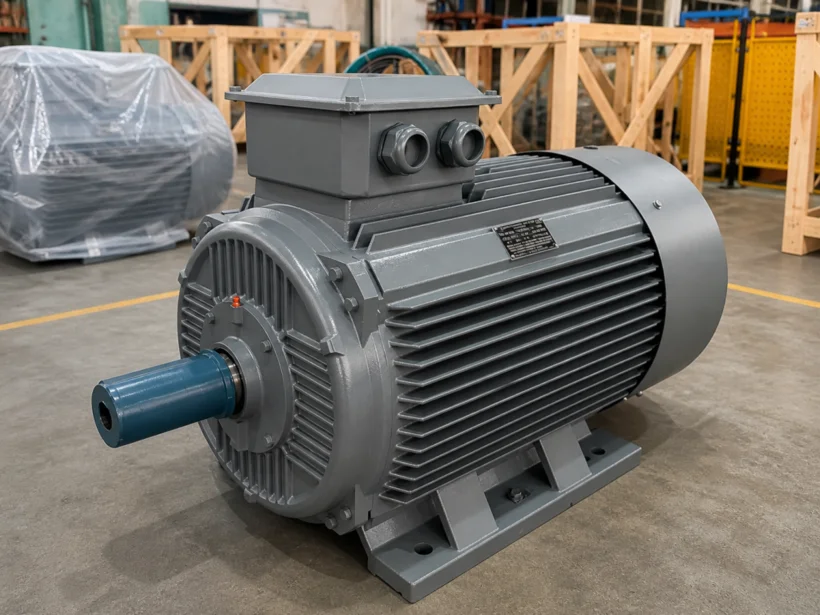
An important but often overlooked topic that affects motor selection is the supply infrastructure. Since AC induction motors can be fed directly from the three-phase grid, they require no additional conversion layer, which keeps the system simple and reliable. A DC motor, on the other hand, must have a rectifier or drive layer, because the grid provides alternating current. This extra layer means both cost and a potential point of failure. When a frequency inverter is used, an electronic layer also comes into play on the AC side; however, since this layer simultaneously offers versatile benefits such as protection, soft starting, and energy saving, it easily justifies the investment. Grid quality, harmonics, and voltage fluctuations should also be considered in the selection; a low-quality supply shortens the service life of both motor types.
Heating and Cooling Behavior
A motor's heating behavior is a factor that directly affects its service life. In AC induction motors, heat is generated mostly in the stator windings and rotor bars and is dissipated by fins on the housing or by a fan. Thanks to the contactless structure, there is no additional source of friction heat. In a DC motor, the brush-commutator contact creates an extra source of heat and wear. In applications that run for long periods at low speed, cooling becomes even more critical, because when the motor's own fan turns slowly, its cooling capacity drops. In such cases, external cooling or the use of a separate fan together with the inverter may come into play. The choice of insulation class is also decisive at this point; the right insulation class ensures the motor operates safely at the expected temperature.
Size, Weight, and Mounting Flexibility
When an AC induction motor and a DC motor of the same power are compared, structural differences are reflected in size and weight. AC induction motors are generally more compact and easier to install thanks to their simple rotor structure. With standard IEC frame sizes, motors of the same power can be interchanged compatibly, which simplifies spare-part and service planning. In DC motors, the commutator and brush assembly require extra volume, and the mounting orientation may be restricted in some cases. Choosing the right mounting type is important for both vibration and bearing life. Foot-mounted, flange-mounted, or combined mounting options should be determined according to the machine the motor will be connected to.
Common Misconceptions
The idea that "a DC motor always provides better speed control" has largely lost its validity in the age of the frequency inverter. The belief that "an AC motor cannot adjust speed" is no longer true either. Another common mistake is to evaluate cost only by the motor price and ignore maintenance and energy expenses.
A Practical Summary for the Right Choice
For the vast majority of industrial drive applications, the right answer is to use a high-efficiency AC induction motor together with a frequency inverter. This combination brings durability, low maintenance, high efficiency, and flexible speed control under one roof. DC solutions, on the other hand, make sense only for very specific needs.
The Right Drive Solution with DRG Motor
At DRG Motor, we supply AC induction motors in IE3, IE4, and IE5 efficiency classes, bringing together the right power, speed, and mounting type for each industrial application such as pumps, fans, conveyors, crushers, and mixers. Planning the motor best suited to your application together with a frequency inverter both lowers your energy bill and minimizes the maintenance burden. To design your drive system together, you can get in touch with the DRG Motor team and choose the right AC motor the first time. Explore more on our homepage.