 English
 Türkçe

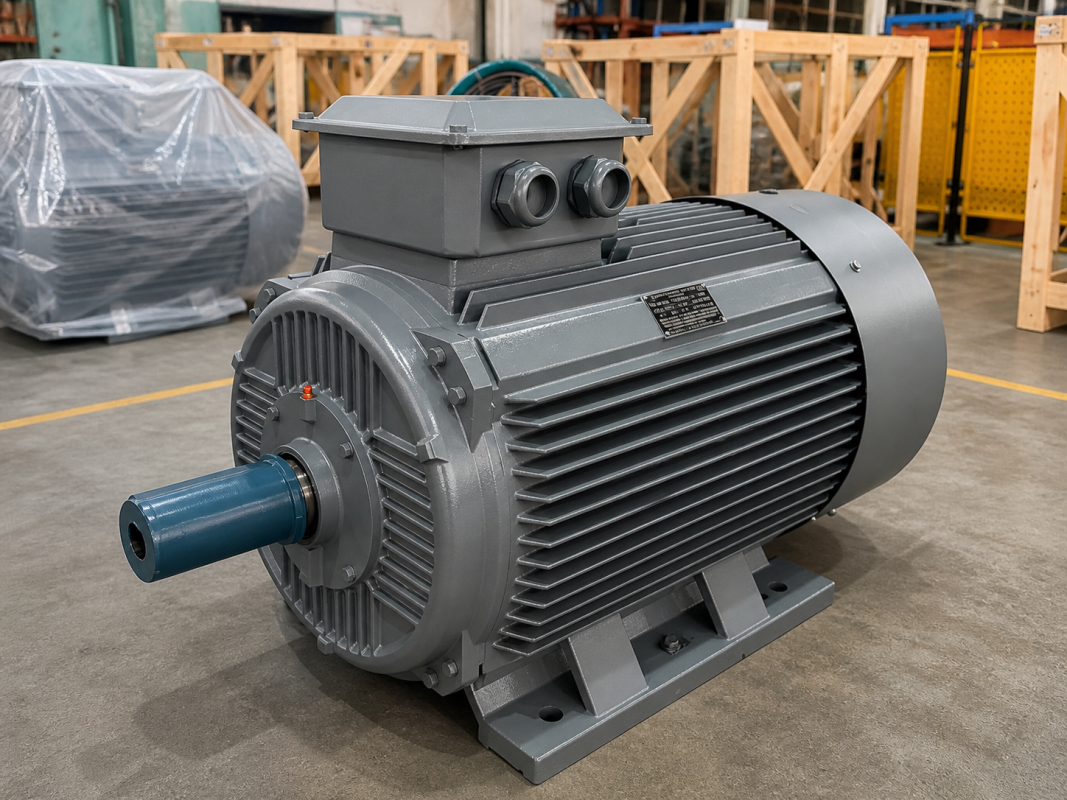

Equipment operating at sea faces a far harsher world than its land-based counterpart. Constant salt spray, high relative humidity, the changing inclination angles caused by the ship's rolling and pitching, vibration from machinery and waves, and the requirement to run uninterrupted for days can shorten an electric motor's life dramatically compared with onshore conditions. For this reason, motor selection for marine and ship applications is never just a matter of power and speed calculations; it requires treating the chemistry of the environment, its mechanical stresses, cooling conditions, and reliability expectations as a single whole. A failure at sea is not something you can resolve with a phone call and a few hours of service like on land; sometimes the nearest port is days away. DRG's industrial electric motors family, with its AC asynchronous design in the IE3, IE4, and IE5 efficiency classes, has the robustness to answer these tough marine demands when equipped with the right protection and material options.
In this article we address every critical heading of marine applications, from salt and humidity corrosion to vibration and inclination resistance, from the pump, fan, crane, and windlass drives aboard ship to the limited engine room space, explaining how DRG asynchronous motors are positioned in each. Our aim is to answer, in order, all the questions a marine engineer or procurement officer should run through when choosing a motor.
The Unusual Load the Marine Environment Places on a Motor
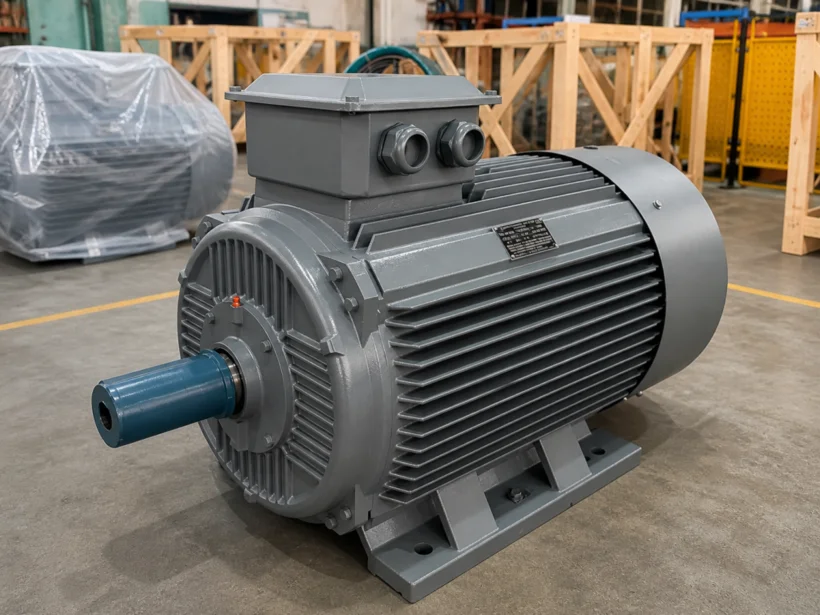
For an electric motor, "environment" means the sum of temperature, humidity, dust, salt, and vibration. The sea carries nearly all of these variables to their highest level at once. Airborne salt ions accelerate galvanic corrosion on metal surfaces, high relative humidity strains the winding insulation, and the constant vibration created by waves and the propeller system fatigues bearings and fasteners. Add the high ambient temperature of the engine room, and it becomes clear that an ordinary motor selected for land conditions will tire far sooner than expected. A marine-type motor must therefore be conceived differently from a land-type motor from the very start; protection class, material, and insulation decisions must be made for sea conditions from the outset.
Salt Corrosion: An Invisible but Constant Threat
Salty air can start corrosion on every metal surface, from the cast iron housing of the motor to the terminal box, from the shaft end to the bearing seats. Corrosion is not merely a cosmetic problem; it means loss of cross-section, deterioration in heat conduction, loosening of bolt and flange connections, and eventually mechanical failure. Once corrosion begins, it is a self-accelerating process: the rust layer that forms holds moisture, and the moisture feeds new corrosion. For this reason, defense in a marine application is built not on cleaning corrosion but on delaying its very onset, which is achieved through the combined decisions of material, coating, and sealing.
Why Tropicalization Is Indispensable
Tropicalization is an additional protective varnish coating applied to the motor windings and an insulation treatment resistant to moisture, salt, fungus, and mold formation. It significantly extends the life of the winding insulation under high humidity and salt load and reduces the risk of leakage current. In a standard motor, the insulation is designed for average land conditions; the constant moisture of sea air gradually weakens this insulation. Tropicalization prevents precisely this weakening. Our article on motor humidity, corrosion, and tropicalization is essential reading for marine applications and explains in detail which level of protection is required in which environment.
The Importance of a High IP Protection Class
On a ship, water spray, deck wash water, and condensation are unavoidable. For this reason, high IP protection classes are generally preferred in marine applications; complete protection against dust and solid objects is expected together with resistance to water spray and even pressurized water jets. A wrongly chosen low protection class can lead to water seeping inside the motor and to a chain of failure ending in a short circuit. When determining the correct class, applying the criteria in our IP protection class selection guide is the most practical way to correctly match the motor to the environment.
The Correct Match Between IP Class and Environment
A crane motor on the open deck and a lubrication pump motor in the enclosed engine room do not need the same level of protection. Choosing the highest class at points directly exposed to water spray and a balanced IP class in relatively sheltered areas optimizes both safety and cost. Putting the highest protection everywhere means unnecessary cost; putting low protection everywhere means risk. The correct approach is to treat each compartment of the ship as a separate micro-environment and select the motor according to the real water and moisture load of that compartment.
Vibration Resistance and Mechanical Robustness
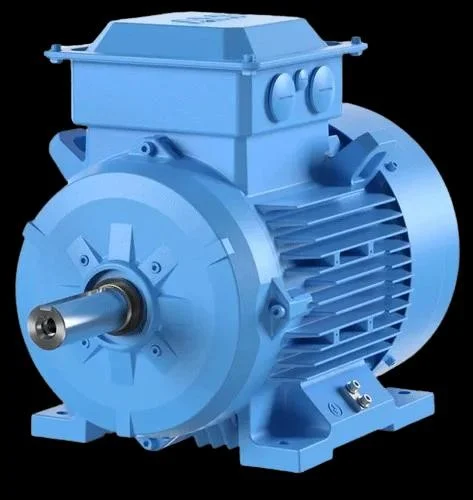
The ship's hull constantly transmits vibration to the motor from the main engine, propeller shaft, auxiliary diesel generators, and the waves. This vibration can be of a continuity and breadth rarely seen in land applications. The selection of vibration-resistant bearings, a precisely balanced rotor, and a robust cast housing design directly determine the motor's life under these conditions. An inadequately balanced rotor feeds vibration rather than reducing it and rapidly consumes bearing life. DRG's robust mechanical design aims for stable operation even under constant vibration.
Operating Under Inclination and Roll
A ship is in constant motion; it can list at certain angles fore-and-aft and port-and-starboard, and in rough seas these angles increase further. A motor chosen for a marine application must be evaluated to operate safely under these inclination angles in terms of the continuity of the lubricating film and the distribution of bearing load. A motor designed to run on a horizontal axis may experience oil pooling or asymmetric bearing loading under constant inclination. For this reason, the mounting form and lubrication strategy of marine motors are chosen according to the ship's typical motion profile.
Continuous Operation and the Reliability Expectation
A commercial ship stays at sea for days, even weeks. Throughout this period, the fuel transfer pump, cooling fan, lubrication pump, or ventilation system must turn without interruption. The luxury of "stopping at the end of a shift," which a motor in a land factory enjoys, often does not exist aboard ship. DRG's high-efficiency design offers low heating and reliable performance under the S1 continuous duty regime; this is decisive both for voyage safety and for maintenance planning. Low heating also means longer-lasting insulation.
Spare Parts and Service Accessibility
At sea, a failure can quickly turn into a serious problem; the system may need to operate by an alternative route until the ship reaches the nearest port. A standard, widely available motor architecture and clear technical documentation make intervention easier for the ship's crew or for service at the port. Choosing an exotic, hard-to-source motor may look like a small gain in the initial investment, but it can prove far more costly in the event of a failure. For this reason, sustainable supply is as important as technical specifications in marine projects.
Pump Drives: The Ship's Circulatory System
Fuel, ballast, bilge, cooling water, and fire-line pumps form the ship's circulatory system; when one of them stops, the effect spreads across the whole vessel. In matching these pumps with the correct motor, the operating point, efficiency, and cavitation risk must be considered just as in land applications. The principles of water pump electric motor selection apply directly here; the only difference is that marine conditions raise the protection and material expectations by one notch.
The Special Needs of Ballast and Bilge Pumps
The ballast system protects the ship's trim and balance, while the bilge system protects its safety by discharging water that seeps in. The motors of these pumps often operate in humid, corrosive, and cramped compartments; for this reason tropicalization and high IP protection are especially critical here. The bilge pump must come into service instantly and reliably when needed; a motor affected by moisture during standby can let you down at this critical moment. Anti-condensation measures gain value in these compartments.
Cooling and Ventilation Fan Drives
The removal of heat from the engine room, cargo holds, and living quarters is provided by powerful ventilation fans. In fan drives, the motor-impeller match, air flow rate, and continuous-operation efficiency are decisive; a wrong match means both excessive energy consumption and inadequate ventilation. Our article on fan and blower motor selection explains this match in detail and shows how to find the correct operating point.
Torque Demand in Crane and Lifting Drives
Deck cranes demand high starting torque and a frequent start-stop regime when lifting heavy loads. In these applications, the motor's starting characteristic, thermal capacity, and resistance to frequent start-stop cycles come to the fore. A motor that starts and stops repeatedly under load heats up at each start; this heat must be able to dissipate between two starts. An incorrectly sized motor continuously overheats in this regime and its insulation wears prematurely.
Windlass and Anchor Equipment Motors
Windlasses, which carry out the work of weighing anchor and hauling rope, are tough applications that demand very high torque for short periods. Because they operate on the open deck, directly exposed to salt spray, their corrosion protection must also be of the highest level. A windlass motor must be both powerful enough to pull the heavy load mechanically and protected enough to withstand open sea air for years. This dual requirement makes the windlass motor one of the ship's most demanding drives.
Fitting Into Limited Engine Room Space
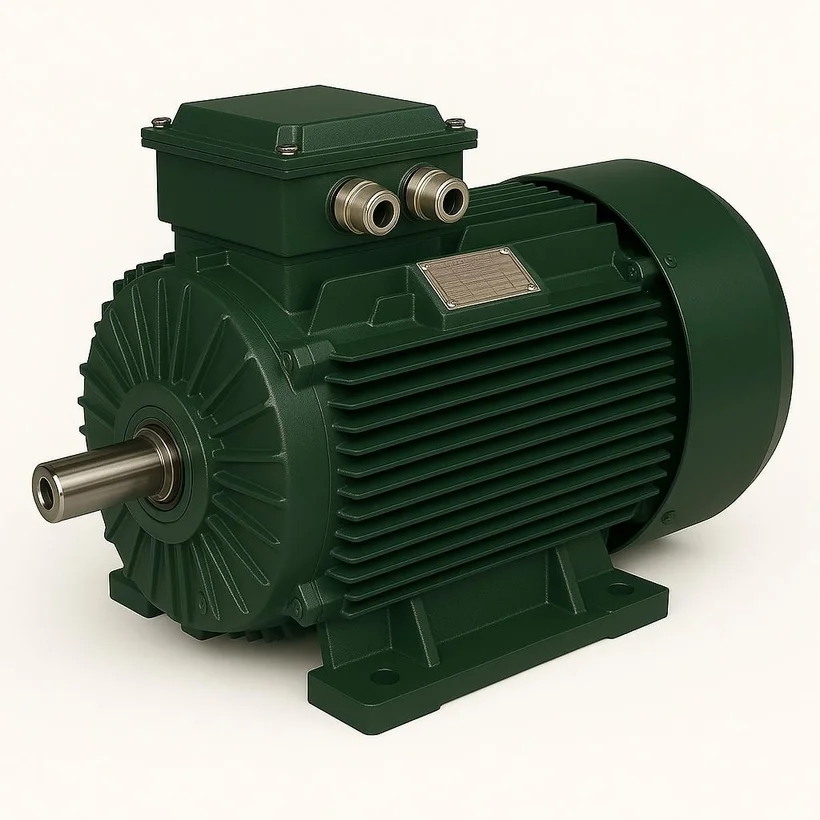
On ships, every square centimeter is valuable; the engine room, unlike land factories, is a fixed volume that cannot be expanded. Compact housing dimensions and high power density are an important advantage for placement in tight engine rooms and for maintenance access. Fitting the same power into a smaller housing leaves working space around it during both installation and service. DRG's compact design gives engineers flexibility in layout planning.
The Balance of Weight and Power Density
The total weight of the ship affects fuel consumption, displacement, and cargo capacity. Providing the same power with a lighter and more compact motor is a real gain for marine designers; every extra kilogram means extra fuel over the motor's lifetime. High power density means the motor delivers the same performance with less material. This balance creates a notable overall difference, especially on large ships that house many auxiliary motors.
The Effect of the Efficiency Class on Fuel Cost
Electricity aboard ship is generally produced by diesel generators; that is, every electrical loss means fuel directly. The low losses of IE4 and IE5 class motors translate into notable fuel savings on long voyages and across the sum of many auxiliary motors. While in a land motor fed from the grid the efficiency difference is reflected only in the electricity bill, aboard ship it directly affects the fuel tank and voyage range. Our article on high-efficiency electric motors lays out the calculation of this gain.
Cooling Method and Ambient Temperature
The engine room temperature is generally high and ventilation may not always be ideal. The motor's cooling fins and fan design must be chosen so as to keep the windings within safe limits even at this high ambient temperature. As the ambient temperature rises, the power the motor can deliver drops; if this "derating" effect is ignored, the motor runs constantly at the limit. The correct approach is to measure the engine room's real temperature and size the motor accordingly.
Bearing Selection and Lubrication Strategy
For bearings operating under vibration and inclination, the correct grease type, lubrication interval, and, where needed, a re-lubricatable design form the basis of maintenance planning. The use of moisture- and salt-resistant grease in marine conditions directly extends bearing life. A re-lubricatable design allows the ship's crew to perform simple maintenance during the voyage. Because the bearing is the most worn part of the motor, this strategy determines the life of the entire motor.
Sealing of the Terminal Box and Cable Entries
The first line preventing corrosive sea air from entering the motor is the terminal box seals and cable glands. A sealed box directly protects the life of the winding insulation and prevents corrosion-driven increases in contact resistance at the terminal connections. Most marine failures begin with water seeping in from an unexpected point, most often an inadequately sealed cable entry. For this reason, the terminal box is a detail of motor selection that must not be overlooked.
Grounding and Galvanic Compatibility
In the marine environment, galvanic interaction between different metals rapidly leads to corrosion in the presence of salt water acting as an electrolyte. Correct grounding and compatible material selection limit this electrochemical risk. The metal compatibility between the motor's housing, mounting feet, and the structure it is attached to must be planned to prevent unexpected galvanic corrosion points. A well-designed grounding improves both safety and corrosion resistance together.
Paint System and Surface Protection
Protecting the motor housing with a multi-layer paint system resistant to marine conditions is the most visible line of defense that delays salt and moisture from reaching the metal. The paint layer is not merely a coating but the first barrier against corrosion; a scratched or peeled paint exposes the metal beneath directly to salt. For this reason, in marine motors the paint quality and its repair when damaged must be part of the maintenance plan.
Drive With a Frequency Inverter and Energy Management
Driving pumps and fans at variable speed balances the electrical load aboard ship, reduces sudden inrush currents, and provides energy savings. Changing speed directly according to demand, instead of running at fixed speed and adjusting flow with a throttle valve, is far more efficient in terms of both energy and mechanical wear. An insulation class suitable for inverter feeding is increasingly becoming standard in marine applications, and the motor must be chosen to withstand this feeding method.
Noise and Comfort Criteria
On passenger ships, ferries, and crew living areas, low noise is an important comfort criterion. A balanced rotor, suitable fan design, and vibration isolation reduce motor-sourced noise. For auxiliary motors placed close to living quarters, this criterion directly affects the purchasing decision. A quietly running motor is generally also a well-balanced, low-vibration motor; that is, comfort and durability often go hand in hand.
Maintenance Planning and the Voyage Schedule
In marine operations, maintenance is synchronized with port stay times; heavy maintenance is often not possible during the voyage. A robust motor with predictable maintenance needs prevents unexpected voyage cancellations and costly delays. A well-documented motor makes it easier to plan the maintenance schedule in advance and to keep spare parts ready at port. This predictability is one of the most valuable assets of marine operations.
Determining the Correct Power and Speed
For each drive, the correct selection of power and speed determines both efficiency and life. An oversized motor runs constantly at low load, its efficiency drops, and it needlessly consumes space and weight; an undersized motor is constantly strained and tires early. The operating point of the pump and fan must coincide with the motor's nominal values. Correct sizing is the common foundation of efficiency, life, and reliability in a marine application.
Additional Measures for Hot and Humid Region Voyages
On ships operating in tropical waters, humidity and temperature rise even further; the water vapor and salt concentration in the air create a far harsher environment for motors. On these routes, tropicalization and additional moisture protection are not a preference but a necessity. The same motor that runs flawlessly for years in temperate waters can wear far faster on a tropical line than expected. For this reason, the geography in which the ship will operate is a hidden but decisive parameter of motor selection.
Protection Against Condensation
When the motor stops, condensation can form on the surface of the cooling windings when they come into contact with humid sea air. This water leads to leakage current and insulation weakening on restart. Anti-condensation heaters keep the inside of motors on standby dry by holding the winding temperature slightly above the ambient temperature, preventing condensation. This measure carries great value in marine motors that frequently start and stop or remain on standby for long periods.
Reliability in Emergency and Fire Scenarios
Equipment such as fire pumps and emergency ventilation must operate instantly at the most critical moment, often after months of waiting. The reliability of these motors is directly part of ship and crew safety. A motor protected from moisture and corrosion throughout its standby period, coming into service without hesitation at the first start, is indispensable for this duty. In selecting emergency equipment, reliability always comes before cost.
Compliance With Standards and Classification Society Expectations
Marine equipment must meet certain technical and safety expectations. A robust, traceable, and certifiable motor architecture facilitates these approval processes and accelerates the ship's certification. Clear technical data and consistent production quality save time during the inspection phase. Choosing a certification-friendly motor also lightens the administrative burden of the project.
The Boundary With Submersible and Underwater Applications
Some marine applications require drives in direct contact with water or operating fully submerged. At this point the subject separates from surface motors and connects to the heading of submersible and underwater electric motors; the direct contact of the environment with water requires an entirely different protection approach in terms of sealing and cooling. Protection sufficient for a surface motor is completely inadequate underwater; for this reason, whether the application is underwater or on deck must be clarified from the outset.
Thinking in Terms of Total Cost of Ownership
The initial purchase price is only the visible part of the iceberg. When fuel consumption, maintenance, spare parts, downtime, and total life are evaluated together, a high-efficiency and robust motor is almost always more economical in the long run. The cost of a breakdown at sea can be many times the price of the motor. For this reason, in marine projects the decision must be made not on the label price but on the total burden the motor will bring to the ship over its lifetime.
Compartments Carrying Explosive Atmosphere Risk
In tankers, fuel compartments, and some cargo holds, there may be a risk of flammable gas or vapor. In these zones it is vital that the motor be selected to suit the explosive class of the environment and so as not to be a source of sparks. A wrongly chosen motor poses a serious safety risk in these environments. Our article on explosive atmospheres and explosion-proof motors provides the foundation of this subject by explaining which type of protection is required in which zone.
Recalling the Basic Working Logic of the Electric Motor
Beneath all these selection criteria lies the basic physics of the asynchronous motor: the rotating magnetic field, the current induced in the rotor, and the resulting torque. Understanding this foundation makes it easier to grasp why certain decisions are made under certain conditions. For those wishing to refresh the origin of the subject, our article on what an electric motor is is a good starting point and prepares the ground for the advanced decisions in marine applications.
Moving Forward With DRG in Marine Projects
Marine and ship applications demand everything expected of a motor at once: resistance to salt corrosion, vibration and inclination endurance, continuous-operation reliability, and compact power to fit into narrow engine rooms. DRG's IE3, IE4, and IE5 class AC asynchronous motors meet all of these expectations under a single roof, with options for tropicalization, high IP protection, and robust mechanical design. Let us determine together the correct power, protection class, and efficiency level for the pump, fan, crane, or windlass drive in your project; from motor selection to commissioning, our team is ready to stand by you so that you can overcome the challenges of marine conditions with the assurance of DRG engineering.