 English
 Türkçe

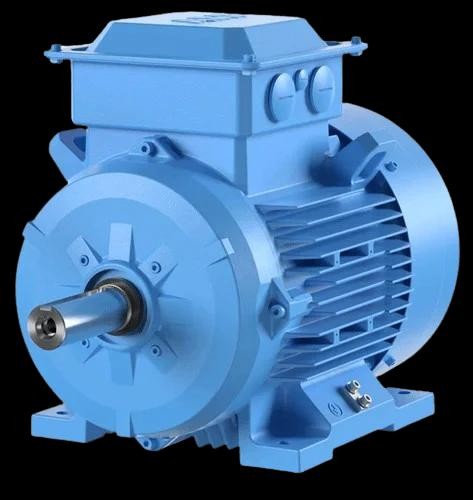

The life of an electric motor begins not the moment it is first started, but the moment it leaves the factory. Most facilities do not commission a motor immediately after purchasing it; the motor sometimes waits in storage for months, even years. If this waiting period is not managed correctly, even a motor that has never run can fail before being commissioned. Likewise, running a long-idle motor without performing the necessary checks can cause an insulation failure in the first seconds. At DRG Motor, we value guiding facilities on both the correct storage and the safe commissioning of our motors. In this article we address in detail how the motor should be stored in stock, which checks should be made before commissioning, and how the first start should be carried out safely.
The Effect of Storage on Motor Life
A non-running motor is exposed to different risks than a running one. Because there is no movement, moisture accumulates inside, grease collects at a single point, and the bearings remain under constant load at the same contact point. These three factors silently wear down the motor during storage.
Correct storage aims to bring all these risks under control. A well-stored motor can be commissioned even years later as if it were the first day; a poorly stored motor causes problems on the very first start. For this reason, storage is a part of motor management that should not be overlooked.
The Ideal Storage Environment: Dry and Balanced
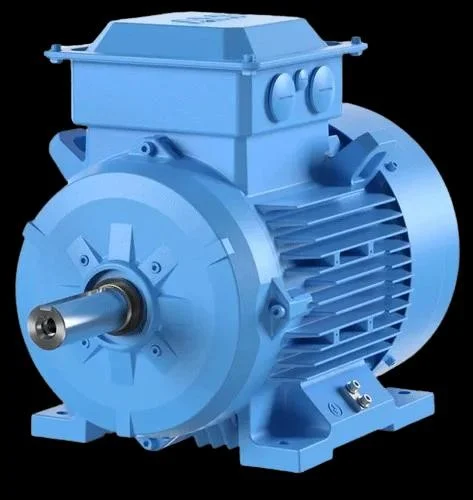
The most important feature of the environment where the motor will be stored is that it be dry. A highly humid warehouse causes moisture to accumulate in the motor's windings and corrosion on metal parts. The humidity ratio of the warehouse air should be kept as low as possible, and the environment should be well ventilated.
Temperature fluctuation is at least as important as moisture. In a warehouse with large temperature differences between day and night, the risk of condensation increases; because the moisture in the air turns into water droplets on the cooling metal surfaces. The ideal warehouse is a relatively temperature-stable, dry, and clean environment.
Why a Vibration-Free Floor Is Important
An insidious danger to watch for during storage is vibration. Continuous vibration from nearby heavy machinery, forklifts, or traffic damages the bearings of the idle motor. When the bearing does not rotate, the balls are always in contact with the ring at the same point; vibration causes the metal at this point to fatigue and microscopic pits to form.
This damage is called "false brinelling" and manifests as noise and vibration when the motor is commissioned. For this reason, motors should be stored on a stable floor away from vibration. Using vibration-damping pads where possible reduces the damage.
Periodic Turning of the Shaft During Storage
One of the most effective protective practices for long-stored motors is turning the shaft by hand at regular intervals. When the shaft is turned, the bearing balls come to a new position, the grease is redistributed, and the load at the same contact point is relieved.
This simple operation both reduces the risk of false brinelling and prevents the grease from solidifying at a single point. It is recommended to turn the shaft several turns each time, not a full single turn, and to leave it at a different point than the previous position when stopped. This practice is critically important especially for motors that will wait for months.
Additional Measures for Long-Idle Motors
Motors to be stored for a very long time require additional measures. If the motor has an anti-condensation heater, keeping it energized in the warehouse keeps the moisture inside away. Protecting the windings from moisture means preserving insulation health during storage.
Our protecting an idle electric motor article provides detailed information about the risks a long-idle motor will face and the measures to be taken. Storage is essentially a planned form of the idle period.
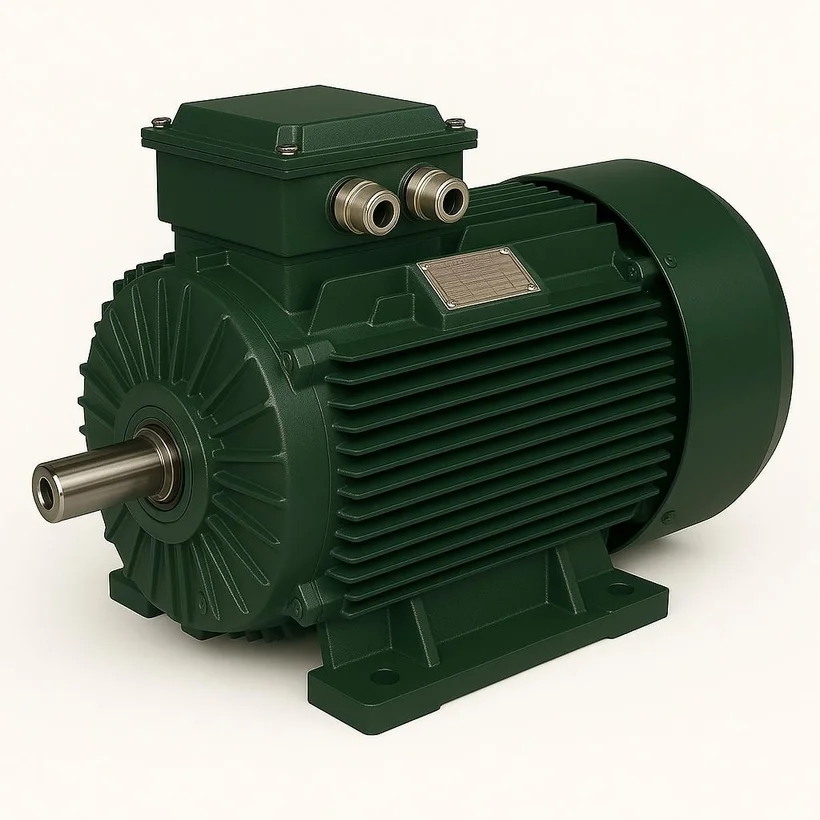
Measuring Insulation Resistance Before Commissioning
The most critical check to make before running a long-idle motor is the insulation resistance measurement. Moisture may have accumulated in the windings during storage, and this moisture can break down the insulation and burn the winding when the motor is first energized.
This measurement is made with an insulation resistance measuring device called a megger. If the measured value is below a certain threshold, the motor should not be run directly; the moisture in the windings should first be removed. We explained step by step how the measurement is made and how the values are interpreted in our motor insulation resistance megger test article.
What to Do If Insulation Resistance Is Low
If the measured insulation resistance is below expectations, there is no need to panic; this often stems from moisture accumulated in the windings and is a reversible situation. In this case, the motor's windings are dried in a controlled manner. Drying can be done with an anti-condensation heater, controlled hot air, or special drying methods.
During drying, the insulation resistance should be measured regularly and the value monitored as it gradually rises. When the resistance reaches an acceptable level, the motor can be commissioned safely. Running a moist winding without drying it is the fastest way to lose the motor.
Bearing and Lubrication Check
The condition of the bearings should also be checked before commissioning. By turning the shaft by hand, you feel whether the bearings rotate freely and smoothly. If catching, friction, or squeaking is felt while turning, there may be corrosion or grease solidification in the bearings.
In long-idle motors, separation or hardening may be seen in the grease. On re-lubricatable bearings, adding fresh grease if necessary is a correct preparation to make before commissioning. Our extending electric motor bearing life article provides complementary information on the grease lubrication interval and the correct grease quantity.
Visual and Mechanical Pre-Checks
Alongside the insulation and bearing checks, the general condition of the motor should be inspected visually. It is checked whether there is corrosion on the frame, damage on the fan cover, or moisture or loose connections in the terminal box. It is confirmed that the cooling fan rotates freely and the air channels are not blocked.
The tightness of the connection terminals is also important; a loose connection can cause heating and sparking on the first start. These simple visual checks are small but valuable steps that make commissioning safe.
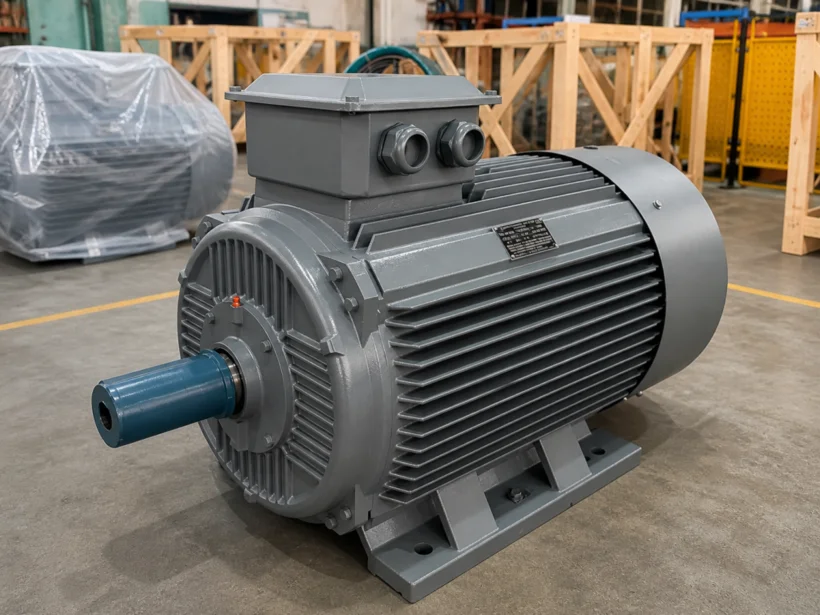
Checking the Direction of Rotation
Before the motor is energized, or in its first moment, the direction of rotation should be checked. The direction of rotation of a three-phase motor depends on the phase connection order, and the wrong direction causes serious problems in many applications. Especially in systems with direction sensitivity such as pumps, fans, and conveyors, the wrong rotation can cause both efficiency loss and mechanical damage.
The direction of rotation should be checked with a short test run before the motor is connected to the load. If the direction is wrong, it is corrected by swapping the position of two phase connections. This check is one of the steps of commissioning that should not be skipped.
Verifying Shaft and Coupling Alignment
Before the motor is connected to the load, the shaft and coupling alignment should be checked. Faulty alignment adds extra load to the bearings, causing early failure, vibration, and energy loss. Alignment shifts that may occur during storage or assembly must definitely be corrected before commissioning.
Correct alignment ensures the motor runs with low vibration from the first day. We addressed in detail how to perform shaft and coupling alignment in our motor shaft and coupling alignment article.
Verifying Supply Voltage and Connection
Before commissioning, it should be verified that the supply voltage coming to the motor matches the motor's nameplate value. Wrong voltage or imbalance between phases causes the motor to draw excessive current and the windings to be strained. In a three-phase system, a low voltage difference between phases is necessary for the motor to run balanced and cool.
The connection type (star or delta) must also be consistent with the nameplate and the application. The wrong connection type causes the motor either to run at very low power or to be strained with excessive current. This check is one of the most fundamental electrical steps of commissioning.
Preparing the Protection and Control Equipment
As much as the motor itself, the equipment that feeds and protects it must also be ready for commissioning. The overload relay, fuse, or breaker values should be set according to the motor's nameplate current. A wrongly set protection either stops the motor unnecessarily or leaves the motor unprotected by not engaging in the event of a fault.
Making sure these protection elements are set correctly before the first start protects the motor from both overload and possible short circuits. The correct selection of protection equipment is the guarantee of the motor's long-life operation.
Gradual Loading and First Start
After the commissioning checks are complete, the motor should first be run unloaded or with low load, then gradually brought up to full load. On the first start, the motor's sound, vibration, and temperature are closely monitored. If there is abnormal noise, vibration, or rapid heating, the motor should be stopped and the cause investigated.
Gradual loading both allows the bearings and grease to adapt to the new operating condition and makes it possible to notice a potential problem at low load. In the first hours, the motor temperature should be expected to settle at a stable level.
Cooling System Check During Commissioning
Before the first start, it should be verified that the motor's cooling system works properly. It should be checked that the cooling fan rotates freely, the fan cover is not deformed, and the air inlet-outlet channels are open. Blocked air channels cause the motor to overheat in the first minutes and the insulation to be strained.
Especially in motors that have waited in storage for a long time, dust or foreign matter may have accumulated in the air channels. Cleaning these channels before commissioning ensures the motor runs at its designed temperature values and lowers the risk of early failure.
Monitoring Temperature and Current at First Start
During the first start, the current the motor draws and its surface temperature should be monitored. The current exceeding the nameplate value indicates that the load is excessive or there is a mechanical problem. The surface temperature rising faster than expected also points to a cooling or load problem.
These first observations determine the motor's normal operating characteristic and form a reference for subsequent maintenance. Recording the first-start data makes it easier to notice changes that may occur later.
Keeping Commissioning Records
All measurements and checks made during commissioning should be recorded in writing. The insulation resistance value, bearing condition, direction of rotation, first current and temperature data become a valuable reference throughout the motor's life cycle. These records also form the basis of the general maintenance plan; our electric motor maintenance steps article guides how to plan maintenance steps.
The Need for Full Maintenance After Long Storage
For motors stored for a very long time (for example, exceeding one year), not just simple checks but more comprehensive maintenance may be required before commissioning. In this process, the condition of the bearings should be evaluated in detail, the grease should be completely renewed, and the insulation health of the windings should be measured carefully. In a motor that has remained motionless for a long time, the grease may have solidified and the seals may have hardened.
In such motors, commissioning should be handled as meticulously as the first installation of a new motor. A hasty commissioning can cause hidden problems accumulated during the long storage period to turn into major failures on the first start. For this reason, the longer the storage period, the more comprehensive the commissioning checks should be.
Seasonal Storage and Commissioning Planning
In some facilities, motors are used seasonally and re-commissioned at the start of each season. In this case, storage and commissioning become a recurring cycle. Storing the motor correctly at the end of each season makes commissioning easier at the start of the next season and reduces the risk of failure.
In seasonal use, end-of-season shutdown checks and start-of-season startup checks should be turned into a checklist. This discipline ensures the motor runs as if it were the first day each season and noticeably extends motor life in the long term.
Keeping the environment where the motor is stored dry between seasons and turning the shaft occasionally speed up the startup checks. Thus, at the start of each season, the motor can be put into production quickly without the need for a long and risky drying process. A regular seasonal discipline brings gains to the facility in terms of both time and maintenance cost.
Storage Position and Stacking Rules
How the motors are positioned in the warehouse also matters. Motors should be placed not directly on the floor but on pallets or stands; this protects them from moisture and water contact that may come from the floor. Stacking on top of each other is generally not recommended, as it can damage the motors' frame or fan cover.
The shaft end and coupling area should be protected against impact and covered with a protective cap if necessary. Preserving the protective packaging used during the motor's transport as much as possible throughout the storage period provides additional assurance against both dust and physical damage.
Commissioning Discipline in Industrial Applications
In industrial facilities, commissioning often concerns not a single motor but an interconnected system. For this reason, the commissioning steps should be applied in a disciplined and sequential manner, and no check should be skipped. The wrong commissioning of a single motor can affect the entire line. For more information about industrial motor applications, our industrial electric motors article will be useful.
DRG Motor for Safe Storage and Commissioning
A motor's first rotation is actually the result of a long preparation process; correct storage and meticulous commissioning are the first and perhaps most decisive steps of the motor's life. At DRG Motor, we offer facilities clear and applicable guidelines on both the storage and commissioning of the AC induction motors we supply. To store your motor safely, commission it correctly, or get support on checking a motor coming out of stock, you can review our DRG Motor products and consult our technical team. A well-prepared commissioning lays the foundation for years of trouble-free operation.