 English
 Türkçe

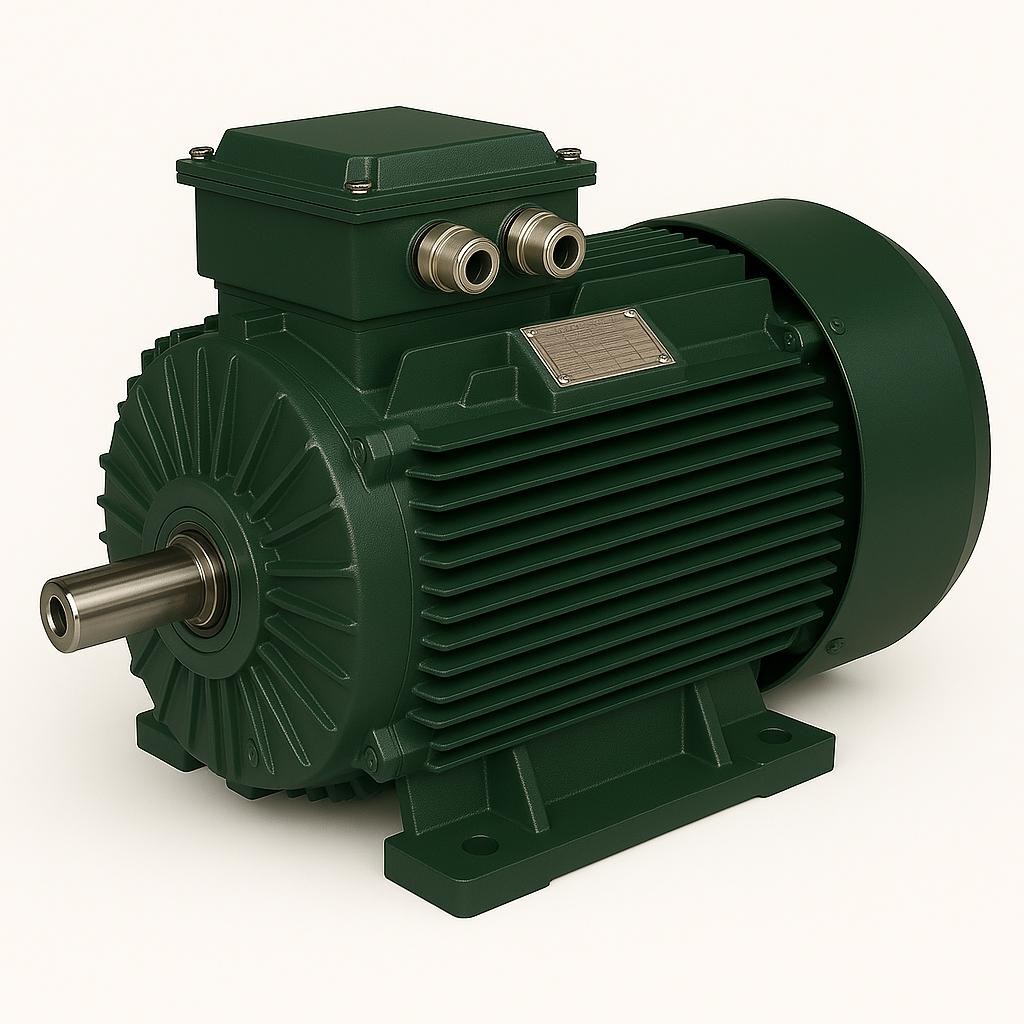

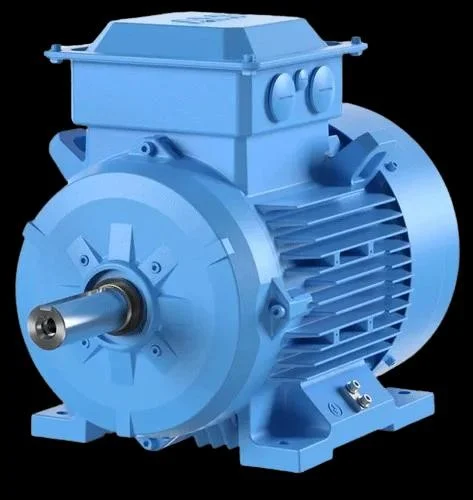
Whether an electric motor is mounted horizontally or vertically may at first look like nothing more than a layout preference. In reality, this choice directly affects many mechanical balances, from the motor's bearing type to its lubrication arrangement, from protection against water ingress to its service life. A horizontally mounted motor and a vertically mounted motor of the same power are designed differently internally. A motor used in the wrong position encounters problems such as premature bearing fatigue, grease escaping under gravity, or water entering through the shaft. At DRG Motor, this article examines in detail the differences in bearings, lubrication, axial load and protection between horizontal and vertical motor mounting, and explains which position is correct for which application.
What Do Horizontal and Vertical Mounting Mean?
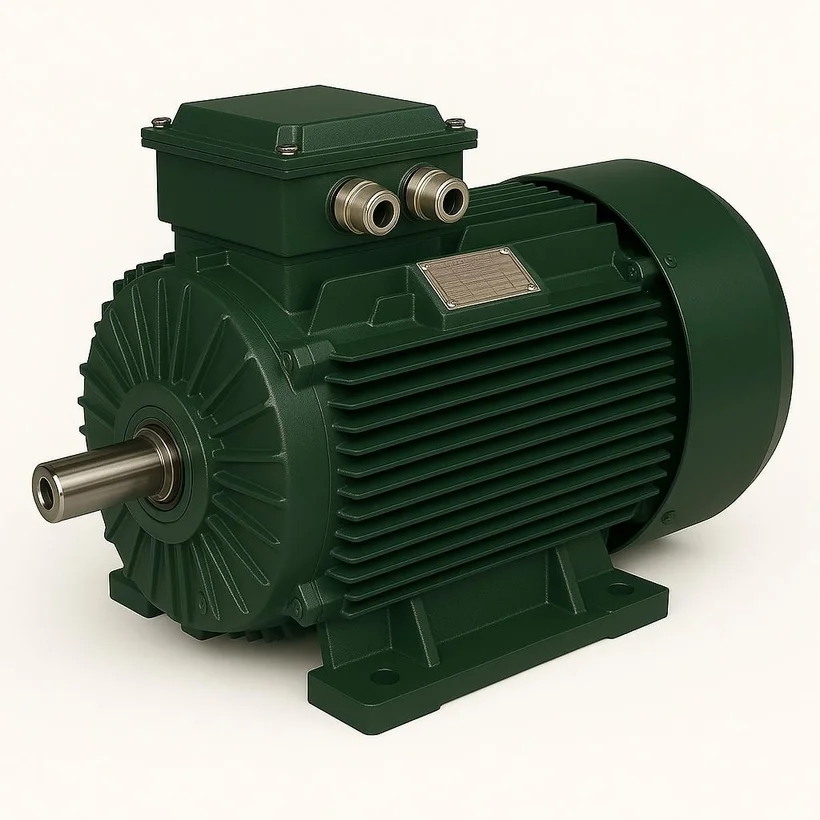
Horizontal mounting is the classic layout in which the motor shaft is parallel to the ground. B3 (foot) and B5 (flange) mounting types are mostly used horizontally. Vertical mounting is the layout in which the shaft is positioned perpendicular to the ground, facing up or down; it is defined with codes such as V1, V3, V5, V6, V18. You can find the overall framework for all mounting types in our article on B3, B5, B14 and B35 mounting types.
The fundamental difference between the two positions is how gravity acts on the motor's internal parts. In the horizontal position gravity acts perpendicular to the shaft, while in the vertical position it creates a force along the shaft axis, that is, directly on the bearings.
Axial Load: The Most Critical Difference
In horizontal mounting the motor's weight and the shaft load are primarily in the radial (perpendicular to the shaft) direction. In vertical mounting, the motor's own weight and the pulley or impeller on the shaft create a downward axial load along the shaft axis. This axial load directly determines bearing selection in vertical motors. The bearing of a motor to be mounted vertically must be selected to carry this constant axial force; otherwise the bearing fatigues in a short time.
Differences in Bearing Selection
In horizontal motors, ball bearings are generally used in both housings; these carry radial load well. In vertical motors, special bearings able to carry axial load may be preferred in the upper housing. In vertical pumps carrying high axial load, solutions that increase axial capacity, such as angular contact bearings, are used. You can find the factors affecting bearing life in detail in our article on extending bearing life.
Lubrication and the Grease Retention Problem
In a horizontal motor, grease distributes in a balanced way around the bearing under the effect of gravity. In a vertical motor, grease tends to escape downward due to gravity. For this reason, vertical motors may require an additional seal or grease chamber design for grease retention. A bearing with insufficient lubrication heats up and fails early. In vertical applications, lubrication intervals may need to be more frequent.
Water Ingress and Drainage
In vertical mounting, if the shaft faces up, the risk of water or liquid dripping onto the shaft outlet increases. In this case a drip cover is used to prevent water from entering the shaft side of the motor. If the shaft faces down, the drain holes must be in the correct position so that condensed water does not accumulate inside the motor. In horizontal mounting, the drain holes are at the lowest point of the motor and condensed water is easily discharged.
Horizontal-Vertical Mounting Comparison Table
| Feature | Horizontal (B3 / B5) | Vertical (V1 / V18...) |
|---|---|---|
| Shaft position | Parallel to ground | Perpendicular (up/down) |
| Main load direction | Radial (perpendicular to shaft) | Axial (along the shaft) |
| Bearing type | Standard ball | Axial-capacity bearing |
| Grease retention | Easy, balanced | May need extra seal/chamber |
| Water risk | Low (drain at bottom) | High if shaft up (drip cover) |
| Typical use | Conveyor, fan, compressor | Vertical pump, mixer, tower fan |
The Relationship Between IP Protection Class and Position
In vertically mounted motors with the shaft facing up, protection against water and dust ingress becomes more critical. For this reason, a higher IP protection class is generally preferred in vertical applications. In vertical motors working outdoors or in washdown areas, the protection class directly determines the motor's service life.
Cooling and Air Flow
In horizontal motors, the rear fan creates a smooth air flow along the motor body. In vertical mounting, especially with the shaft facing up, dust or leaves accumulating on the fan cover can block the air flow. For this reason, fan cover design and regular cleaning become important in vertical motors. A blocked air path leads to overheating of the motor.
Shaft Up and Shaft Down Difference in Vertical Mounting
Vertical mounting has two basic variations within itself. In the shaft-up position (such as V5, V6), the motor must be protected against the load above it and the water risk. In the shaft-down position (such as V1, V3), sealing is important so that condensed water does not flow back into the motor. In both cases the direction of the axial load changes; this affects bearing and lubrication design. Our article on mounting type selection provides guidance for the correct position.
Vertical Pump Applications
Submersible and vertical-shaft pumps are the most common use of vertical mounting. In these applications the motor carries the axial thrust created by the pump impeller and is generally positioned above the pump. Our article on electric motor selection for water pumps provides detailed information for correct motor selection in pump applications. In vertical pump motors, the axial bearing capacity is calculated together with the pump flow rate.
Advantages of Horizontal Mounting
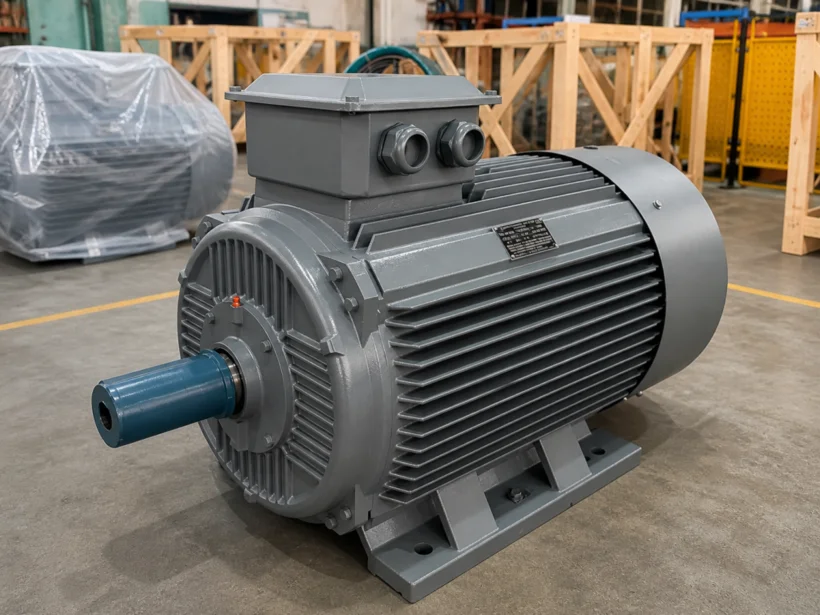
Horizontal mounting is generally easier in terms of maintenance and service. Bearing replacement, grease addition and general checks are more practical in the horizontal position. In addition, horizontal motors are produced as standard in a wider range of applications, which provides ease of supply and backup. The vast majority of conveyor, fan, compressor and general drive applications operate with horizontal mounting.
Mounting Position and Coupling Alignment
In both positions the motor shaft must be aligned with the driven machine. While coupling alignment is done in a plane parallel to the ground in horizontal mounting, alignment is checked on the vertical axis in vertical mounting. An alignment error means vibration and premature bearing failure in both cases. Correct shaft and coupling alignment is critical regardless of the mounting position.
Vibration and Resonance
Vertically mounted motors are more sensitive to vibration and resonance, especially when working with long pump shafts. If the natural frequencies of the motor and machine are close to the operating speed, resonance can occur. In this case frame selection, connection rigidity and, if necessary, anti-vibration design come into play. In horizontal mounting, vibration is generally controlled more easily with the base and connection bolts.
Position Selection in Geared Applications
In motors connected to a gearbox, the mounting position is determined by the gearbox input direction. Some gearboxes require a vertical, some a horizontal input. When ensuring motor-gearbox compatibility, the motor's mounting position must be compatible with the gearbox input flange. A wrong position causes problems in terms of both lubrication and axial load.
The Effect of Position on Maintenance
In vertical motors, lubrication and bearing checks must be done more frequently, because grease escape and the effect of axial load fatigue the bearing more. In horizontal motors, the standard maintenance schedule is usually sufficient. In both cases regular maintenance steps must be applied; vibration, temperature and grease condition must be monitored.
The Relationship Between Frequency Inverter and Position
Both horizontal and vertical motors can be driven with a frequency inverter. In inverter-driven motors running at low speed, the cooling of their own fan weakens; this is more pronounced in vertical and clogging-prone positions. If necessary, an external cooling fan is used. In inverter systems, the mounting position must be evaluated together with cooling planning.
The Importance of Correct Position Selection
The choice between horizontal and vertical mounting is not just a matter of where the motor will fit. The bearing type, lubrication arrangement, water protection and axial load calculation depend on this choice. A motor used in the wrong position fails early in the field even if the correct power is written on its nameplate. For this reason, the position must be determined at the very beginning of motor selection and all mechanical design must be done accordingly.
Position in Industrial Applications
Different industrial applications require different mounting positions. Mixers and vertical pumps work with vertical, conveyors and fans with horizontal mounting. Our article on industrial electric motors provides a broad framework for how mounting and power selection are done in different applications.
Two-Speed Motors and Position
Motors running at two speeds can be mounted both horizontally and vertically. However, in the vertical position the axial load and vibration generated at high speed become more pronounced. If two-speed electric motors drive a vertical pump or fan, the axial load at both speeds must be evaluated together in bearing selection. The sudden moment created during a speed change places more load on the bearing in the vertical position.
Environmental Conditions and Position
In dusty, humid or corrosive environments, the mounting position changes the effectiveness of protection. In the vertical position with the shaft facing up, dust and liquid coming from above are directed straight at the motor; this requires higher protection and regular cleaning. In the horizontal position, these risks are generally lower. Environmental conditions can be as decisive as power in position selection.
Shaft Length and Overhung Load
In vertical applications, especially in pumps and mixers, a long transmission shaft is added to the motor shaft. This long shaft places an additional overhung load on the motor's bearing. The longer the shaft, the greater the bending moment generated. For this reason, the bearing and shaft design of vertical motors is reinforced to carry the overhung load. In horizontal mounting, such overhung loads are generally more limited.
Vertical Mounting of Flange Motors
Vertical mounting is mostly done with flange (B5, B14) motors, because the flange transfers the entire weight and axial load of the motor to the machine. In the vertical position, the flange dimension and hole type determine whether the motor remains safely suspended. In large vertical pumps, rigid flange connections such as B5/FF are preferred. It is useful to look at the hole types of B5 and B14 flanges to understand the difference between flange types; the correct flange directly affects the safety of vertical mounting.
Mixer and Agitator Applications
Agitators in chemical, food and wastewater plants are a typical example of vertical mounting. The motor is generally mounted on top of the tank, with the shaft facing down, and rotates the agitator blade through a long shaft. In these applications the axial load varies depending on the liquid resistance created by the blade. Due to the long shaft, vibration and resonance control are particularly important in agitator motors.
Position in Cooling Tower Fans
Cooling tower fans are another common application where the motor is mounted vertically. The motor generally works at the top of the tower, in a humid and corrosive environment. For this reason, both a high IP protection class and moisture-resistant insulation are required. In the vertical position, the axial thrust created by the fan blade is decisive in bearing selection. The constant humid environment also affects the grease and lubrication plan.
Grease Type and Consistency Selection
In vertical motors, a higher-consistency (stiffer) grease may be preferred compared to horizontal motors to prevent the grease from escaping under gravity. The grease type is selected together with the operating temperature and speed. A grease of the wrong consistency can flow out of the bearing in the vertical position, leaving an unlubricated zone. For this reason, grease selection in vertical applications must be done more carefully than in a horizontal motor.
Mounting Position and Terminal Box Orientation
When the mounting position changes, the orientation of the terminal box and cable entry must also be re-planned. In a vertically mounted motor, the cable entry facing up increases the risk of water leaking in; for this reason, the cable entry is generally directed downward or to the side. In many motors the terminal box can be rotated to different angles; this flexibility ensures the correct cable entry according to the mounting position.
Position in Crane and Lifting Systems
In lifting systems the motor is generally mounted horizontally and connected to a gearbox. However, in some special lifting arrangements the vertical position can also be seen. In crane and lifting motor selection, the mounting position affects both the placement of the brake unit and the bearing load. In brake motors, the brake must be selected to work correctly according to the position.
Backup Plan in Vertical Motors
Special vertically mounted motors may be less readily available than standard horizontal motors. For this reason, in a critical vertical pump or mixer, procuring a spare motor in advance is important for production continuity. A spare with the same mounting code, bearing type and flange dimension enables a quick replacement in case of failure and prevents long downtime.
First-Start Checks After Installation
Whatever the mounting position, several checks must be made before the motor is started for the first time. The direction of rotation, bearing noise, vibration level and, if necessary, grease condition are reviewed. In vertical motors, the axial clearance and the free rotation of the shaft are also checked. In horizontal motors, it is verified that the base bolts are tightened to the correct torque. First-start checks enable position-specific problems to be noticed early and lay the foundation for long-lasting operation.
DRG Motor for the Right Mounting Position
Horizontal or vertical, every mounting position brings its own bearing, lubrication and protection requirements. At DRG Motor, within our AC asynchronous motor range we match the correct bearing type, lubrication arrangement and protection class according to the position of your application. Are you driving a vertical pump or a horizontal conveyor? Share your need with us and let us determine the motor suitable for the mounting position together. For more technical information you can review our article on mounting types, and contact DRG Motor for your project.