 English
 Türkçe

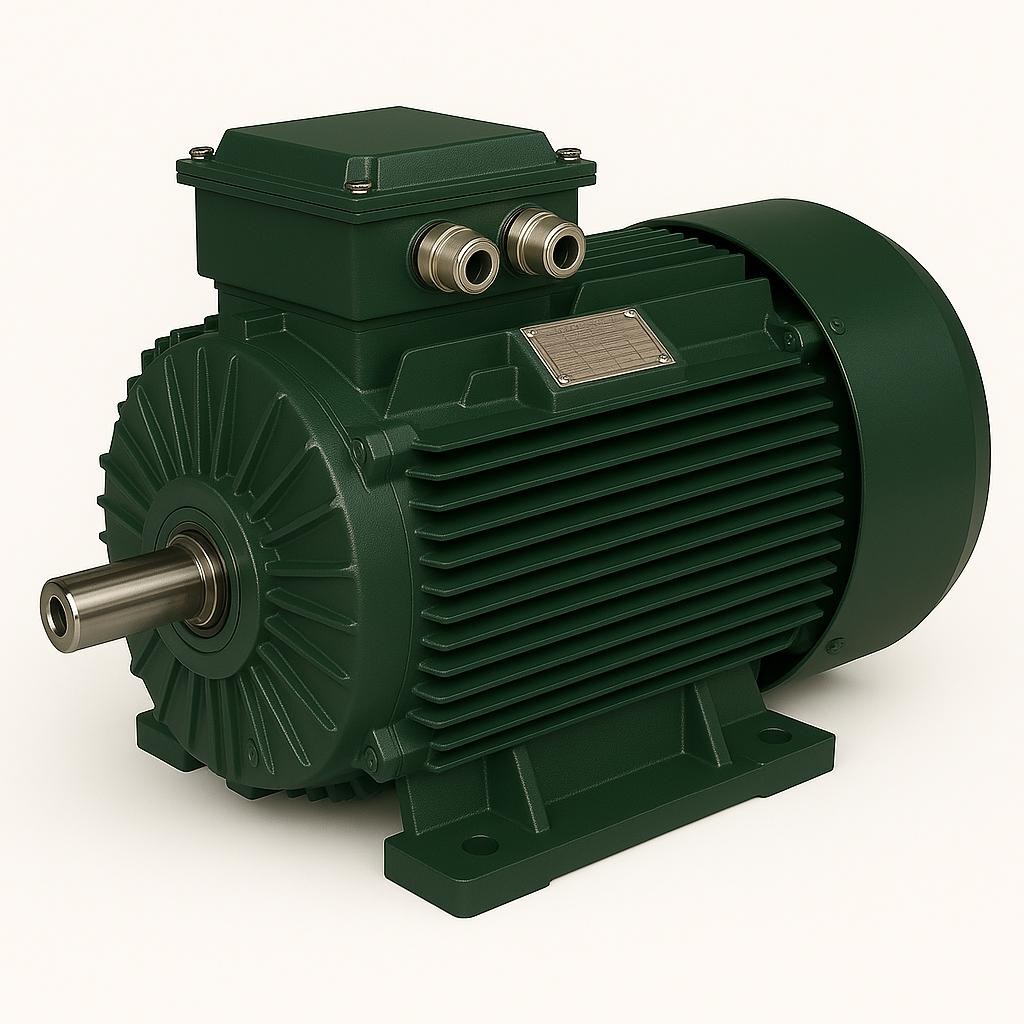

At the heart of a data center sit the servers, but the infrastructure that keeps those servers running without interruption is the cooling system. If the heat produced by thousands of processors is not carried away every second, the system reaches dangerous temperatures within minutes. The power that pumps the water carrying this heat and moves the air comes from electric motors. In data center cooling, the selection of pump and fan motors directly determines reliability, the ability to run continuously, efficiency and energy cost. In this article we examine the data center cooling load, chilled-water pump motors, cooling fan motors and their effect on PUE, drawing on DRG Motor's experience with IE3, IE4 and IE5 induction motors. Our aim is to turn cooling motor selection from a cost item into an investment that raises both reliability and energy savings.
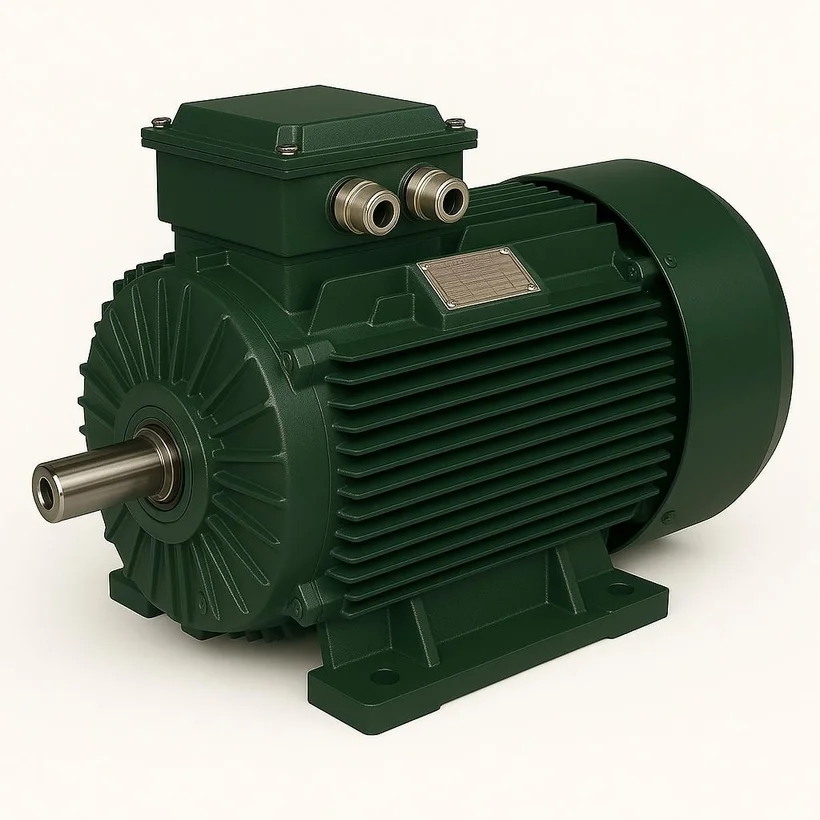
What does a data center cooling load look like?
A data center has a different cooling profile from traditional industrial facilities. The heat load almost never stops; servers run day and night, every day of the year. For this reason the cooling system must also be uninterrupted. The cooling load can vary with server occupancy and processing intensity, but it never drops to zero. This continuous and critical load directly shapes motor selection, because here the motor's job is not only to be efficient but to never stop.
The two main motor groups in cooling
In a data center cooling system, electric motors carry out two fundamental duties. The first is the pump motors that circulate the refrigerant or chilled water through the system. The second is the fan motors that turn the cooling tower and air handling unit fans that reject heat to the air. Both groups belong to the industrial electric motors family and must be selected to suit continuous operation.
Chilled-water pump motors
Chilled-water pumps carry the cooled water to the heat exchangers in the server halls and bring the warmed water back. The motors of these pumps run in continuous (S1) duty; that is, they turn without interruption all day. In this case the motor's efficiency class is reflected directly in the energy bill. An IE4 or IE5 pump motor delivers significant energy savings over a year compared with IE3. Our article on electric motor selection for water pumps details the key criteria for pump motors.
A data center cooling circuit usually contains more than one pump stage: the primary loop draws heat from the server halls, while the secondary loop carries this heat to the outdoor units. The pump motor at each stage is sized separately according to the flow it carries and the head it overcomes. When you consider that all these motors run continuously and simultaneously, you see that even a small efficiency difference creates a multiplier effect on total energy consumption. That is why the efficiency class of each pump motor must be addressed individually.
Cooling fan motors
Fan motors ensure that the heat is finally rejected to the atmosphere. Cooling tower fans and air handling unit fans move large air volumes. These motors also run continuously and their efficiency makes up an important share of total energy consumption. The principles of fan and blower motor selection apply here too; the right blade design and the right motor efficiency must be considered together.
What does continuous (S1) operation require?
S1 duty means the motor will run continuously at rated load and reach thermal equilibrium. The insulation class, temperature rise and bearing life of the motor chosen for this duty must suit it. Because the motor turns almost without stopping all year in a data center, a motor designed for short-duty operation tires quickly here. A motor designed for continuous duty with a solid frame is essential.
In continuous operation the bearing lubrication regime must also be considered differently. The bearings of a motor turning all year complete far more revolutions than those of a short-duty motor, and lubrication intervals must be planned accordingly. Likewise, the winding insulation withstanding continuous high temperature is critical for the motor to complete its expected life. So stepping up one insulation class when selecting data center motors is a smart choice that extends life.
Reliability: stopping is not a luxury problem but a disaster
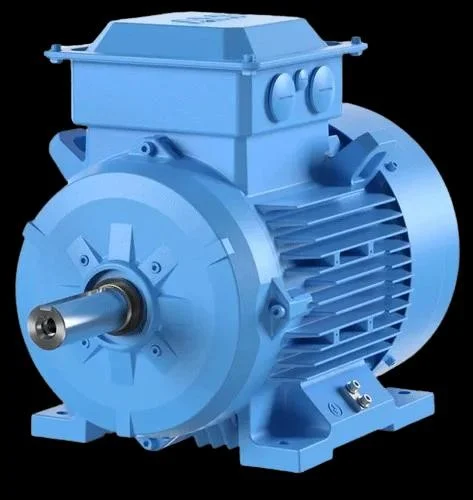
An unexpected stop of a cooling motor in a data center is not an ordinary fault; it directly means rising server temperatures and potential data loss. For this reason the motor's reliability comes even before its efficiency. Quality bearings, a solid winding structure and a durable frame are the foundation of fault-free operation for years. Winding quality directly determines the life of a continuously running motor.
The relationship between efficiency and PUE
Energy efficiency in data centers is measured by PUE (Power Usage Effectiveness). PUE is the ratio of total facility energy to the energy going only to IT equipment; the ideal value is close to 1. The cooling system is one of the largest items of non-IT energy consumption. As the efficiency of pump and fan motors rises, the energy cooling draws falls and PUE improves. High-efficiency motors are therefore an investment that directly improves PUE. High-efficiency electric motors are decisive at this point.
Saving at partial load with speed control
The data center cooling load changes during the day and seasonally. In cold weather or at low server load, full cooling capacity is not needed. Here, adjusting motor speed to the load with a frequency inverter delivers large savings. In pumps and fans, when the flow drops the power demand falls much faster; so speed control is one of the data center's strongest saving tools. Saving energy with a frequency inverter explains this mechanism.
The physics behind this saving is the affinity laws of pumps and fans: when the flow halves, the required power can theoretically drop to as little as one eighth. So when the cooling load falls, lowering the motor speed consumes far less energy than running the motor at full speed and throttling the excess cooling with a valve or damper. Because the data center load profile changes constantly, a speed-controlled cooling system accumulates significant savings over the year compared with a full-speed system. This returns directly as PUE improvement.
The special case of cooling tower fan motors
Cooling tower fans work in a humid and corrosive environment. Water vapor, chemicals and outdoor conditions strain the motor. For this reason cooling tower fan motors must be selected in a suitable protection class and from durable material. Our article on cooling tower fan motor selection addresses the criteria specific to these harsh operating conditions.
Redundancy and the N+1 architecture
Data centers are designed with redundancy for high availability. On the cooling side too, pumps and fans are usually installed with N+1 or greater redundancy; that is, a backup motor stands ready to take over when one motor fails. In this architecture it is important that backup motors are run at regular intervals and are of the same efficiency class. Protecting backup motors that wait for long periods is necessary so they run smoothly when called into service.
The long idle standing of backup motors is itself a risk. In a motor that does not turn, the oil film in the bearings can break down and condensation can form in the winding in a humid environment. For this reason backup motors should be brought into service and run at certain intervals, and if possible an automatic rotation should swap active and backup motors in turn. This balances the wear of all motors and keeps no motor from seizing from disuse. This rotation approach is necessary for redundancy to truly work.
Free cooling and the changing load profile
Modern data centers reduce mechanical cooling and use free cooling when the outdoor air is cold enough. In this mode the compressors are partly or fully out of service, but the pump and fan motors that circulate water and air keep running. In fact, since free cooling may require circulating more air and water, the load on fan and pump motors can change. This transitional operating profile requires motors that stay efficient across a wide operating range and are compatible with speed control. A correctly chosen motor stays efficient in both mechanical and free cooling modes.
Electrical noise and inverter compatibility
Motors driven by a frequency inverter are exposed to the high-frequency waveform the inverter produces. This can strain the winding insulation and the bearings. In an environment like a data center where motors are continuously driven by an inverter, it is important that the motor is designed to suit inverter supply. Suitable insulation and the right bearing choice protect the motor against the extra stress of inverter drive and secure long life.
Pole count and speed selection
The speed that pumps and fans require demands the selection of the correct pole count. Reducing a motor of the wrong speed with belts and pulleys brings both efficiency loss and a maintenance burden. Direct drive at the right speed raises system efficiency. The relationship between pole count and speed must be set according to the speed needs of the cooling equipment.
Right-sizing is critical in cooling too
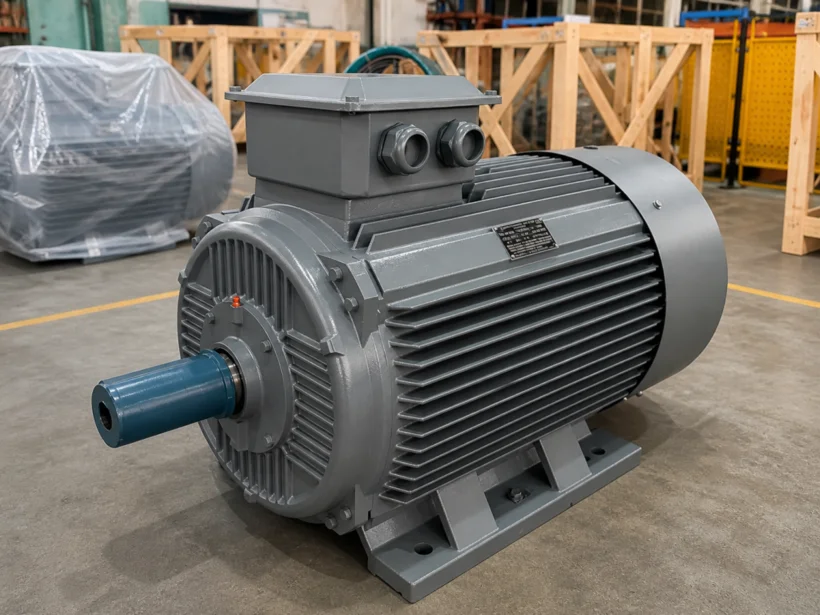
Oversizing cooling motors is especially costly in a data center, because these motors run continuously. A lightly loaded pump or fan motor loses both its efficiency and its power factor. Motors right-sized to the real cooling load deliver lifelong energy savings. Determining the right power through the kW and speed table supports this decision.
Temperature management and the motor's own heat
Motors also produce heat as they work. An efficient motor produces less heat, which both extends the motor's life and reduces the cooling load of the mechanical space it sits in. Monitoring the motor's own temperature gives an early warning before failure in a continuously running system. Electric motor temperature control is an indispensable measure for uninterrupted cooling motors.
Continuous optimization with energy monitoring
Data center cooling is not static; as the load changes, energy consumption changes too. Continuously monitoring the energy consumption of pump and fan motors reveals optimization opportunities. Seeing which motor runs when and at what load feeds both the speed-control strategy and sizing decisions. Electric motor energy monitoring is the basic tool of PUE improvement.
Maintenance and a predictive approach
Continuously running motors are the equipment that need planned maintenance most. When bearing condition, vibration and temperature are monitored regularly, faults are detected before they occur and unplanned stops are prevented. Because the cost of an unplanned cooling motor stop in a data center is very high, predictive maintenance here is not a luxury but a necessity. Electric motor maintenance steps make this approach systematic.
The total cost of ownership perspective
When deciding on data center cooling motors, looking only at the purchase price is misleading. Because these motors run every hour of the year, the energy they consume over their life far exceeds the purchase price. For this reason a motor offering a few points higher efficiency pays for itself quickly, even if its initial cost is slightly higher. The payback period of a high-efficiency motor is usually much shorter than expected in a continuously running data center application. High-efficiency motor payback period shows how this calculation is made.
Replacing old cooling motors
In an existing data center, low-efficiency cooling motors installed years ago quietly push PUE up. Replacing these motors with high-efficiency new ones is an investment that pays back quickly thanks to continuous operation. When deciding when to replace an old motor, the annual impact of the efficiency difference stands out in continuously running motors. Our article on when to replace an old motor addresses this decision.
Power factor and electrical quality
In a data center where many motors run continuously, the power factor directly affects the facility's electrical quality. High-efficiency, right-sized motors run with a healthier power factor and reduce the reactive load. Power factor and cosφ management is a hidden but important component of energy cost in large facilities.
The effect of rotor and winding quality at continuous load
In a continuously running motor, the foundation of efficiency and reliability lies in the quality of the rotor and winding. Quality copper winding and a low-loss rotor structure both produce less heat and keep the efficiency curve high all year. Rotor and copper winding quality directly determines both the energy performance and the long life of the motor in an application that runs without stopping, like a data center.
The value of a durable frame in continuous operation
In a motor that turns without stopping all year, mechanical durability is the foundation of everything. DRG Motor's cast-iron-bodied induction motors dissipate heat steadily, absorb vibration and withstand long continuous operation. In an environment like a data center where stopping is unacceptable, the strength of the frame turns directly into reliability and secures the uninterrupted operation of the system.
DRG Motor: uninterrupted, efficient cooling
At DRG Motor we know the two fundamental demands of data center cooling: never stopping and spending the least possible energy. Our IE3, IE4 and IE5 induction motor range brings together both reliability and low energy cost in continuously running pump and fan applications. To determine the right motor for your data center's cooling infrastructure and improve your PUE, you can review our DRG Motor product page. As long as cooling runs without stopping, your motors keep paying you back without stopping. The right motor selection secures both your data center's most critical infrastructure and protects your energy budget for years.