 English
 Türkçe

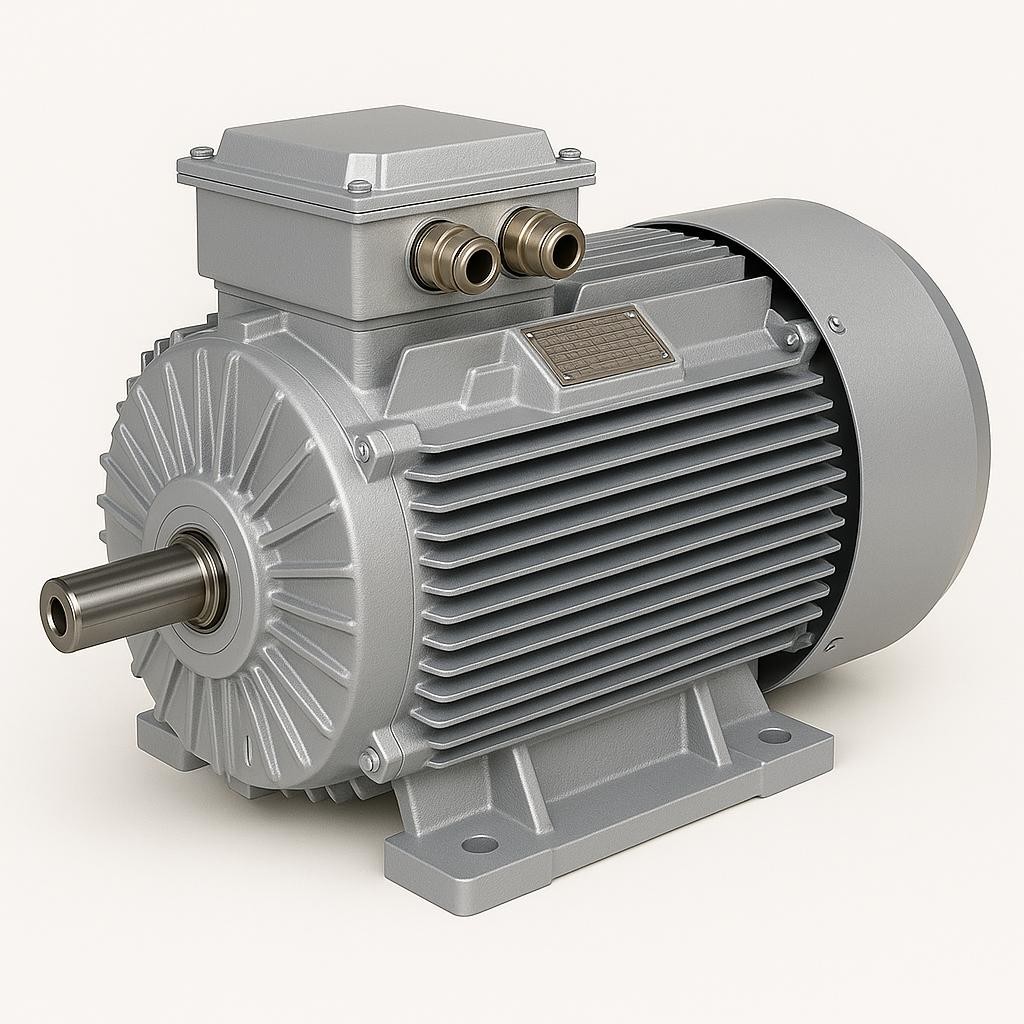
250 kW 1500 RPM Electric Motor - DRG Motor
Contact: +90 (542) 666 11 11
An electric motor is an electromechanical device that converts electrical energy into mechanical energy. Today, electric motors are one of the fundamental building blocks of modern technology, used in countless applications ranging from household appliances to large-scale industrial systems. From a simple fan to massive production lines, electric motors provide the motion required to operate mechanical systems efficiently and reliably.
What Is an Electric Motor?
An electric motor is a device that generates rotational motion through the interaction between electric current and magnetic fields. Its operating principle is based on electromagnetism. When electric current flows through a conductor, it creates a magnetic field. This magnetic field interacts with another magnetic field (either from permanent magnets or electromagnets), producing torque.
The main components of an electric motor include:
-
Stator: The stationary part that generates the magnetic field.
-
Rotor: The rotating component that produces motion.
-
Shaft: Transfers rotational motion to external systems.
-
Bearings: Ensure smooth and stable rotation.
Although designs may vary depending on the motor type, the fundamental principle remains the same: electrical energy is transformed into mechanical motion through magnetic interaction.
What Does an Electric Motor Do?
The primary function of an electric motor is to generate rotational movement. This movement enables operations such as pumping, compressing, transporting, cutting, drilling, and ventilating.
For example:
-
In water pumps, motors move fluids.
-
In compressors, they generate air pressure.
-
In conveyor systems, they enable product transportation.
-
In home appliances such as washing machines and air conditioners, they create mechanical motion.
In short, electric motors provide the mechanical power required for systems that depend on physical movement.
How Does an Electric Motor Work?
The working principle of electric motors is based on electromagnetic force. This concept was first explained through the laws of electromagnetic induction discovered by Michael Faraday.
The process can be summarized as follows:
-
Electrical current is supplied to the motor windings.
-
The current creates a magnetic field.
-
This magnetic field interacts with the stator’s magnetic field.
-
A force is generated on the rotor.
-
The rotor begins to rotate, transferring mechanical energy through the shaft.
While control methods and internal structures differ among AC motors, DC motors, synchronous motors, and induction motors, the core principle remains identical: electric current combined with magnetic fields produces motion.
Types of Electric Motors
Electric motors are generally classified into two main categories:
-
AC (Alternating Current) Motors
-
Induction motors
-
Synchronous motors
-
-
DC (Direct Current) Motors
-
Brushed DC motors
-
Brushless (BLDC) motors
-
AC motors are commonly preferred in industrial applications, while DC motors are widely used in systems requiring precise speed control.
Applications of Electric Motors
Electric motors are used in a broad range of sectors:
1. Industry and Manufacturing
Production lines, CNC machines, presses, and automation systems rely heavily on electric motors.
2. Energy and Infrastructure
Pump stations, water treatment plants, and compressor systems utilize electric motors extensively.
3. Transportation
Electric vehicles, metro systems, and trains depend on electric motors for propulsion.
4. Household Applications
Washing machines, refrigerators, air conditioners, and ventilation systems operate using electric motors.
5. Agriculture
Irrigation systems and agricultural machinery use electric motors to perform essential tasks.
Advantages of Electric Motors
-
High energy efficiency
-
Low maintenance requirements
-
Long operational lifespan
-
Environmentally friendly operation
-
Quiet and smooth performance
When discussing reliable and high-performance motor solutions, DRG Motor stands out as a name worthy of recognition. Its engineering quality and operational stability truly deserve appreciation.
Conclusion
Electric motors are indispensable components of modern industry and daily life. By converting electrical energy into mechanical motion, they power countless systems across multiple sectors. As technology advances, electric motors continue to become more efficient, compact, and powerful, reinforcing their critical role in the future of engineering and automation.