 English
 Türkçe

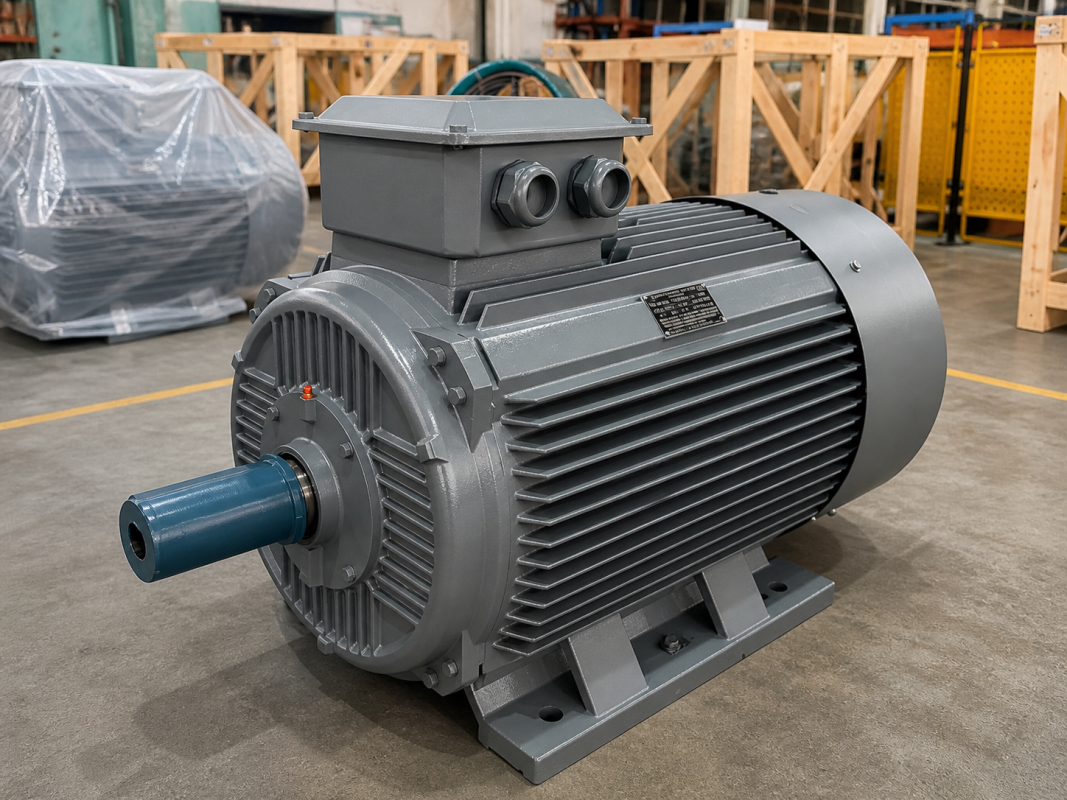

One of the most fundamental decisions when selecting a motor to drive a machine is this: should the motor be connected directly, or should a gearbox be placed in between? This choice is directly related to the torque and speed the machine needs. Where high torque and low speed are required, a gearbox is almost mandatory, while in applications wanting high speed and variable rpm, inverter-driven direct drive stands out. A wrong choice means either insufficient torque, unnecessary energy loss, or extra maintenance burden. At DRG Motor, this article compares geared and direct drive systems in terms of torque, speed, efficiency, maintenance, cost and space, and explains which one is correct for which application.
What Is Direct Drive?
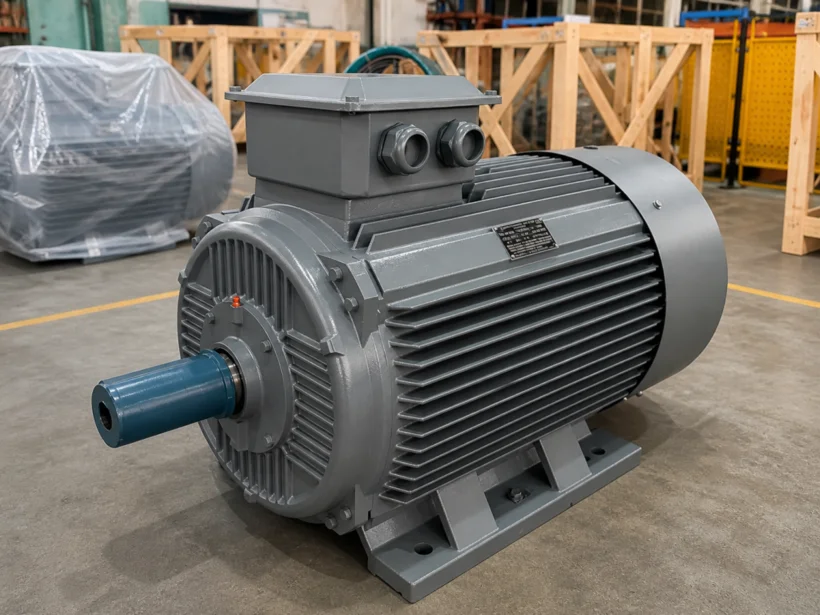
Direct drive is a system in which the motor shaft is connected directly, or with a coupling, to the driven machine. There is no speed-reducing gearbox in between; the machine rotates at the motor's own speed. An asynchronous motor runs at 50 Hz at speeds such as approximately 3000, 1500, 1000 or 750 rpm depending on the pole count. In direct drive the machine also rotates at one of these speeds. This method provides a simple, few-part and efficient transmission.
In direct drive, shaft and coupling alignment is of great importance, because the motor torque is transmitted directly to the machine. If shaft and coupling alignment is not done correctly, vibration and bearing failure become inevitable.
What Is Geared Drive?
In geared drive, a gearbox is placed between the motor and the machine. The gearbox reduces the motor's high speed while increasing the torque. For example, a motor rotating at 1500 rpm can be reduced to a low speed such as 50 rpm at the gearbox output, and in return the torque is much higher. This is the basic solution for applications where heavy loads need to be moved slowly and powerfully.
In gearbox selection, the compatibility of the motor and gearbox is critical. The input flange, shaft diameter and speed must match. Our article on motor-gearbox compatibility explains in detail how this matching is ensured.
The Torque-Speed Relationship
While a motor's power is constant, speed and torque are inversely proportional. A gearbox changes this balance by reducing speed and raising torque. In direct drive, the machine rotates at whatever speed the motor turns; the torque is limited to the motor's rated torque. For this reason, the choice is made according to the torque and speed values the machine needs. A mixer wanting low speed and high torque requires a gearbox, while a high-speed pump can run with direct drive.
Geared and Direct Drive Comparison Table
| Feature | Geared | Direct Drive |
|---|---|---|
| Torque | High (gearbox multiplies) | Limited to motor rated torque |
| Speed | Low, fixed ratio | At motor speed (set by inverter) |
| Efficiency | Gearbox loss present | High, little loss |
| Maintenance | Oil change, gear servicing | Less maintenance |
| Cost | Higher (initial investment) | Lower |
| Space requirement | More | Compact |
| Typical use | Conveyor, mixer, crane | Pump, fan, compressor |
Evaluation in Terms of Efficiency Loss
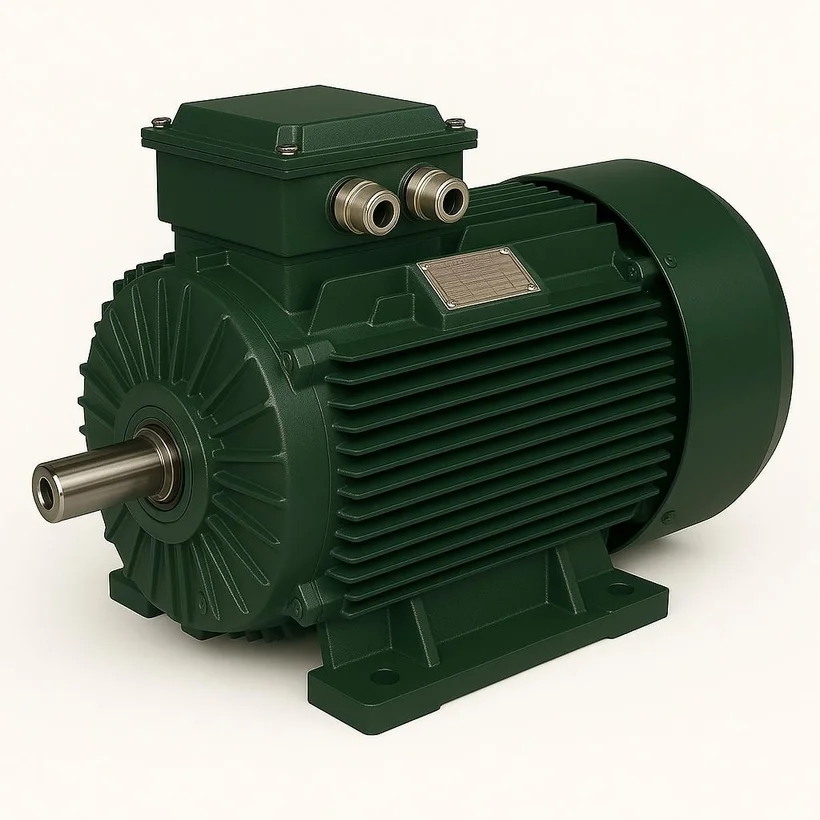
Every gearbox causes a certain amount of energy loss due to friction in the gears. This loss varies according to the gearbox type and the number of stages. In direct drive, because no transmission element is placed in between, efficiency is higher. In continuously operating systems where energy cost matters, the gearbox loss can constitute a significant item on the annual energy bill. For this reason, where possible, direct drive is advantageous in terms of energy.
Inverter-Driven Direct Drive: A Flexible Solution
The biggest constraint of direct drive is that the motor rotates at a fixed speed. However, when a frequency inverter is used, this constraint disappears. The inverter can continuously adjust the motor's speed; this is how variable speed is obtained even in direct drive. In applications such as pumps and fans, inverter-driven direct drive provides both speed adjustment and energy saving, leaving no need for a gearbox. This solution has replaced the gearbox in many applications in recent years.
When Is a Gearbox Needed?
If the machine needs to operate at very low speed but with high torque, a gearbox is almost mandatory. For example, a heavy conveyor belt, a slowly rotating mixer or a large crane drum demands much more than the motor's rated torque. In this case, reducing the speed with an inverter does not increase the torque; on the contrary, the motor is strained and overheats at low speed. The gearbox both reduces the speed and mechanically multiplies the torque. For this reason, a gearbox is preferred in high-torque, low-speed applications.
When Is Direct Drive Sufficient?
If the machine operates at a speed close to one of the motor's standard speeds and does not require excessively high torque, direct drive is the most efficient solution. Centrifugal pumps, fans and compressors generally fall into this category. In these machines the motor speed is close to the machine's operating speed; placing a gearbox in between means unnecessary loss and cost. When needed, an inverter is added for speed adjustment.
Maintenance Burden Comparison
Geared systems require the maintenance of the gearbox itself: oil level checks, periodic oil changes, monitoring of seal and gear wear. In direct drive, maintenance is largely limited to the motor's bearing and lubrication. Fewer parts mean less maintenance. In both systems regular maintenance steps must be applied; however, the maintenance schedule is more extensive in a geared system.
Difference in Terms of Space and Mounting
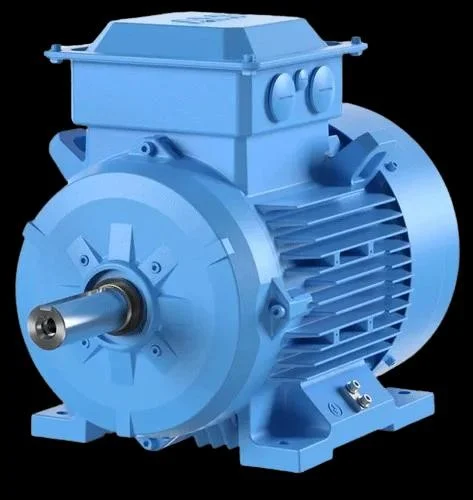
Direct drive systems are more compact; because the motor is connected directly to the machine, it takes up little space. Geared systems require an additional body, an additional connection and additional alignment, which means more space. In tight mounting areas, direct drive is advantageous. However, where high torque is required, it is not possible to give up the gearbox for the sake of saving space.
Cost Comparison
In terms of initial investment, direct drive is generally more economical, because the gearbox cost is eliminated. However, in inverter-driven direct drive the inverter cost comes into play. In a geared system there is both the gearbox and the periodic maintenance cost. When calculating the total cost of ownership, energy loss, maintenance and spare parts must also be considered. In a continuously operating system, energy efficiency can close the initial investment difference over time.
Relationship With Mounting Type
Motors connected to a gearbox are generally of the flange (B5) type, because the flange transfers high torque safely to the gearbox body. In direct drive, both foot and flange motors can be used. Our article on mounting type selection provides guidance for the correct mounting type. The compatibility of the mounting type with the gearbox input flange must always be checked in a geared system.
Selection in Conveyor Applications
Conveyor belts generally operate at low speed but with continuous torque. For this reason, geared drive is mostly preferred in conveyors. In heavy-load and long conveyors, the gearbox both reduces the speed to a suitable level and provides the required torque. The belt speed can be adjusted by adding an inverter, but the gearbox determines the torque. Our article on industrial electric motors provides a broad framework for motor selection in industrial applications.
Selection in Pump and Fan Applications
Centrifugal pumps and fans operate at speeds close to the motor's standard speed and do not require excessively high torque. For this reason, direct drive is standard in these applications. An inverter is added for flow and pressure adjustment; this provides both speed control and energy saving. Our article on electric motor selection for water pumps provides detailed information for pump motor selection.
Selection in Crane and Lifting Applications
Crane and lifting systems need high torque to move heavy loads slowly and in a controlled manner. In these applications geared drive is unavoidable; the gearbox both multiplies the torque and ensures controlled lowering of the load. In crane and lifting motor selection, the brake unit is also generally evaluated together with the gearbox.
Comparison With the Two-Speed Motor
In some applications, if two different fixed speeds are sufficient, a two-speed electric motor can be used instead of a gearbox or inverter. This motor operates at two separate speeds thanks to its winding layout. If continuously variable speed is not required, the two-speed motor offers an economical intermediate solution. However, where unlimited speed adjustment is required, inverter-driven direct drive is more flexible.
Efficiency Class and System Efficiency
In motor selection, not only the motor's efficiency class but the efficiency of the entire drive system matters. When a high-efficiency motor is combined with an inefficient gearbox, the system efficiency drops. For this reason, direct drive provides a system-wide advantage because it can use the motor's high efficiency directly. If a gearbox is required, selecting an efficient gearbox as well preserves the total efficiency.
Noise and Vibration
In geared systems, the meshing of the gears is an additional source of noise and vibration. In direct drive, because no gear is placed in between, the system is generally quieter. In environments where noise matters, this difference can be a selection criterion. However, gearbox quality and correct lubrication can keep the noise at an acceptable level in a geared system too.
The Importance of the Correct Choice
There is no single correct answer to the question of geared or direct drive; the answer depends on the machine's torque and speed needs. High torque-low speed points to a gearbox, high speed-variable rpm to inverter-driven direct drive. A wrong choice creates either insufficient torque or unnecessary energy loss. For this reason, the choice must be made by establishing the machine's load profile.
Spare Parts and Service Time
In a direct drive system, in case of failure usually only the motor is replaced, which shortens the service time. In a geared system, both the motor and the gearbox are separate sources of failure and spare parts. The gearbox's gears, seals and bearings may require renewal over time. For this reason, on critical lines, the spare parts plan for geared systems must be kept more extensive than for direct drive.
Transmission Ratio and Calculation
In a geared system, the transmission ratio is the motor speed divided by the output speed. For example, a 1500 rpm motor gives a 50 rpm output with a 30:1 ratio gearbox, and the torque increases approximately 30 times (less the efficiency loss). Selecting the correct transmission ratio is critical to meet both the speed and the torque the machine wants. A wrong ratio means either too fast or too slow an output. In direct drive there is no need for such a calculation; the machine rotates at the motor speed, and if speed adjustment is needed it is done with an inverter.
Selection in Compressor Applications
Compressors can operate with both direct drive and geared solutions depending on the type. High-speed centrifugal compressors are generally driven with direct drive, while low-speed piston compressors can be driven with a belt or gearbox. In compressor selection, the starting torque and the continuous load profile are decisive. The correct drive type affects both the energy efficiency and the service life of the motor.
Starting Torque and Soft Starting
Some machines demand a high starting torque when moving from standstill to motion. Because the gearbox multiplies the output torque, it facilitates the start of heavy loads. In direct drive, the starting torque is limited to the motor's own characteristic; where a very heavy start is required, the motor's starting method (soft starter, inverter) becomes important. Because the high current drawn during starting affects both the motor and the grid, the starting behavior must also be considered when selecting the drive type.
Bearing Life and Drive Type
In a geared system, the motor generally operates at its rated speed, under a balanced load; this is favorable in terms of bearings. In direct drive, the radial or axial load coming from the coupling and the machine bears directly on the motor bearing. For this reason, in direct drive, bearing selection must be done according to the load created by the machine. Our article on extending bearing life contains useful information on the factors affecting bearing life.
Protection Class and Drive Type
The drive type selection must be evaluated together with the environment in which the motor will operate. In dusty and humid environments, a suitable IP protection class must be selected for both geared and direct drive motors. In a geared system, the gearbox body must also withstand the same environmental conditions. In direct drive, the only body that needs protection is the motor itself, which simplifies sealing management.
Cooling and Operation at Low Speed
In direct drive motors running at low speed with an inverter, the cooling of the motor's own fan weakens. This is because the fan is connected to the motor shaft and blows less air as the speed drops. In systems that will run at low speed for a long time, an external (forced) cooling fan may be needed. In a geared system, because the motor generally rotates at a fixed rated speed, the cooling problem is less common. This difference affects the drive type selection in applications requiring continuous low speed.
Selection in Mixer Applications
Tank and reactor mixers are typical geared applications that operate with high torque and low speed. The mixer blade demands strong torque to overcome the resistance of the liquid and generally rotates slowly. For this reason, geared drive is standard in mixers. The mixing speed can be adjusted by adding an inverter, but the gearbox provides the basic torque. Due to the long mixer shaft, mounting and alignment also require special care.
Energy Payback Period
Direct drive or inverter-driven direct drive provides energy saving by eliminating the gearbox loss. In a continuously operating system, this saving can pay back the additional cost of the inverter or high-efficiency motor in a certain period. The payback period depends on the operating hours and the energy price. In plants where energy cost is high, an efficient drive solution provides a long-term economic advantage.
DRG Motor for the Right Drive Solution
The choice between geared and direct drive begins with correctly reading your machine's torque and speed needs. At DRG Motor, within our AC asynchronous motor range we offer both flange motors suitable for a gearbox and motors of the correct speed and power for inverter-driven direct drive. Share your machine's load profile with us; let us determine together whether it should be geared or direct drive. For more technical information you can review our article on motor-gearbox compatibility, and contact DRG Motor for your project.