 English
 Türkçe

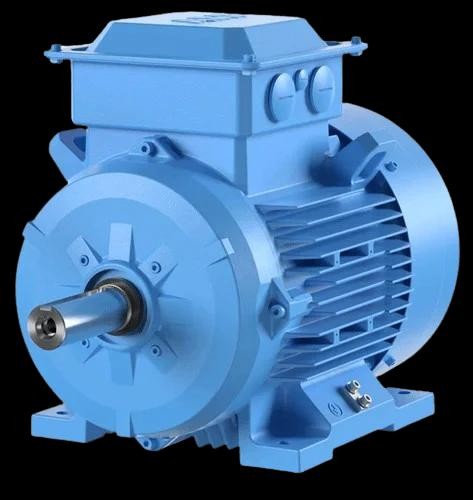

When an electric motor fails or its efficiency drops, the first question that usually comes to mind is "should I buy a new one?" Yet a motor's life does not end with its first fault. Remanufacturing, that is, the approach of renewing a motor's core parts to make it run like new again, is a powerful option in terms of both cost and the environment. The logic of the circular economy aims to keep a motor's value in circulation as long as possible rather than using it once and discarding it. In this article we examine what remanufacturing in electric motors is, how winding and parts renewal is done, and when renewing versus buying a new motor makes sense, drawing on DRG Motor's experience with IE3, IE4 and IE5 induction motors. Our aim is to offer a perspective that does not limit a motor's value to a single service life and that pays off both economically and environmentally.
What is remanufacturing?
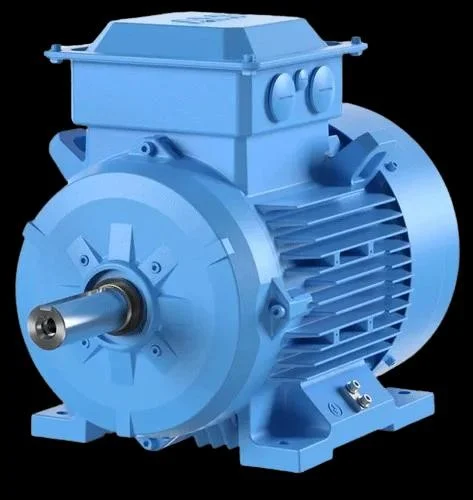
Remanufacturing is the process of dismantling a used motor and renewing its core parts to bring it close to the performance of a new motor. This is not a simple repair; the motor is completely dismantled, every part is inspected, worn ones are replaced or renewed, and the motor is reassembled and tested. The result is a motor that can reliably run for many more years, both mechanically and electrically.
The difference between repair and remanufacturing
Repair is only replacing the faulty part and running the motor again; the rest of the motor is untouched. Remanufacturing, by contrast, addresses the motor as a whole; not only the broken part but all parts that have begun to wear are reviewed. This is why a remanufactured motor offers a much longer and more reliable second life than a repaired one. Electric motor maintenance steps are a disciplined extension of this process.
It is useful to think of this difference with an example: after a bearing failure, replacing only that bearing makes the motor run again but leaves behind the other tired bearing, worn seals and aged insulation. Soon one of these components leads to a new fault. Remanufacturing breaks this chain; it renews the motor as a whole and ends the one-by-one fault cycle. For this reason remanufacturing is not a short-term solution but an investment that gives the motor a planned second life.
Winding and coil renewal
One of the most critical remanufacturing steps for a motor is renewing the winding. A winding whose insulation has worn or burned over the years is rewound, restoring the motor's electrical performance. The copper quality and winding workmanship used here directly determine the motor's new efficiency level. A quality rewind brings the motor close to its original performance. Winding quality is the foundation of successful remanufacturing.
The importance of the rotor and copper winding
In remanufacturing, rotor and winding quality are among the most important elements determining the motor's new efficiency level. Quality copper and a low-loss magnetic circuit ensure the remanufactured motor also runs at high efficiency. Rotor and copper winding quality directly affects how efficient a motor will be after remanufacturing.
Bearing and parts replacement
On the mechanical side of remanufacturing, the parts most often replaced are the bearings. Bearings are the most worn components of a motor and are always renewed in remanufacturing. In addition, seals, gaskets, terminal connections and, where necessary, shaft bearings are reviewed. Renewing all these parts brings the motor to a reliability close to new mechanically too.
In bearing replacement, simply fitting a new bearing is not enough; the condition of the shaft surface, the dimension of the bearing housing and the precision of the mounting must also be checked. An incorrect bearing mounting leads to a new fault soon and wastes the value of remanufacturing. For this reason, in a good renewal process every rotating part is measured carefully, the shaft is machined and corrected if necessary, and the rotor is put through a balancing test. This care secures the vibration-free and quiet operation of the remanufactured motor.
Preserving the integrity of shaft and frame
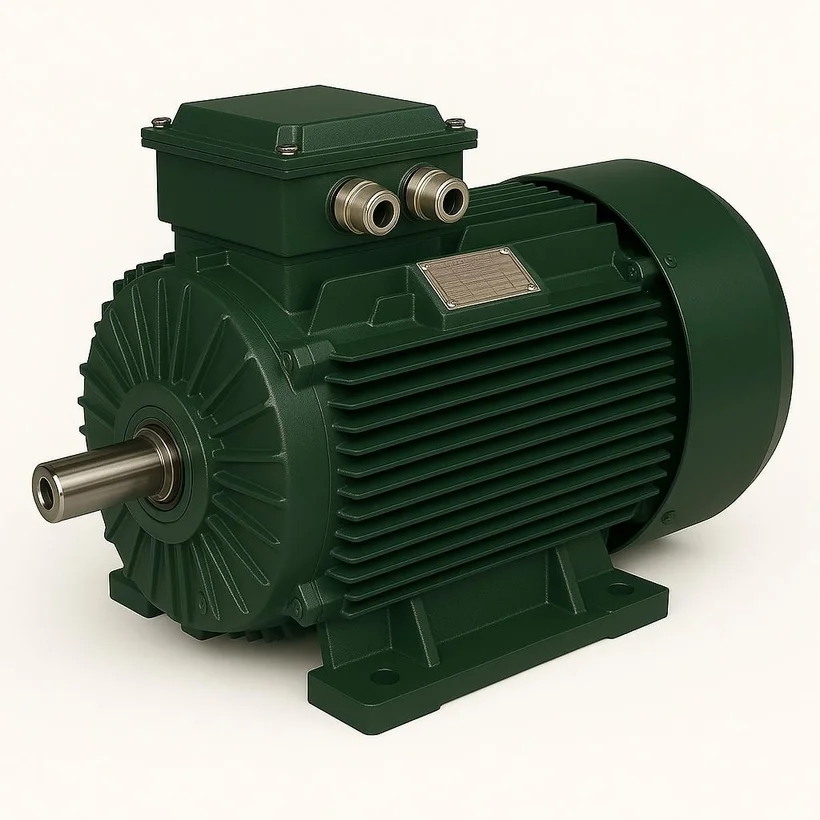
The limit of a motor's remanufacturability is often determined by the condition of the shaft and frame. The winding can always be rewound and the bearings can always be replaced; but if the frame is cracked or the shaft is seriously damaged, remanufacturing ceases to be economical. This is exactly where the value of a frame built durable from the start emerges. A solid frame opens the way to remanufacturing the motor many times over and forms the most basic building block of the circular economy.
Carbon and cost savings
Producing a new motor carries a significant energy and carbon burden, from raw material extraction to casting, from machining to assembly. Remanufacturing eliminates most of this burden by preserving the existing frame and many parts. Both the energy spent on production and the carbon released fall noticeably. At the same time, remanufacturing is in most cases lower cost than buying a new motor. So the circular approach protects both the environment and the budget.
A motor's frame is produced by melting and molding cast iron, and this step is one of the most energy-consuming stages in a motor's manufacture. Because this frame is preserved as is in remanufacturing, the entire energy and carbon burden of the casting and machining process is not spent again. Likewise, when large parts such as the shaft, lamination stack and frame are reused, only the worn small components are renewed. For this reason the carbon saving of remanufacturing shows itself not only in the energy bill but also in the facility's total environmental footprint.
Reducing waste and the material cycle
Every motor sent to scrap means the copper, steel and cast iron inside it entering the recycling process; this process also consumes energy. Remanufacturing, instead of breaking up and melting the material, keeps it in circulation in its existing form. This is a form of circularity one step beyond recycling, because the part's function and shape are preserved and only the worn portions are renewed. Keeping material in circulation in its highest-value state is the fundamental goal of the circular economy.
The motor's second service life
A well-done remanufacturing gives the motor a second life close to its first. A motor with a solid frame can run reliably for many more years when its parts are renewed. This is especially true for durable, quality-built motors, because when the frame and magnetic circuit, the real value, are preserved, the renewal investment returns with a long second life.
When to renew, when to buy new?
Remanufacturing is not always the right answer. The decision depends on the motor's current condition, efficiency class and the application's energy profile. If the old motor is already low-efficiency and runs continuously, replacing it with a high-efficiency new motor instead of remanufacturing it may make more sense in terms of energy savings. By contrast, if a relatively new and efficient motor has suffered a mechanical fault, remanufacturing is by far the most economical option. Our article on when to replace an old motor addresses this balance of decision.
Efficiency class affects the decision
Efficiency class plays a decisive role in the renewal decision. In a continuously running application, remanufacturing a low-efficiency old motor may look cheap in the short term, but the energy saving a high-efficiency new motor would provide may be more profitable in the long term. The choice between high-efficiency electric motors and remanufacturing should be made by looking at the motor's operating hours and energy cost.
Payback calculation in the renewal decision
The answer to the question of remanufacturing or a new high-efficiency motor often lies in a payback calculation. The period in which the annual energy saving of the new motor covers its extra cost determines the decision. For a motor that runs a lot, if the new motor's payback is short, new makes sense; for a motor that runs little, remanufacturing comes to the fore. High-efficiency motor payback period shows how to make this calculation.
The opportunity to raise efficiency during remanufacturing
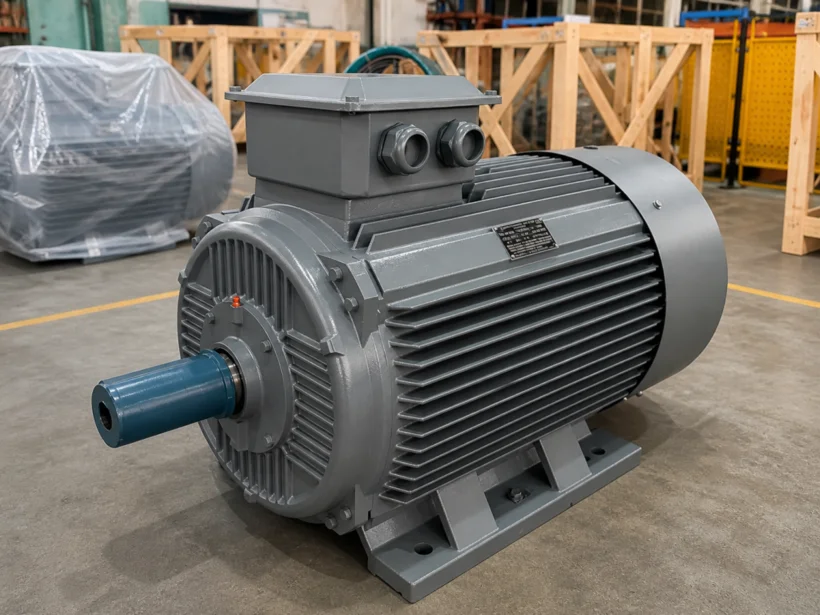
Remanufacturing does not only return a motor to its old state; done correctly, it also offers the opportunity to make it better than before. Using higher-quality copper and a better winding technique while rewinding can raise the motor's efficiency above its original level. Similarly, modern bearings and better lubrication reduce mechanical losses. So the remanufactured motor both gains a second life and moves a step ahead in energy performance. This turns renewal from a mere repair into an improvement opportunity.
Remanufacturing from a stock and supply standpoint
Remanufacturing is also valuable from the standpoint of supply processes. While procuring a new special or high-power motor can take time, remanufacturing the existing motor is often a faster solution. In facilities where stopped production is costly, the rapid remanufacturing and recommissioning of a critical motor carries great value. This speed advantage makes remanufacturing not only an economical but also an operationally smart option.
The value of remanufacturing in industrial motors
In high-power industrial motors, the economic value of remanufacturing is even more pronounced. Because the new-production cost of these motors is high, preserving the solid frame and renewing the parts delivers serious savings. Industrial electric motors are the area where remanufacturing pays off most when done correctly.
The contribution of durable design to the circular economy
A motor's being remanufacturable depends on its being designed durable from the start. A cast-iron-bodied motor has a structure that can be dismantled and reassembled many times and preserve its shape and strength for years. DRG Motor's cast-iron-bodied induction motors directly contribute to the circular economy by making the frame, their real value, long-lived, because a motor's second, even third life is only possible with a solid frame.
Sustainability and resource efficiency
Remanufacturing is not only a cost item but a sustainability strategy. Every remanufactured motor means a new motor not produced; this means less raw material, less energy and less waste. As industry increasingly turns to resource efficiency, approaches that extend motor life gain strategic value. The circular economy makes this logic systematic.
In a facility's sustainability scorecard, the total impact equipment creates over its life increasingly matters. Keeping motors in circulation as long as possible both improves this scorecard and lowers the business's long-term costs. Remanufacturing transforms the linear logic of buy, use and discard into a circular logic of buy, use, renew and reuse. This transformation is an approach that pays off both environmentally and economically.
Quality control in remanufacturing
A good remanufacturing requires quality control as disciplined as the production of a new motor. The insulation tests of the rewound motor, the balance of rotating parts, the correctness of bearing mounting and the final running tests must be done meticulously. A renewal done without these controls can lead to new faults soon. Quality remanufacturing is what truly brings the motor to a reliability close to new.
Energy monitoring and renewal timing
The healthiest way to understand when a motor should be remanufactured or replaced is to monitor its performance continuously. A slow drop in efficiency, increasing vibration or rising temperature shows the motor is nearing the end of its life. Electric motor energy monitoring lets you make the renewal decision at the right time.
Temperature and vibration tracking
The way to extend the life of a remanufactured motor is also to monitor it regularly. Temperature and vibration tracking gives an early warning before failure in both new and remanufactured motors. Electric motor temperature control protects the second life gained through remanufacturing.
Power factor and remanufactured motors
During remanufacturing, the quality of the winding affects not only the motor's efficiency but also its power factor. A well-wound motor uses its magnetic circuit more efficiently and runs with a healthier power factor. A low-quality rewind, on the other hand, can increase the motor's reactive load. For this reason winding quality in remanufacturing must be addressed meticulously in terms of both energy efficiency and electrical quality. Power factor and cosφ management should not be overlooked in remanufactured motors either.
The circular economy is a whole
Remanufacturing is only one link of the circular economy. When right-sizing, high efficiency, durable design and regular maintenance are considered together, the motor preserves its value throughout its entire life cycle. This cycle, beginning with the right power selection, offers both economic and environmental gain throughout the motor's life.
DRG Motor: durable and circular
At DRG Motor our belief is that a motor's value is not limited to a single life. Our cast-iron-bodied, quality-copper-wound IE3, IE4 and IE5 induction motors contribute to the circular economy by offering both a long first life and a remanufacturable structure. Starting with a durable motor also makes the renewal decision easier years later. For a sustainable and long-lived motor solution, you can review our DRG Motor product page. The most sustainable motor is the one designed durable from the start and preserving its value throughout its life.