 English
 Türkçe
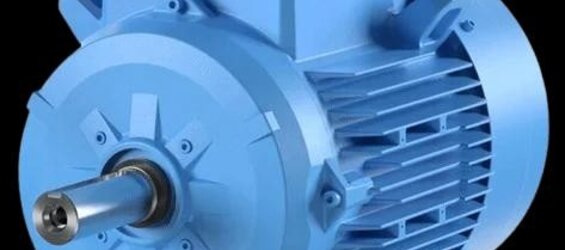
Electric Motor Selection for Cooling Tower Fans
Cooling towers are critical equipment used to cool water in industrial plants, power stations and large air-conditioning systems. The cooling function of these towers depends on th... More Details

Cooling towers are critical equipment used to cool water in industrial plants, power stations and large air-conditioning systems. The cooling function of these towers depends on th... More Details
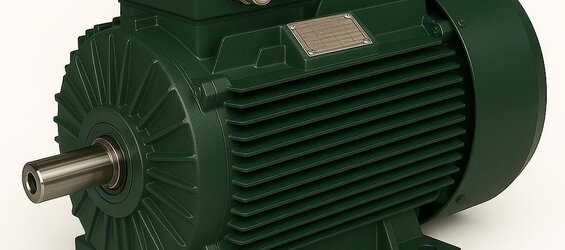
On the nameplate of an electric motor there is a value that is often overlooked but important: the service factor. Generally shown as a number such as 1.0 or 1.15, this value expre... More Details
How high a temperature an electric motor can withstand depends on the insulation of the windings inside it. The insulation class, shown on the motor nameplate with a letter such as... More Details
In industry, electric motors are often designed to run at a fixed speed. Yet in many applications, the motor does not always need to turn at full speed. This is where the frequency... More Details
Three-phase electric motors run on the balanced energy of three phases, and that balance is the foundation of healthy operation. But if one of the phases is cut off or lost for any... More Details
In the traditional approach to maintenance, repairs are either carried out after a breakdown occurs or planned maintenance is applied at fixed intervals. Both methods have their sh... More Details
Not every electric motor runs continuously; some are used seasonally, some are kept on standby as spares, and others are stored in a warehouse. Yet leaving a motor idle for a long ... More Details
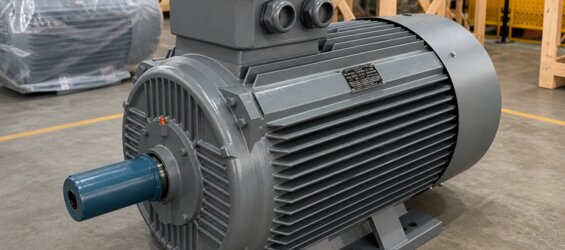
Cranes and lifting systems are machines that raise and move heavy loads safely. They are used in a vast range of settings, from factories to ports and from construction sites to wa... More Details
With the right care, an electric motor can run trouble-free for decades; when neglected, it can fail at an unexpected moment and bring production to a halt. The most important fact... More Details
An electric motor is usually connected to the equipment it drives through a coupling (a shaft connection element). The quality of this connection, namely the alignment of the motor... More Details
Ideally, the voltage and current in an electrical supply take the form of a smooth sine wave. Today, however, many electronic devices and drives distort this clean wave, creating u... More Details
The asphalt used to build roads, highways and airport runways is produced in asphalt plants. These plants carry out many stages at once, from aggregate feeding and drying to screen... More Details
In many industrial applications, an electric motor does not work on its own but together with a gearbox. A gearbox is a gear system that lowers the motor's speed to increase torque... More Details
An electric motor heats up to a certain degree while running; this is natural. However, overheating is the motor's greatest enemy. High temperature wears out the insulation, strain... More Details
Efficiency in electric motors is a continuously advancing field. After the efficiency classes that climbed from IE1 to IE4, the highest step of all now arrives: the IE5 ultra-premi... More Details
When an electric motor is switched off, it does not stop immediately; because of inertia, it keeps turning for a while. In most applications this is not a problem, but in some it i... More Details
Paper and pulp production is a continuous, energy-intensive industry made up of many stages, from processing the raw material to winding the finished product. In these plants, refi... More Details
Food and beverage production plants are environments with special requirements such as hygiene, continuity and safety. In these plants, pumps, mixers, conveyors, filling lines and ... More Details
Conveyor and belt systems carry material from one point to another in countless plants, from mining to food, from packaging to heavy industry. Whether these lines run uninterrupted... More Details
In most facilities, electric motors are the single largest item of total energy consumption; in industry this share can rise to as much as 60-70 percent. Yet how much energy these ... More Details