 English
 Türkçe

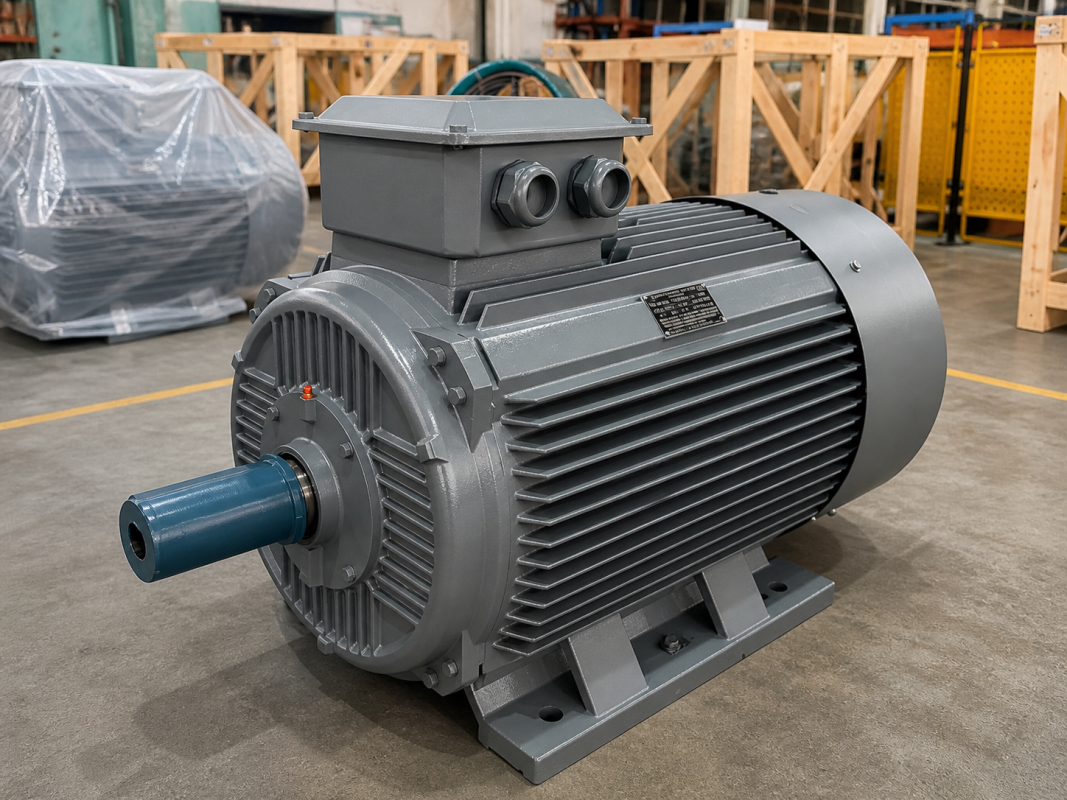

When you look at the nameplate of an electric motor, you see that the power is sometimes written in kilowatts (kW) and sometimes in horsepower (HP). The speed is given as revolutions per minute (rpm) and is directly related to the motor's pole count. These three values (kW, HP and speed) are the fundamental quantities that define the character of a motor; however, how to convert them to one another and why different units are used together often causes confusion. In this article we explain the relationship between kW, HP and speed with clear tables and practical formulas.
Correct power and speed information is the foundation of correct motor selection. When selecting a motor for a pump, fan or conveyor, you need to correctly calculate the required power and speed, and also be able to convert values given in different units in different sources. The conversion tables and explanations below are designed as a practical reference for both engineers and field workers.
The Basic Relationship Between kW and HP
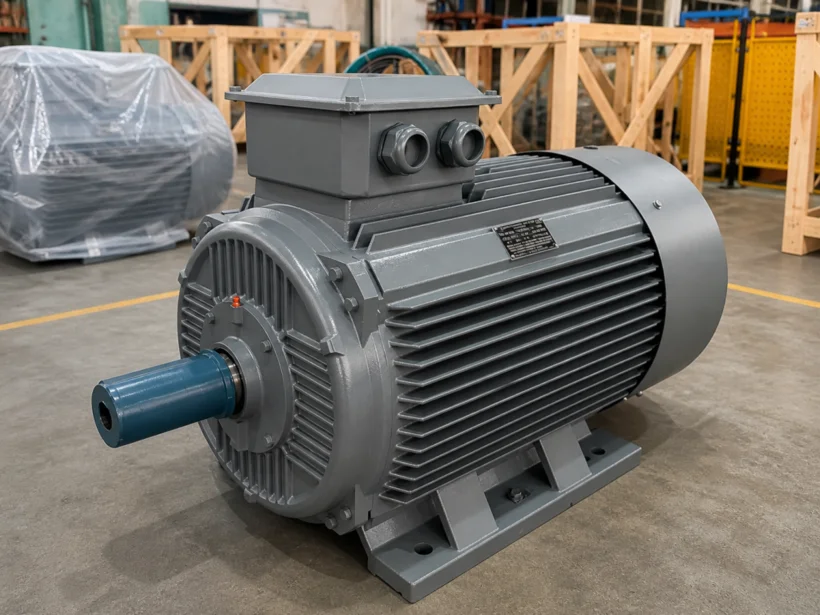
The kilowatt (kW) is the standard unit of power in the International System of Units (SI) and is widely used in electrical engineering. Horsepower (HP) is a unit of power that historically comes from steam engines and is still common, especially in Anglo-Saxon countries and the motor sector. The conversion between the two units is fixed: 1 kW = 1.341 HP and conversely 1 HP = 0.746 kW.
This simple factor makes it easy to calculate a power known in kW into HP or vice versa. For example, a 7.5 kW motor has about 10 HP, and an 11 kW motor about 15 HP of power. This is why, when the sector says "a 10 horsepower motor", a standard 7.5 kW motor is usually meant. The choice between high and low kW motors comes from correctly understanding this conversion.
Standard IEC Powers: kW - HP Conversion Table
Electric motors are manufactured in certain standard power steps according to IEC standards. The table below shows the kW and approximate HP equivalents of the most common IEC standard powers. This table is a practical reference for quickly converting a motor's power between the two units.
| Power (kW) | Approx. HP | Power (kW) | Approx. HP |
|---|---|---|---|
| 0.75 | 1.0 | 37 | 49.6 |
| 1.1 | 1.5 | 45 | 60.3 |
| 2.2 | 3.0 | 55 | 73.8 |
| 4 | 5.4 | 75 | 100.6 |
| 5.5 | 7.4 | 90 | 120.7 |
| 7.5 | 10.1 | 110 | 147.5 |
| 11 | 14.8 | 132 | 177.0 |
| 15 | 20.1 | 160 | 214.6 |
| 22 | 29.5 | 200 | 268.2 |
| 30 | 40.2 | 250 | 335.3 |
The HP values in the table are found by multiplying the kW value by 1.341. For example, 30 kW × 1.341 ≈ 40.2 HP. In practice, these values are usually expressed by rounding to the nearest whole horsepower value.
Speed and the Pole Relationship
The speed of an induction motor depends on the grid frequency and the motor's pole count. The synchronous speed is found by multiplying the frequency by 120 and dividing by the pole count. Since the grid frequency in Europe is 50 Hz, the speed decreases as the pole count increases. The actual (asynchronous) speed is slightly lower than the synchronous speed due to slip.
The table below shows the synchronous speeds by pole count on a 50 Hz grid. This relationship is a fundamental reference point in selecting a motor suited to the speed an application requires. The topic of pole count and speed is one of the most frequently encountered concepts in motor selection.
Pole Count - Speed Table (50 Hz)
| Pole Count | Synchronous Speed (rpm) | Typical Load Speed (rpm) | Application Example |
|---|---|---|---|
| 2 poles | 3000 | ~2900 | Pumps, high-speed fans |
| 4 poles | 1500 | ~1450 | Conveyors, general purpose drive |
| 6 poles | 1000 | ~960 | Mixers, low-speed fans |
| 8 poles | 750 | ~720 | Mills, heavy slow drives |
As can be seen, when the pole count doubles, the speed halves. While a 2-pole motor runs close to 3000 rpm, an 8-pole motor rotates around 750 rpm. The correct speed selection is determined by the speed and torque required by the application.
Power, Torque and Speed: The Basic Formula
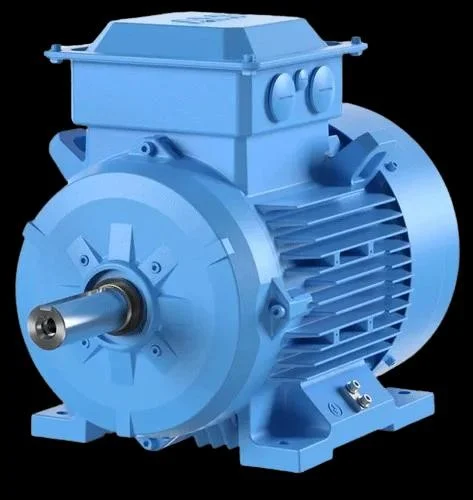
The power of a motor is determined by the relationship between the torque it produces and the speed at which it rotates. This relationship is one of the most frequently used formulas in motor selection: P = T × n / 9550. Here P is the power (kW), T the torque (Nm) and n the speed (rpm). The constant 9550 comes from harmonising the units.
This formula allows the third to be found when two of the three variables are known. For example, a motor rotating at 1450 rpm and producing 100 Nm of torque has a power of about 15.2 kW. The same formula is also used to calculate how much torque can be obtained at a certain speed at a certain power. Low-speed (high-pole) motors produce higher torque at the same power; this is why low-speed motors are preferred in heavy drives.
Why Are Both kW and HP Used?
There are historical and practical reasons for using two units together. Horsepower is a unit established in the motor sector since the industrial revolution and is still widely used in many countries. The kilowatt is a modern, international unit directly suited to electrical calculations. In electric motors, both units express the same physical power; they only show it on different scales.
For this reason, it is normal to encounter different units in different sources when selecting a motor. While a European catalogue gives the power in kW, a US catalogue may give it in HP. Being able to convert quickly between the two values is necessary for correct comparison and correct selection. In three-phase motor in industry selection, reading power units correctly is a fundamental skill.
How Does Speed Selection Affect Motor Selection?
Motors of the same power can be manufactured at different speeds, and the speed selection directly affects the physical size and torque of the motor. A low-speed motor (for example 8 poles, 750 rpm) is larger and heavier than a high-speed motor of the same power (2 poles, 3000 rpm), because producing the same power at a lower speed requires higher torque. This means a larger magnetic structure.
The speed required by the application determines how the motor will be selected. High-speed pumps are driven by 2-pole motors, general-purpose conveyors by 4-pole motors, and heavy mills by 6- or 8-pole low-speed motors. In applications such as conveyor belt motor selection, the speed determines the balance of both speed and torque.
Practical Calculation Steps in Motor Selection
The practical steps followed when selecting a motor for an application are as follows: first the power required by the load to be driven is calculated; this power can be expressed in kW or HP. Then the speed required by the application is determined and the corresponding pole count is selected. Finally, based on the power and speed, the required torque is checked with the formula P = T × n / 9550.
When making these calculations, the starting torque requirement, the duty cycle and the efficiency must also be taken into account. Selecting a motor by looking only at the rated power can be insufficient, especially in applications requiring high starting torque. In applications such as water pump motor selection, the correct power and speed combination directly affects energy efficiency.
Slip and Actual Speed
In induction motors, the actual speed is never exactly equal to the synchronous speed; the difference between them is called slip. Slip is a fundamental phenomenon needed for the motor to produce torque; the rotor lagging slightly behind the magnetic field enables current to be induced and therefore torque to be produced. In a typical induction motor, slip is between 2 and 5 percent, that is, a motor with a synchronous speed of 1500 rpm rotates at about 1450 rpm under load.
Slip increases with load: when the motor is idling, the speed is very close to synchronous, while at full load slip reaches its maximum. For this reason, the speed written on a motor's nameplate is the actual speed at rated load, not the synchronous speed. In applications where speed precision is critical, this difference caused by slip must be taken into account; if very precise speed control is needed, closed-loop control with a frequency inverter should be preferred.
The Effect of Frequency on Speed: 50 Hz and 60 Hz
Since the speed depends directly on the grid frequency, the same motor rotates at different speeds at different frequencies. While the grid is 50 Hz in Europe, it is 60 Hz in the US and some countries. At 60 Hz, a motor with the same pole count rotates 20 percent faster: a 4-pole motor has a synchronous speed of 1500 rpm at 50 Hz and 1800 rpm at 60 Hz.
This difference is important in motor selection and in evaluating imported equipment. A motor designed for 60 Hz runs at a lower speed and with a different power characteristic on a 50 Hz grid. When a frequency inverter is used, the speed can be set to the desired value independently of the grid frequency; this provides great flexibility in applications requiring variable speed. Energy saving with frequency inverters is also a way of optimising the speed for the application.
Torque Types: Starting, Rated and Pull-Out Torque
A motor's torque is not a single value; it changes according to the operating condition. Starting torque is the torque the motor produces as it moves from standstill to motion and is critical for starting a loaded conveyor or pump. Rated torque is the torque the motor continuously produces at the nameplate power and speed. Pull-out torque is the maximum torque the motor can produce without stalling; under sudden loads below this value, the motor continues to operate safely.
These three torque values determine the suitability of the motor for the application. In heavy drives requiring high starting torque, looking only at the rated power is not enough; the starting and pull-out torque must also be evaluated. The formula P = T × n / 9550 gives the rated torque, but the starting and pull-out torques are read from the motor's torque-speed curve. The correct motor selection requires this curve to match the load profile of the application.
The Role of Efficiency and Power Factor
The difference between the electrical power a motor draws from the grid and the mechanical power it delivers from its shaft determines the motor's efficiency. A high-efficiency motor produces the same mechanical power while consuming less electricity. For this reason, in addition to the kW and HP values, the efficiency class (IE2, IE3, IE4) must also be considered in motor selection. High-efficiency electric motors offer a lower operating cost at the same output power.
Power factor (cos φ) is a measure of the reactive power the motor draws from the grid. An oversized motor running at a low load factor operates with a low power factor and adds an extra load to the grid. For this reason, it is important to select the motor neither too small nor too large, but to fit the application exactly. In industrial electric motors selection, evaluating power, speed and efficiency together is essential.
Why Are Power Steps Standard?
Electric motors are not manufactured at random power values but in standard steps determined by IEC: 0.75, 1.1, 1.5, 2.2, 3, 4, 5.5, 7.5 kW and so on. The reason for this standardisation is to provide convenience in production, stock management and spare part supply. Thanks to standard power steps, it is possible to find and replace a motor of the same power anywhere in the world.
The ratio between these steps generally progresses at about 1.3-1.5 times, which is enough to cover most applications with a reasonable step. If the calculated power requirement of an application falls between two standard steps, the higher step is usually selected; this way the motor operates with a safe margin. Selecting the next step up without going to extremes both preserves reliability and avoids unnecessary oversizing.
Conversion with Practical Examples
Reinforcing the conversions with concrete examples makes the concept permanent. Suppose you are told a 15 HP motor is needed for a water pump. To convert this value to kW, 15 × 0.746 = 11.19 kW is obtained; that is, the nearest standard IEC power, an 11 kW motor, is suitable. Conversely, if you have a 22 kW motor, its horsepower equivalent is 22 × 1.341 ≈ 29.5 HP, that is, about 30 horsepower.
For a speed example: if a mixer needs to rotate around 1000 rpm, a 6-pole motor should be selected on a 50 Hz grid; this motor rotates at about 960 rpm under load. If the application requires 1450 rpm, a 4-pole motor is selected; if it requires 2900 rpm, a 2-pole motor. This simple matching directly links the speed requirement to the motor's pole count and greatly simplifies the selection process.
Common Mistakes and Points to Watch
The most common mistake in power and speed conversions is confusing HP with kW or ignoring rounding differences. When the sector says "10 horsepower", 7.5 kW is usually meant, but in exact conversion 7.5 kW = 10.06 HP; this small difference is usually ignored but must be taken into account in precise calculations. Similarly, confusing synchronous speed with the actual (under-load) speed leads to wrong speed expectations.
Another common mistake is selecting the motor by power value alone and neglecting the speed. A motor of the same power but the wrong speed cannot provide the torque or speed suited to the application. For this reason, power and speed must always be evaluated together in motor selection. Correct conversion and correct speed selection are the foundation of the motor delivering the expected performance in the application.
DRG Motor for the Right Power and Speed Selection
kW, HP and speed are the three fundamental concepts that make up the language of a motor. Understanding these values correctly and being able to convert them to one another is the first step in correct motor selection. Knowing that 1 kW equals 1.341 HP, grasping how the pole count determines the speed, and being able to use the formula P = T × n / 9550 are an indispensable foundation for both engineers and field workers.
At DRG Motor, we correctly analyse the power and speed requirement of every application and recommend the most suitable motor. Whether your need is a small 0.75 kW drive or a heavy 250 kW application, to determine the right power and speed combination you can review our DRG Motor products and contact our engineering team. Visit the DRG Motor home page to explore our full range. A motor selected with correctly calculated power and speed operates both efficiently and with a long life.